How Long It Takes
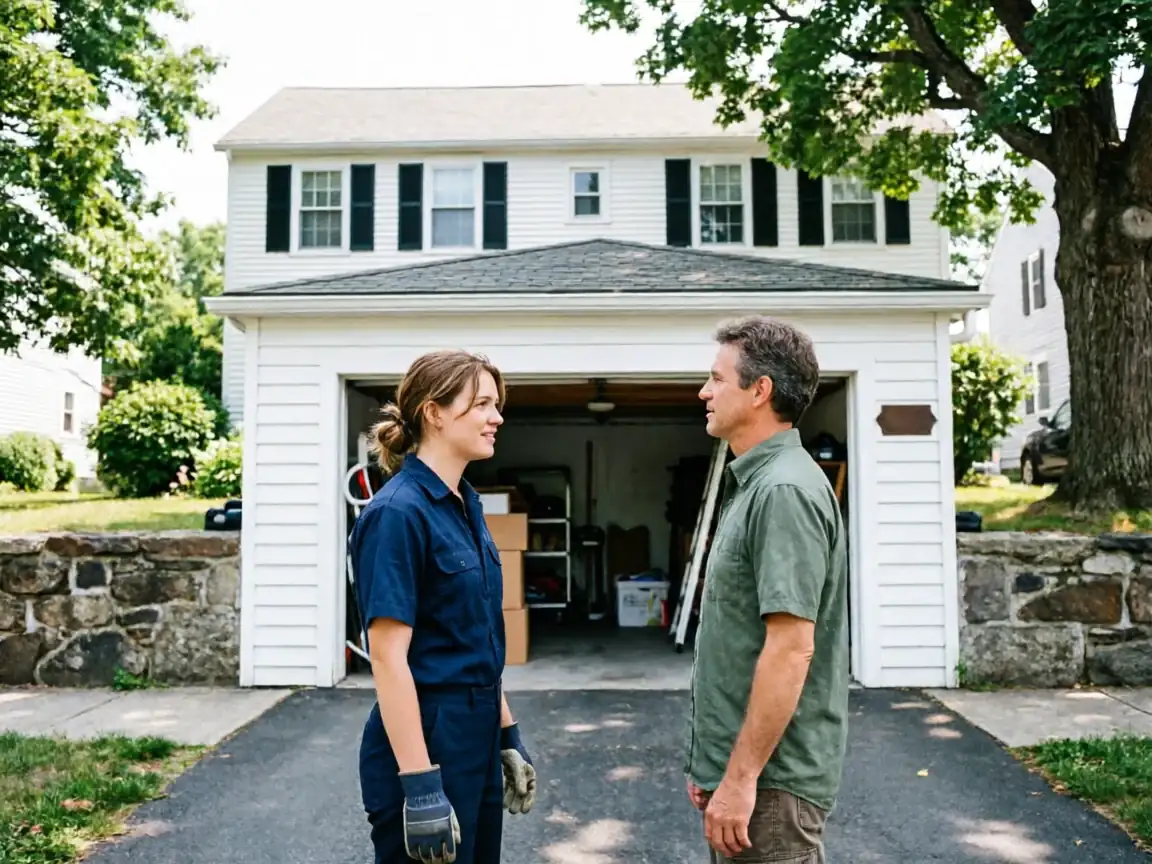
Stow is a small town - about 2,731 households, which is a fraction of the service area's 111,565. That matters for how off-track calls get handled here: there's no separate crew or depot in Stow, the truck comes 4 miles from Hudson, and because the town is small, an off-track door isn't something we see constantly from this one address book - it's a handful of calls a season, not daily work.
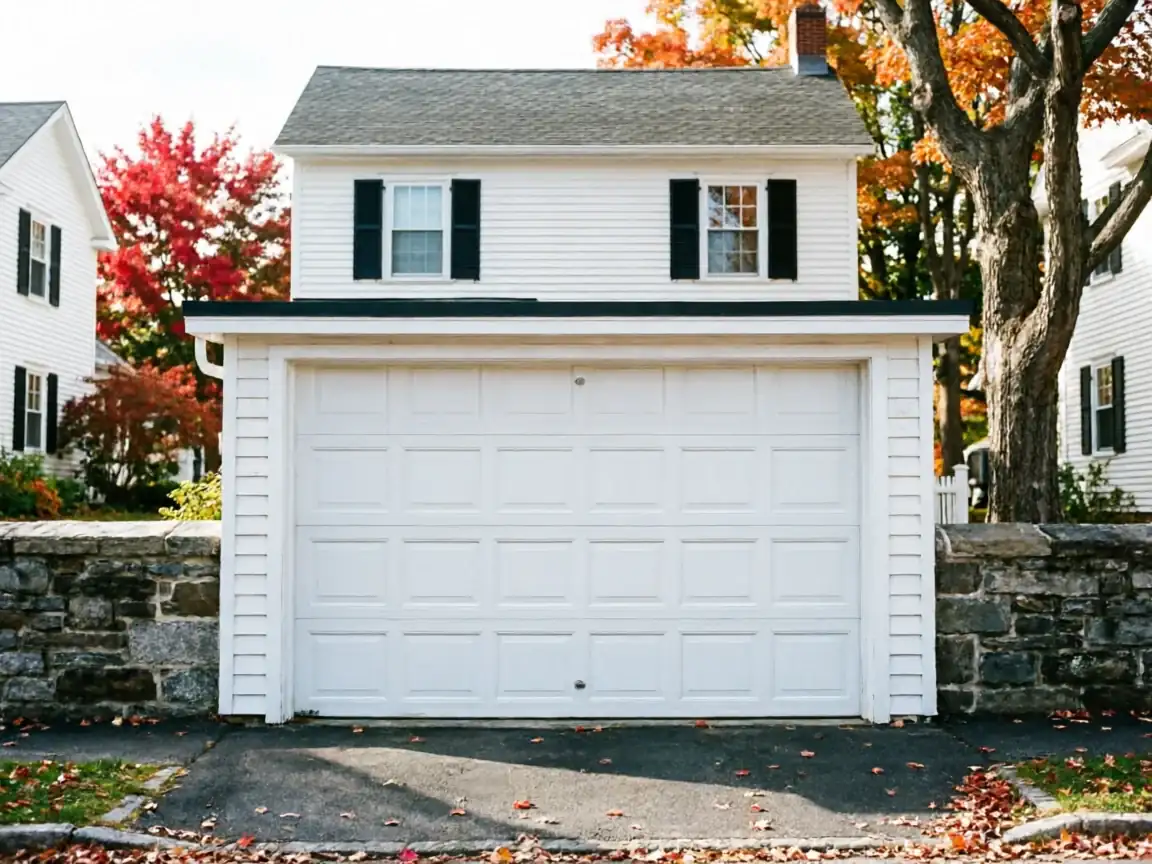
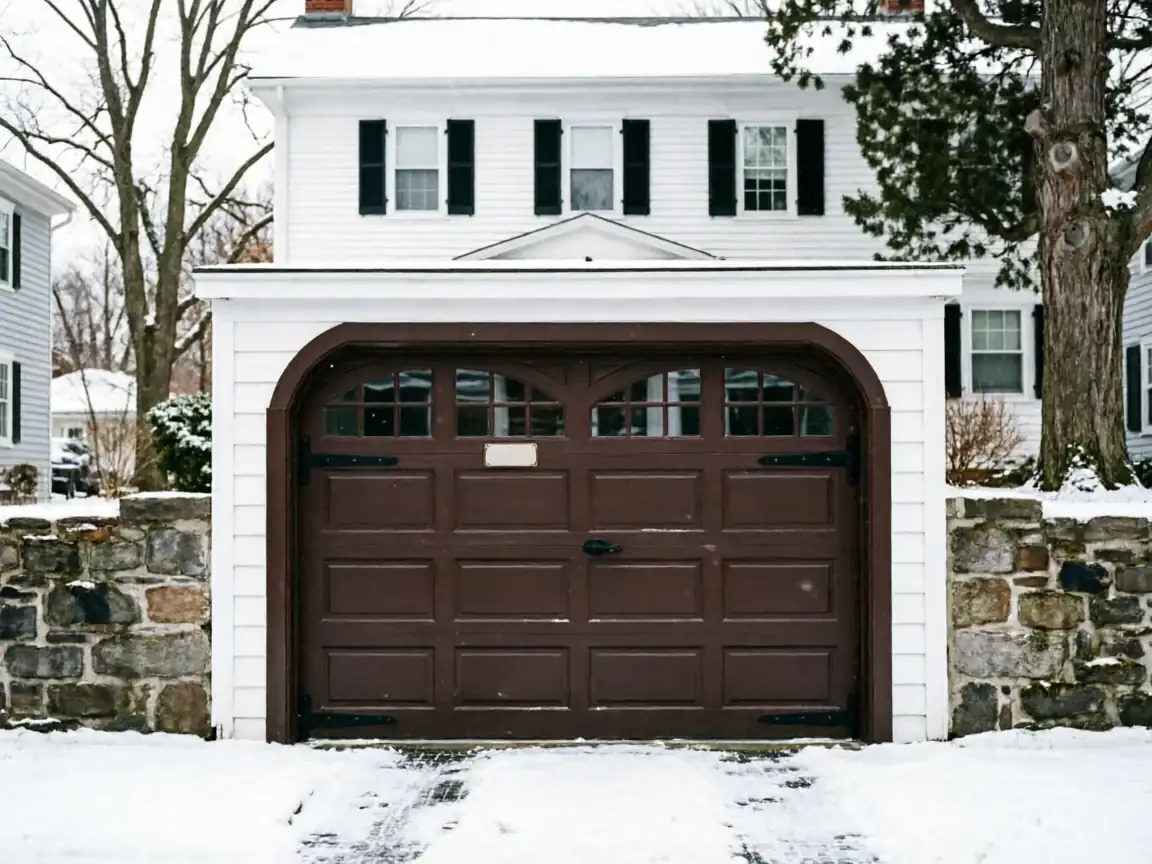
Most of what triggers the call in Stow traces back to the housing stock. The town's median year built is 1973, a little newer than the wider service area's 1969 median, but still well inside the 1938-1993 range where the original hardware is decades past its intended life. A door built in the early 70s on steel track that's never been replaced doesn't jump the track dramatically - it walks off a roller at a time, usually at a bent or loose track bracket, until one bottom corner finally drops out of the rail.
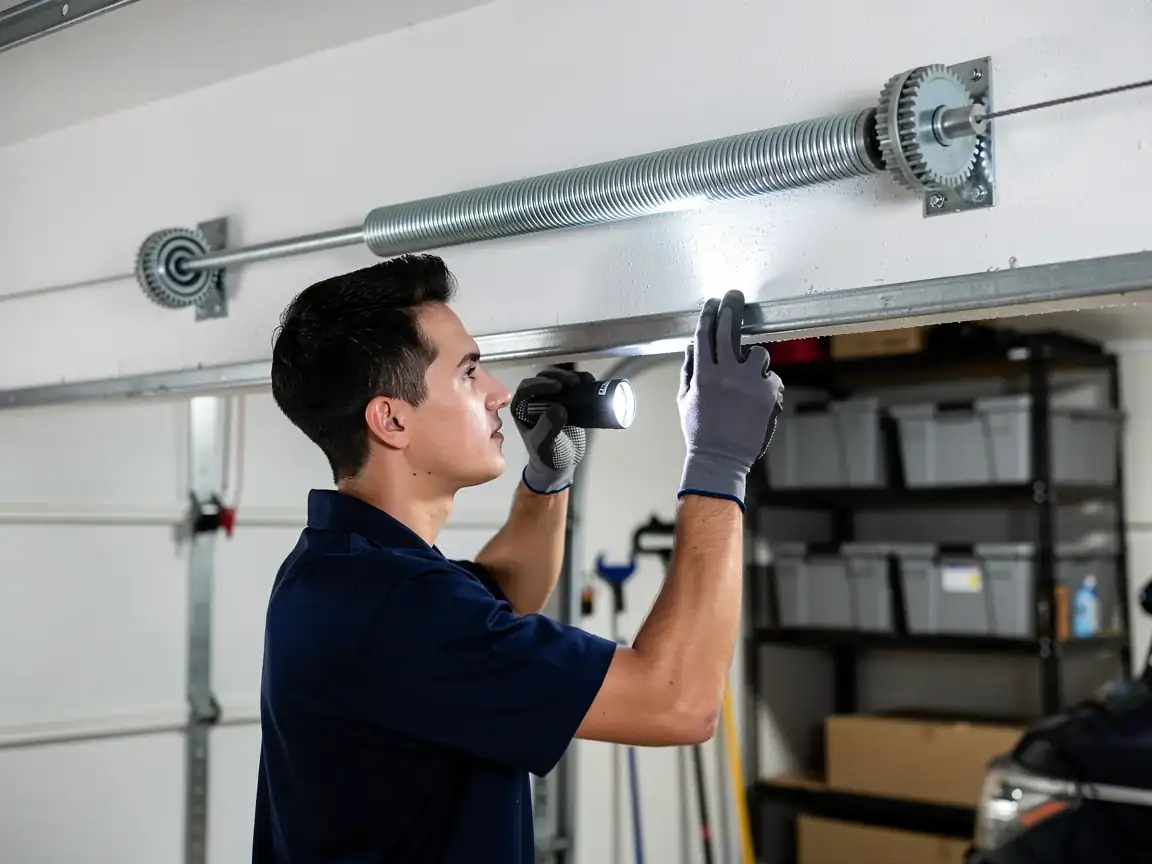
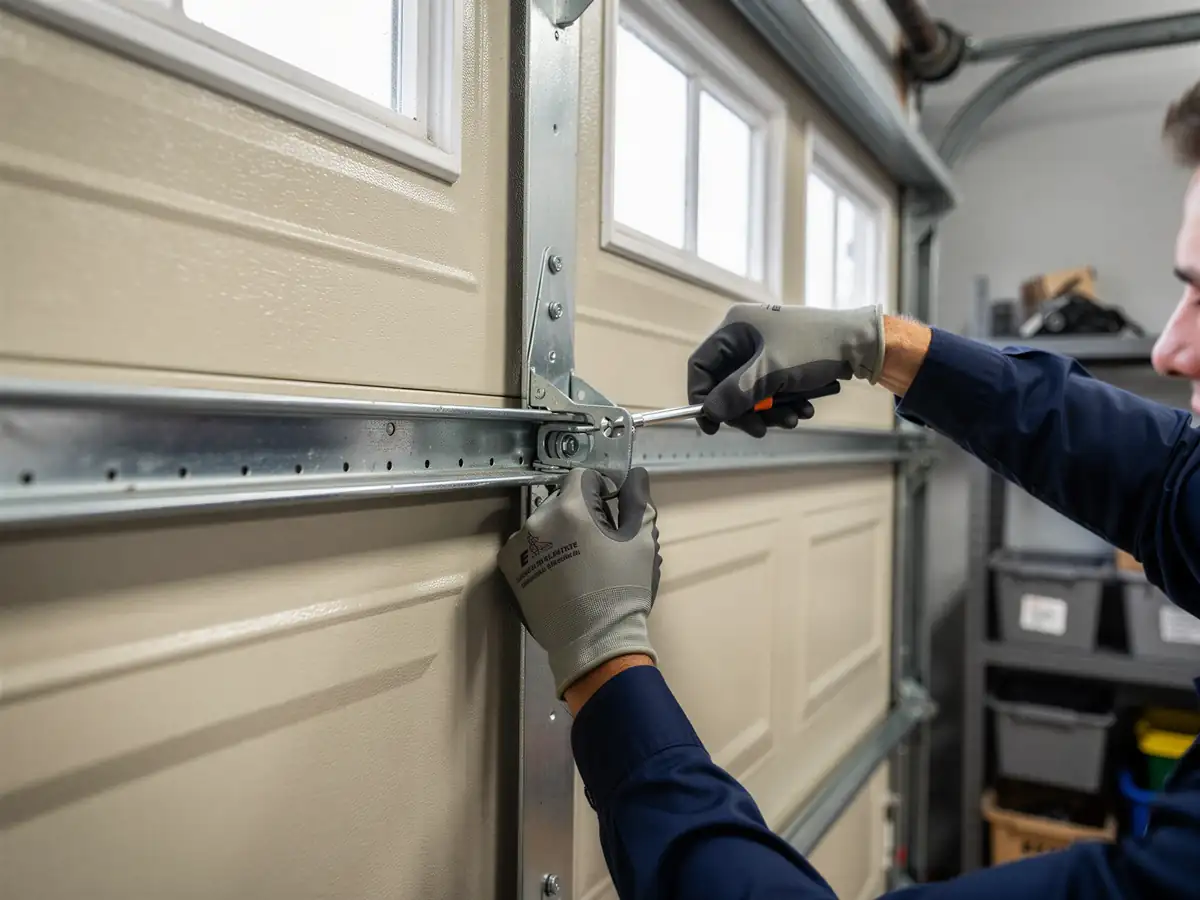
Once we're on site, the diagnosis itself takes minutes: a flashlight on the track, a hand on the roller, a check of whether the door came off clean or whether a cable or spring issue pulled it off. The repair length depends entirely on what that look tells us, not on anything about the town.
How It Shows Up
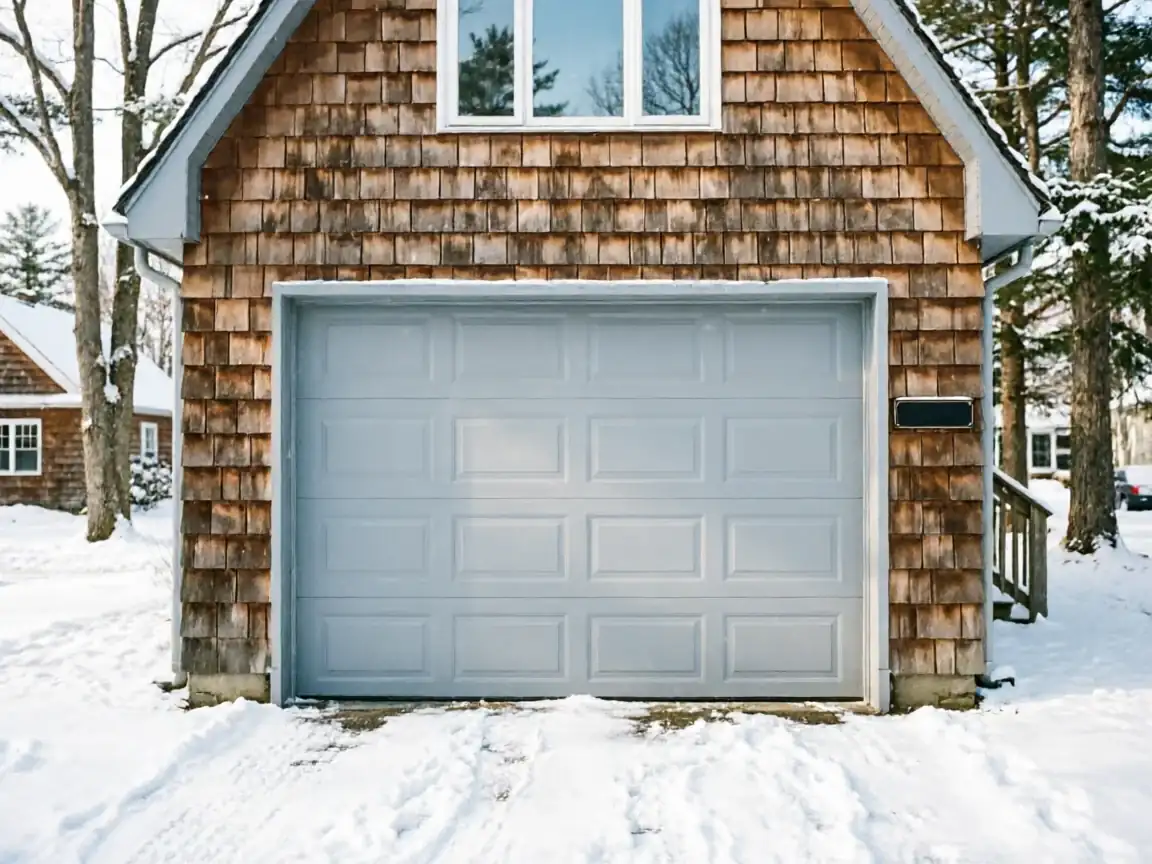
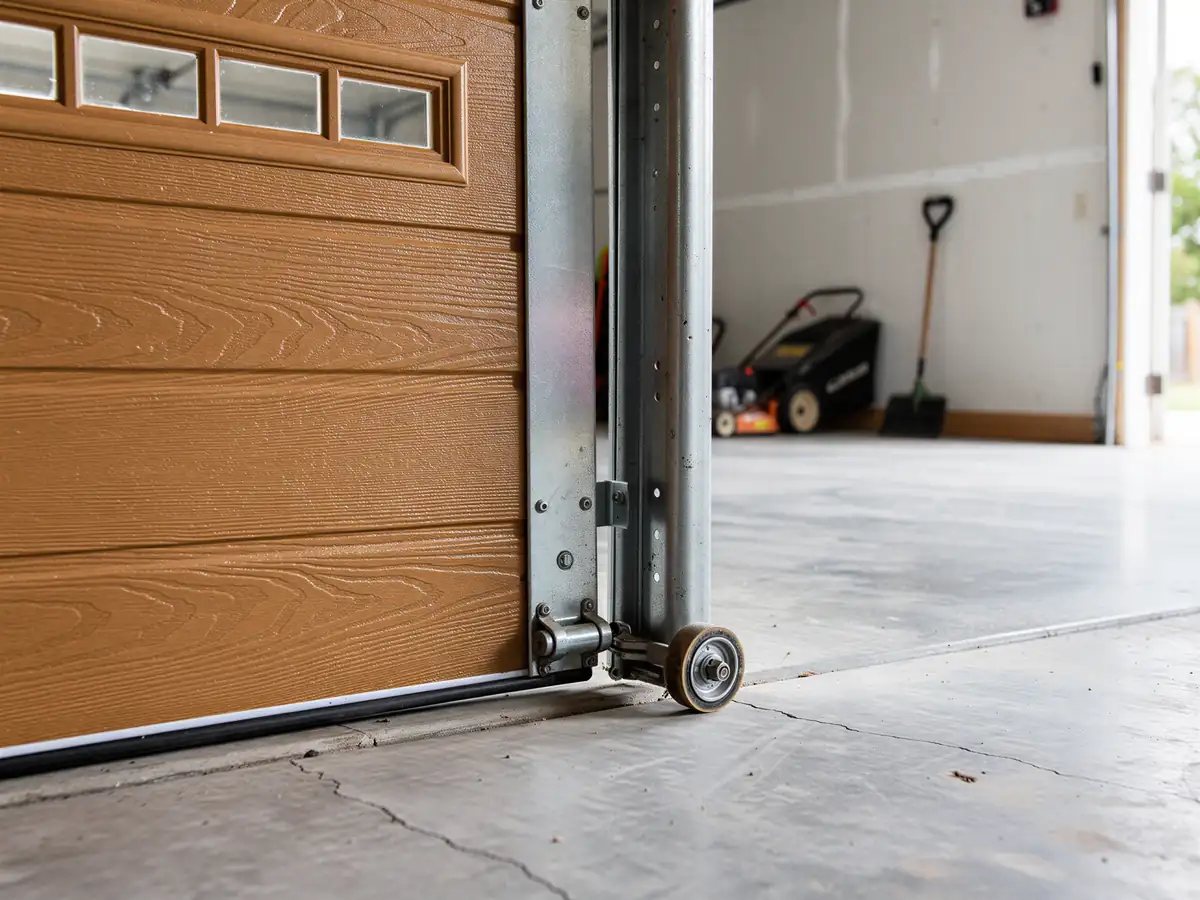
The way an off-track door shows up in Stow tracks the age of the house more than anything else. On a door from the early 1970s, the track brackets are original steel, fastened to framing that's shifted a little over fifty-plus years - normal house settling, nothing dramatic. That shift tilts the track just enough that a roller rides the edge instead of the channel, and one day it climbs out instead of rolling through.
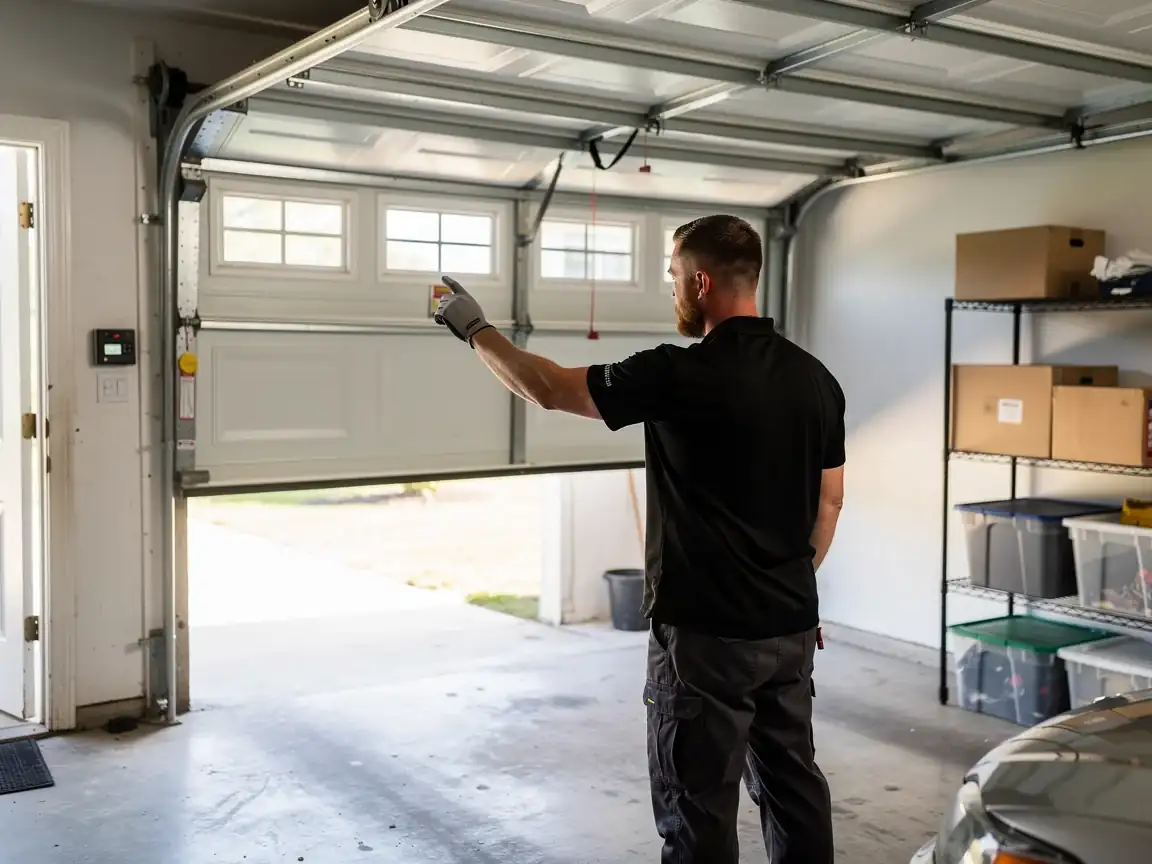
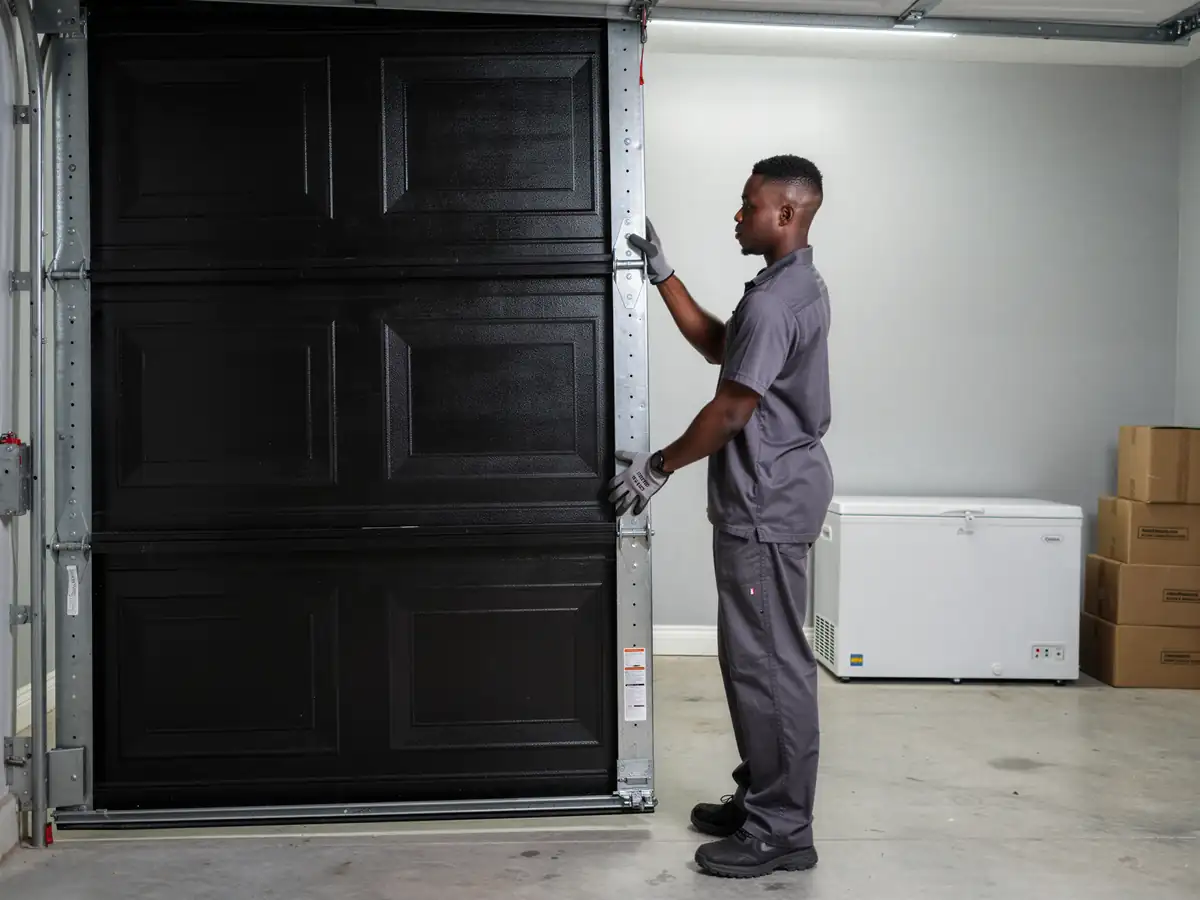
You'll usually notice it as a door that binds on one side, or a bottom panel that looks visibly crooked against the frame when it's down. Sometimes it's louder - a scrape or a grinding sound right before it stops moving. If the opener is still trying to pull a door that's partly off the rail, you'll hear the motor strain and then quit, which is the opener's safety reversal doing its job.
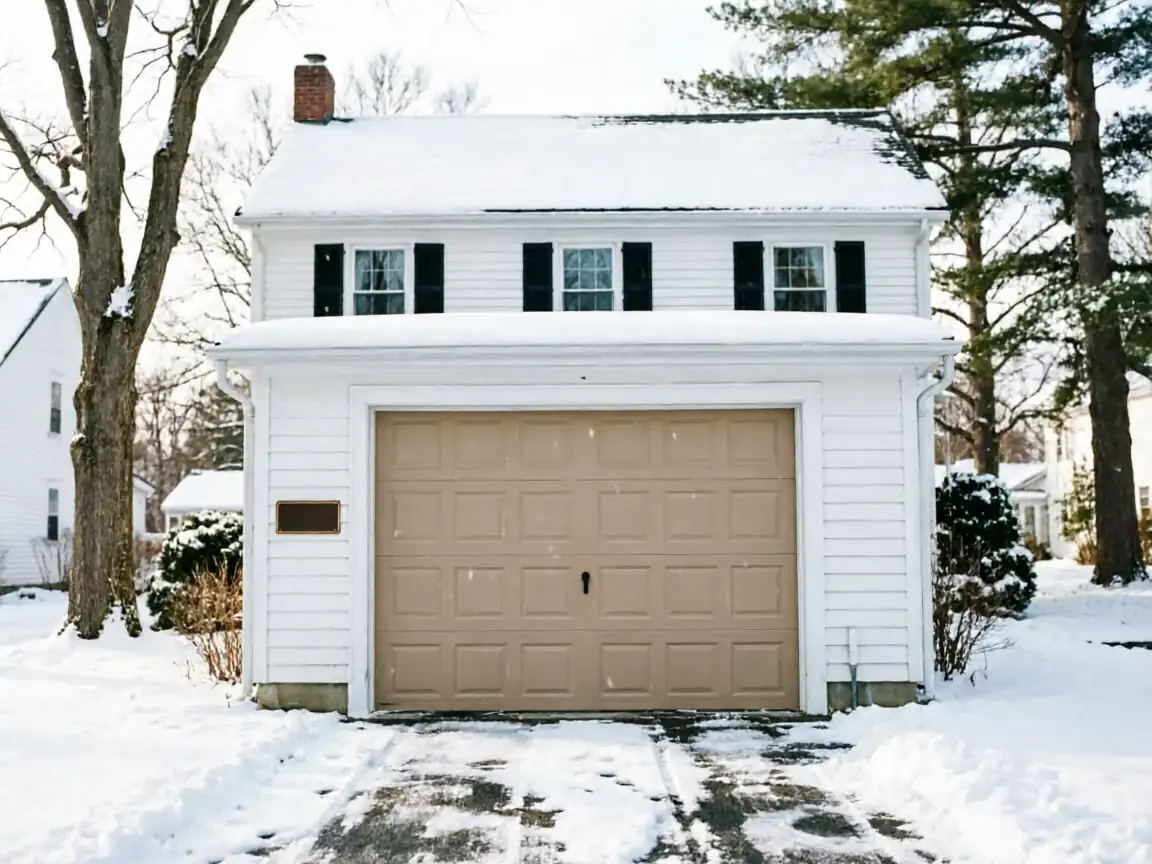
Stow's winters put their own stress on this. The region sits in a cold, severe climate band, and a steel track that's a few degrees out of true gets worse when it contracts in a hard freeze - metal doesn't forgive misalignment the way it might in a mild season. A door that's been slightly off all summer can finally jump the track on the first real cold snap.
What Can Go Wrong
An off-track door is rarely just the track
On houses from this era - 1973 is Stow's median, squarely in the 1938-1993 range that covers most of the area - the rollers are often original or a prior cheap replacement, and a worn roller is usually what let the door wander off the rail in the first place. Fixing the track and leaving a worn roller in place just buys you a repeat call.
The bigger risk is a door that's off-track because a cable slipped or a spring let go
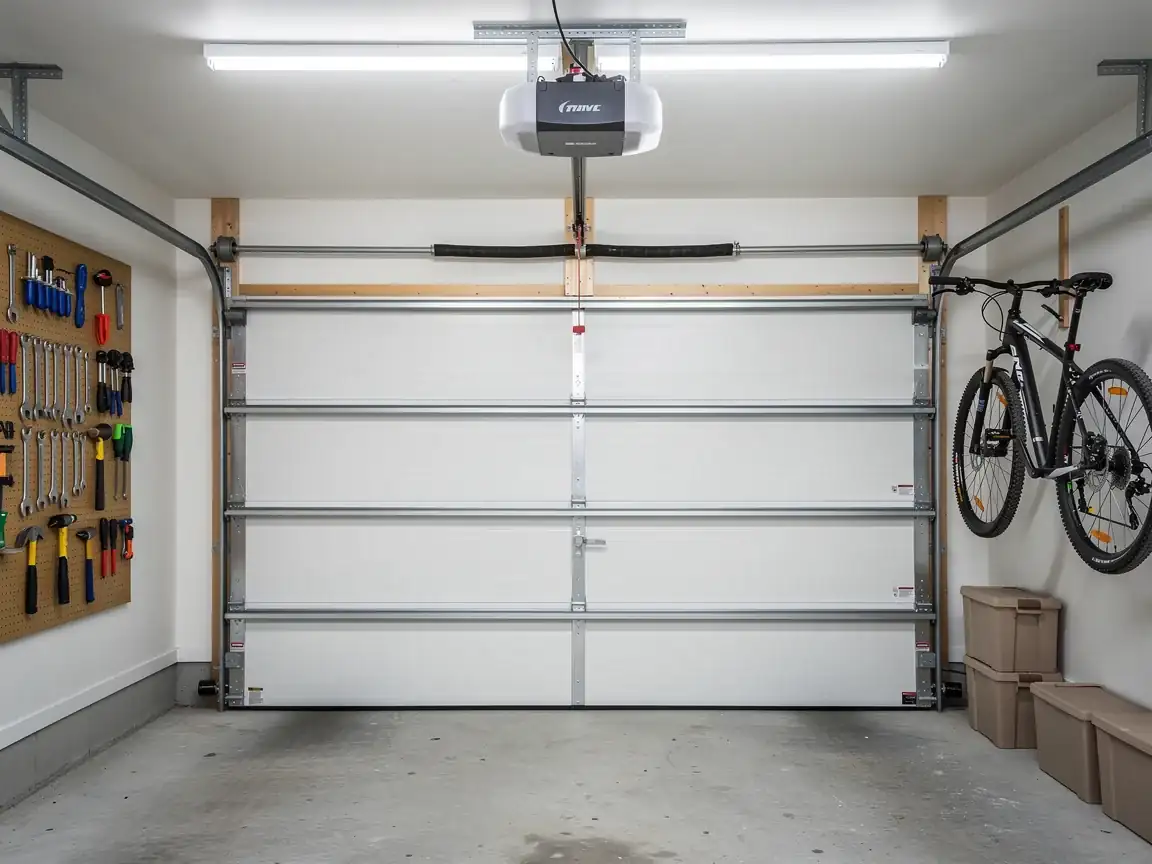
Not because the track itself is bent. If a cable is loose or a spring is broken, the door can be under uneven tension, and forcing it back into the track without addressing that is how someone gets a panel or a finger caught. We check cables and springs before we touch the track for that reason.
Here's the limit: if the track is badly bent
Not just knocked loose - bending it back rarely holds. Steel that's been kinked work-hardens at the bend, and it'll fail there again, usually sooner than the first time. At that point, replacing the section of track costs less in the long run than repeated service calls to re-true the same bad bend.
What You Pay
We don't have a published price list for Stow specifically, and we're not going to invent a number to fill this section - what you pay depends on whether it's a simple re-seat of rollers on bent-but-fixable track, a track replacement, or a cable/spring issue that caused the door to jump in the first place.
What we can say is where the cost tends to land for a town like this. Stow's median household income is $177,862, noticeably above the broader service area's $147,635, and the housing is largely from a single, narrower building era - 1973 median - rather than a wide mix of decades. That tends to mean more consistent hardware from house to house, which makes diagnosis faster and keeps the job closer to a standard repair rather than a surprise.
The real cost swing is the same one that applies everywhere: whether the track alone needs adjusting, or whether a spring or cable also needs replacing. We'll tell you which one it is before we start, not after.