What Local Conditions Do
Hudson's housing was built mostly between 1938 and 1993, with the median landing around 1969. That one number explains most of the off-track calls we get. A door hung in 1969 was set on steel track bolted to framing that's shifted a half-inch or more since then - slabs settle, jambs rack, and the track that was plumb when it went in stops being plumb. The door doesn't know that. It keeps trying to run straight rollers through a track that's now slightly bowed, and every cycle wears the roller and the bracket a little more until one day the roller jumps the rail.
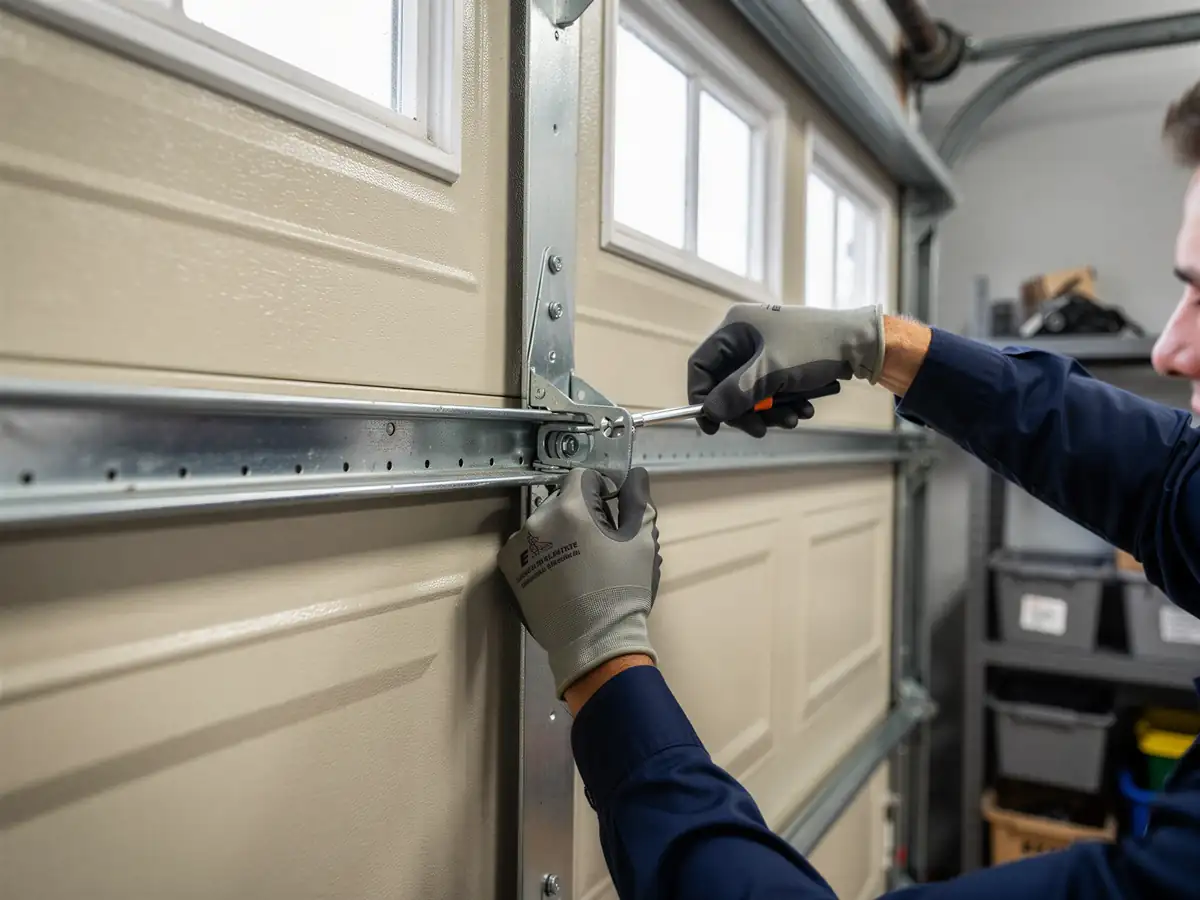
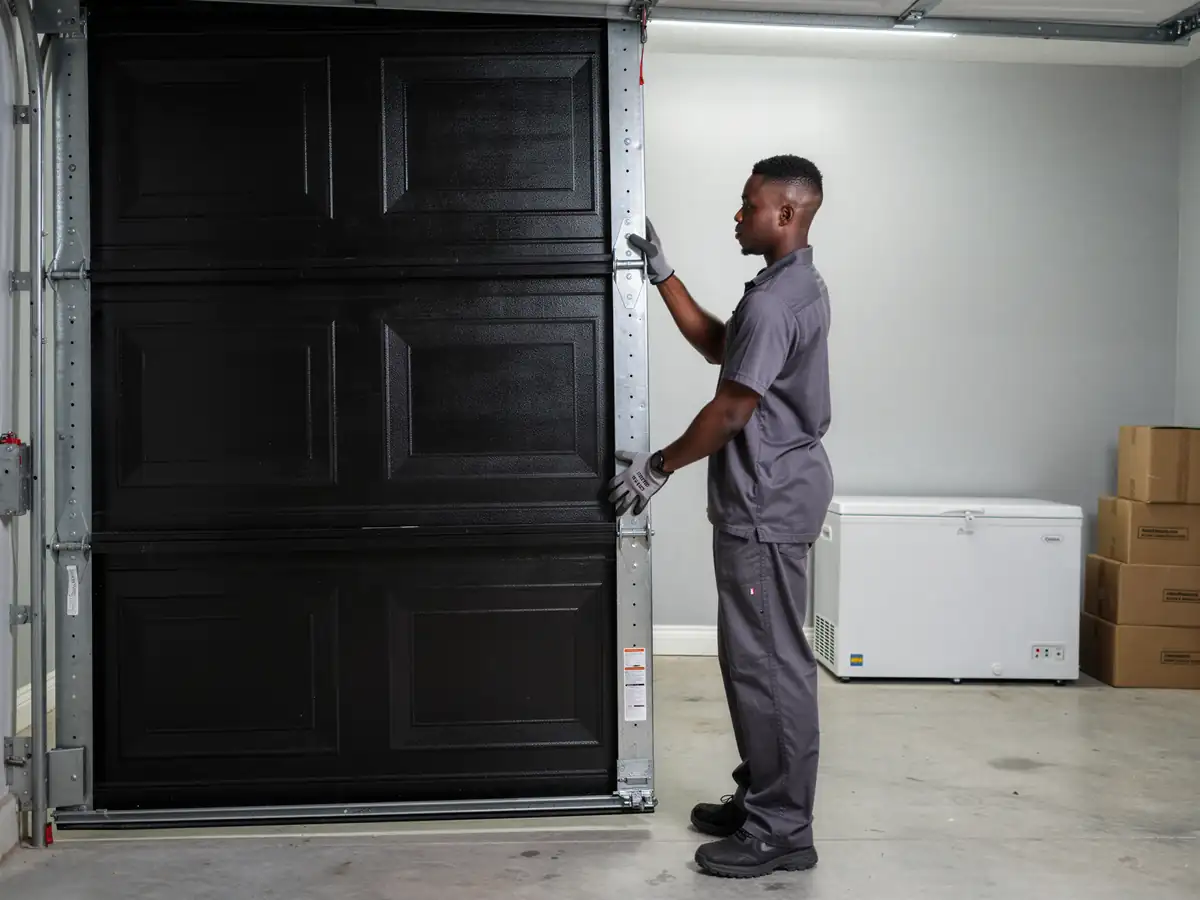
This isn't a defect in the original install. It's just what fifty-plus years does to a wood-framed house on a New England foundation. The track itself is rarely the real problem - it's usually the brackets holding it to studs that have moved, or a hinge that's stretched its screw holes oblong. We check both before we touch the track, because replacing track on a bracket that's about to pull loose again is a repeat call waiting to happen.
What Is Going On
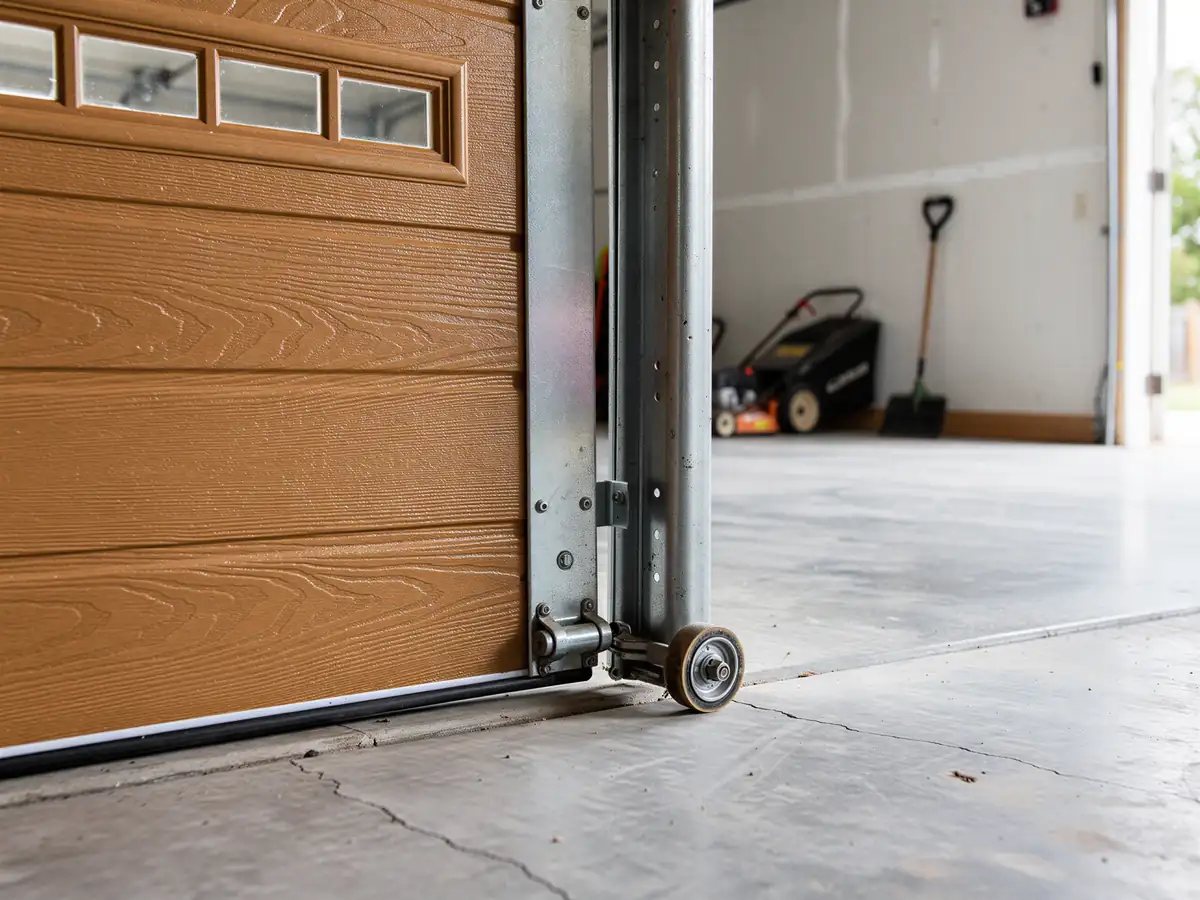
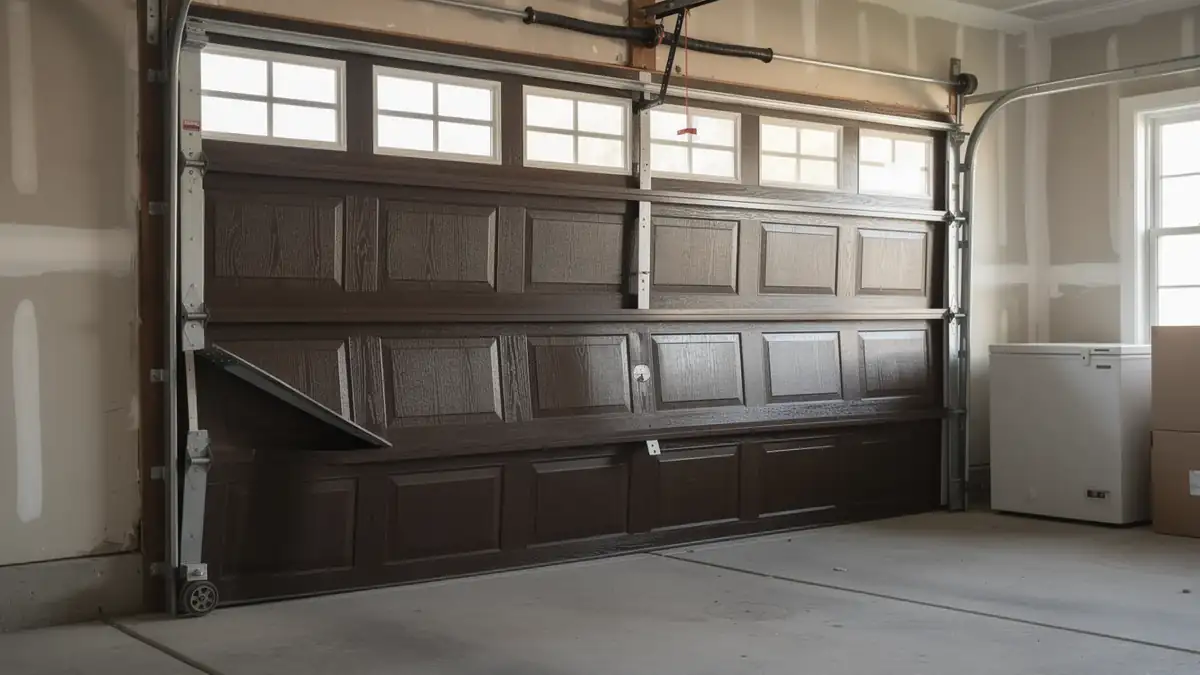
Most off-track doors we're called to in this area trace back to one of three things: a bent track from something hitting it (a mirror, a bike, a trailer tongue), a broken cable letting one side of the door drop while the other stays up, or worn rollers that have gotten sloppy enough to walk sideways out of the rail. On houses from the 1960s and 70s stock that makes up most of this area, we also see galvanized track that's simply fatigued - thin-gauge steel that was standard then, not built for forty years of twice-daily cycling.
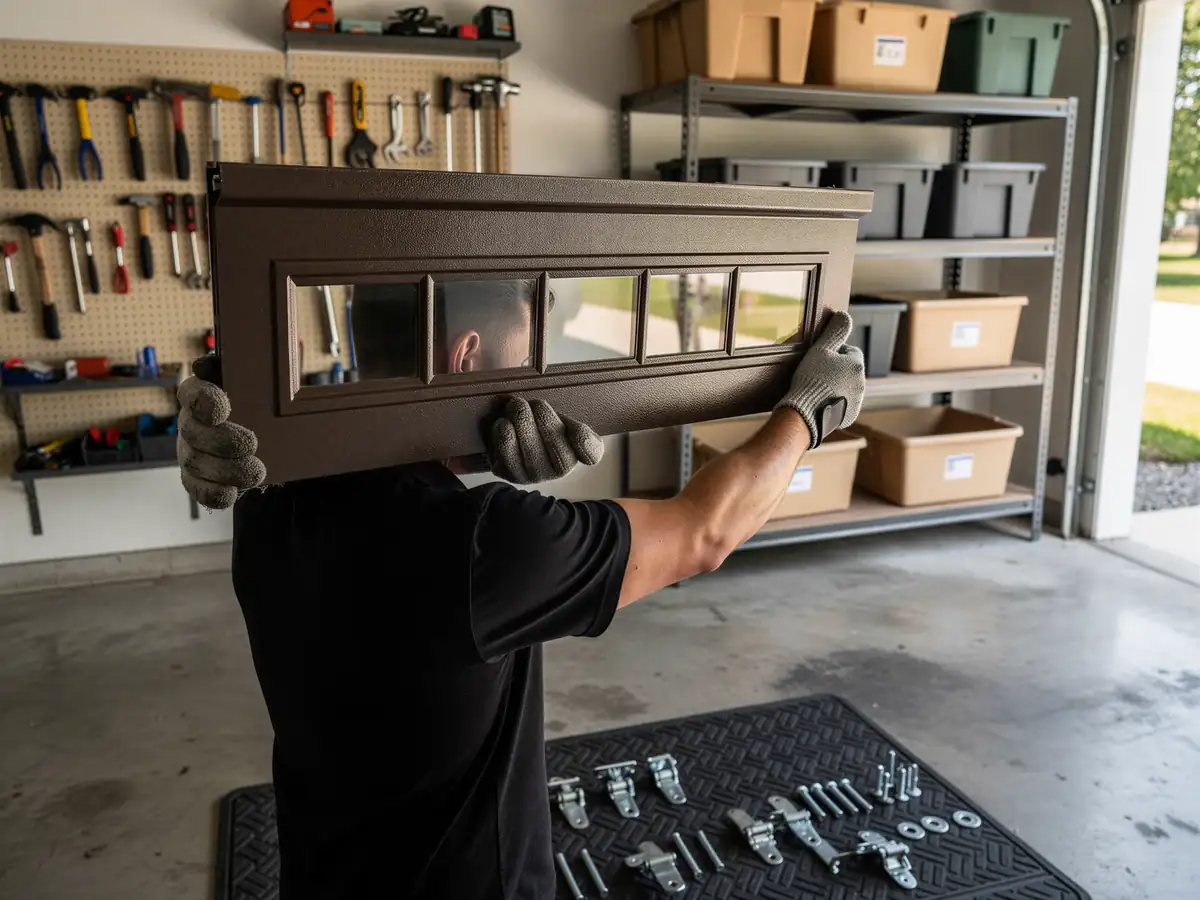
We don't straighten bent track and call it fixed. Bent steel work-hardens at the bend point, and it will bend again at the same spot under load, usually within a season. If a section's kinked, we replace that section. That's the honest call even when a customer would rather save the cost of the part - a patched track doesn't hold up, and we'd rather tell you that up front than have you call us back in six weeks with the same door on the floor.
Season by Season
This area sits in a cold-severe climate band
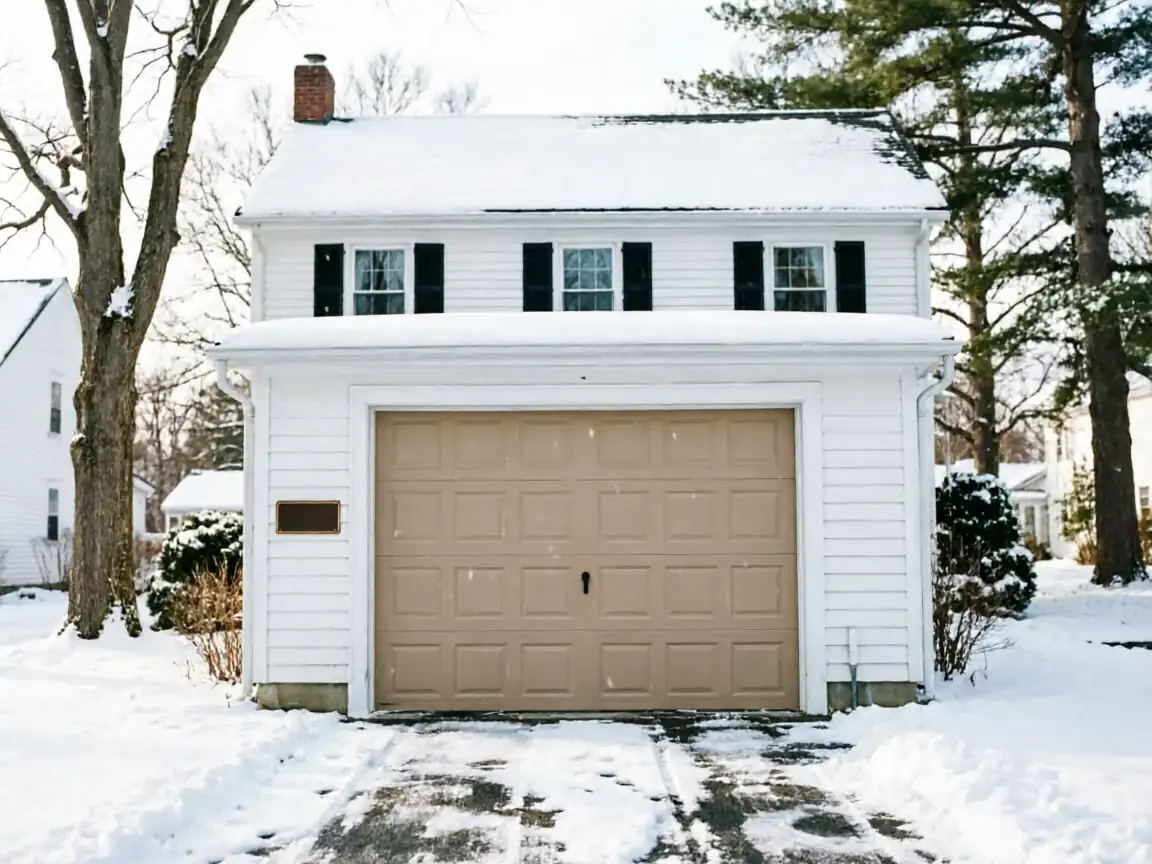
And that matters for track alignment in a specific way: steel contracts in deep cold, and a track that was shimmed loose in August can develop just enough play in January for a roller to walk out of it on a hard stop. We see the jump in off-track calls start once nighttime temperatures hold below freezing for stretches, not on the single coldest day of the year - it's the repeated freeze-thaw cycling that loosens fasteners, not one cold snap.
Spring brings the opposite problem
Frost heave over winter can lift a slab edge a fraction of an inch, and a door that ran fine in December catches on the bottom track come April once the ground settles unevenly. Summer and fall are when we do most of our inspection work, because that's when a loose bracket or a slightly bowed rail is easiest to catch before the cold makes it worse. If your door's been rubbing or chattering on one side, don't wait for winter to deal with it.
What You Pay
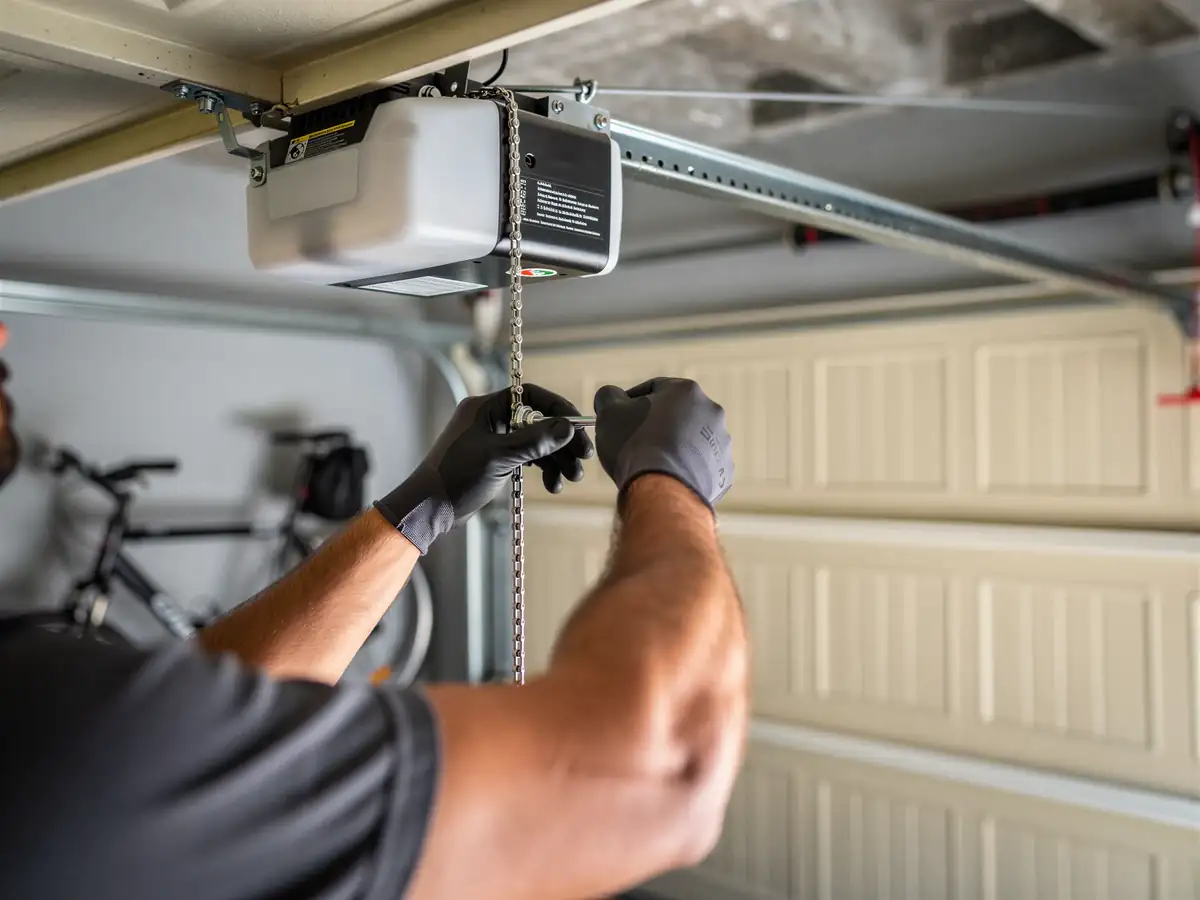
We don't have a flat number to quote here without seeing the door - a bent section of track, a bracket, and a full track replacement are three different jobs with three different parts costs, and median household income in this area runs well above the state figure, which doesn't change what the steel costs. What we can tell you is what drives the price: whether it's one section or the whole run, whether the opener's travel limits need resetting after, and whether the rollers need replacing at the same time, since putting new track under worn rollers just moves the failure point.
If you're not sure whether what you're hearing is a track problem or something else, we can usually tell from a short description over the phone - a grinding noise low on the door reads different from a door that's visibly crooked in the opening.