What Local Conditions Do
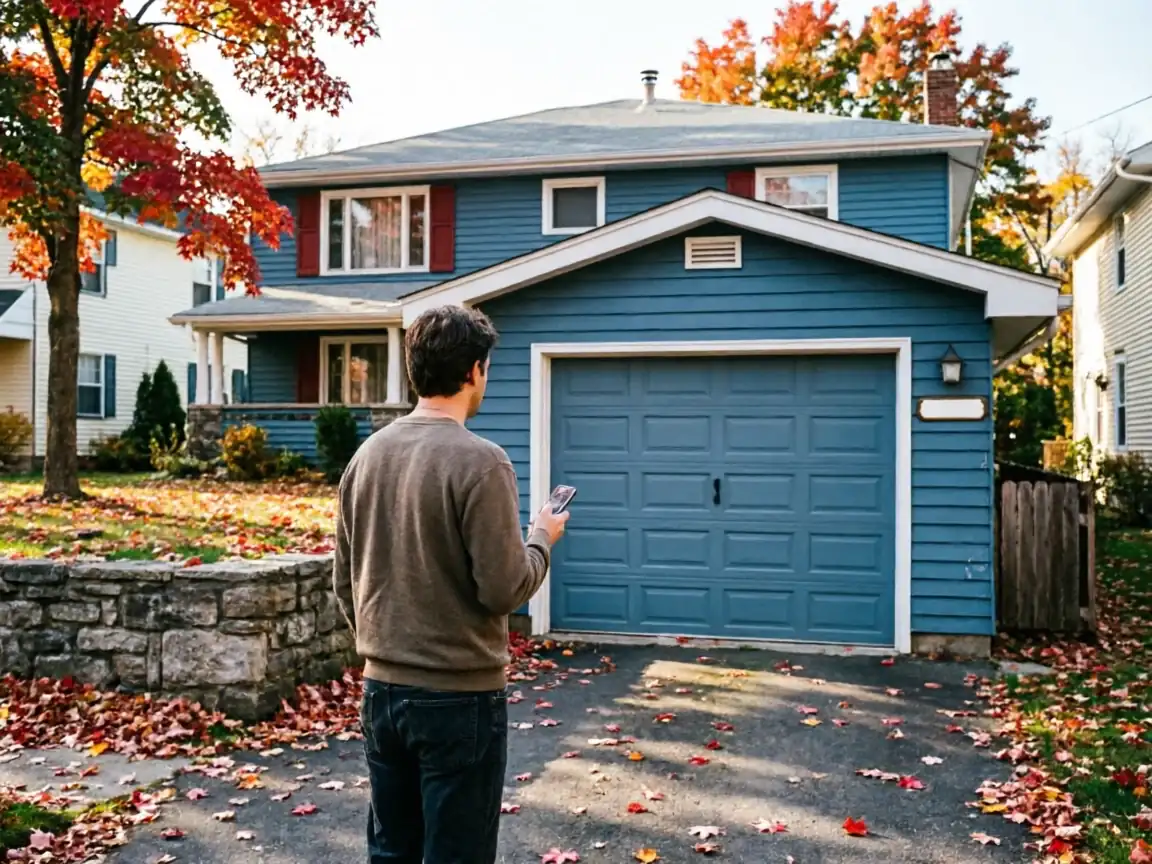
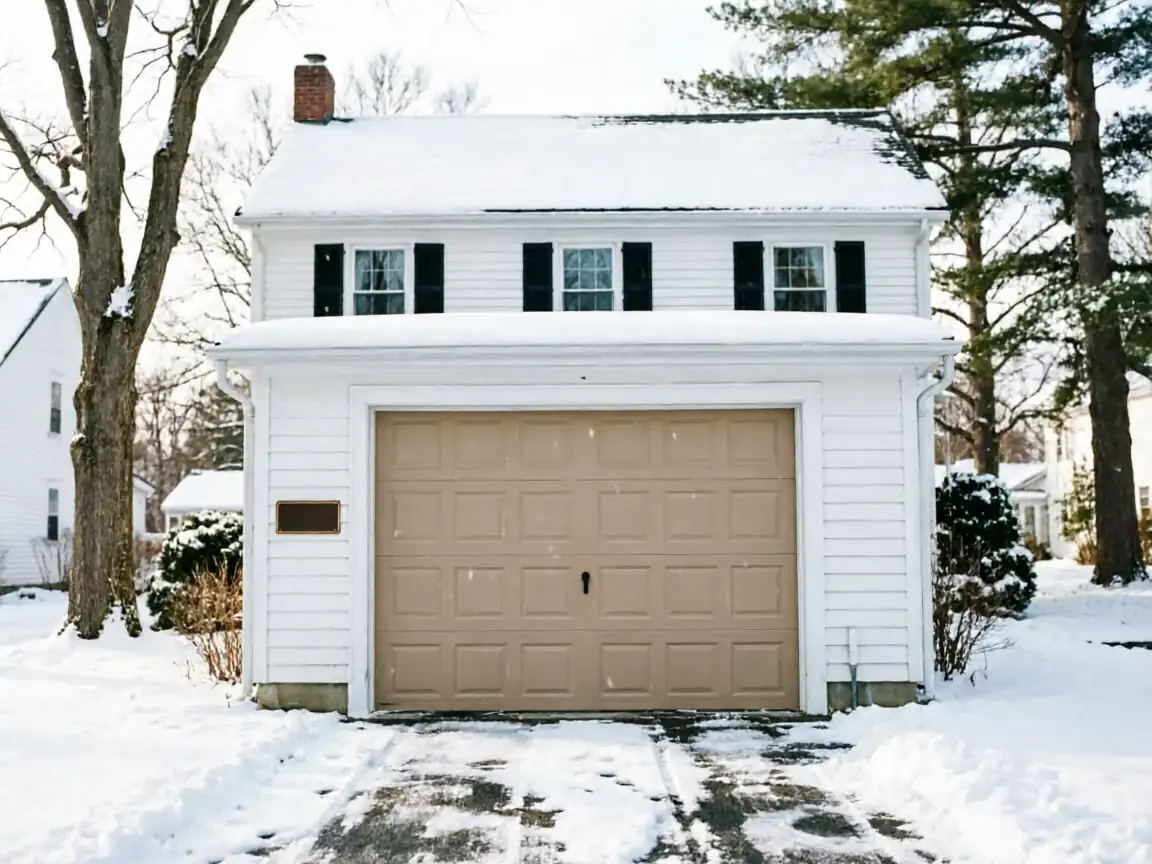
Hudson sits in a climate band the federal data classifies as cold and severe. That's not marketing language - it means bigger temperature swings between a January morning and whatever the furnace pushes into an attached garage, and it means spring steel, cable, and hardware that expand and contract more than they would in a milder zone. A torsion spring doesn't care what town it's in, but it does care how many freeze-thaw cycles it's lived through. Across this service area, most houses were built between 1938 and 1993, with the median landing around 1969, and most of that stock is concentrated in the 1960s and 70s wave. That matters because a door and opener installed during that build-out, or a replacement put in a decade or two later, is now old enough that its hardware tolerances, its spring gauge, and sometimes its track width don't match what gets sold off the shelf today. Local conditions here aren't really about Hudson weather being dramatic - they're about an older housing stock meeting a climate that's hard on steel and rubber year-round. That's the starting point for almost every call we get.
What Is Going On
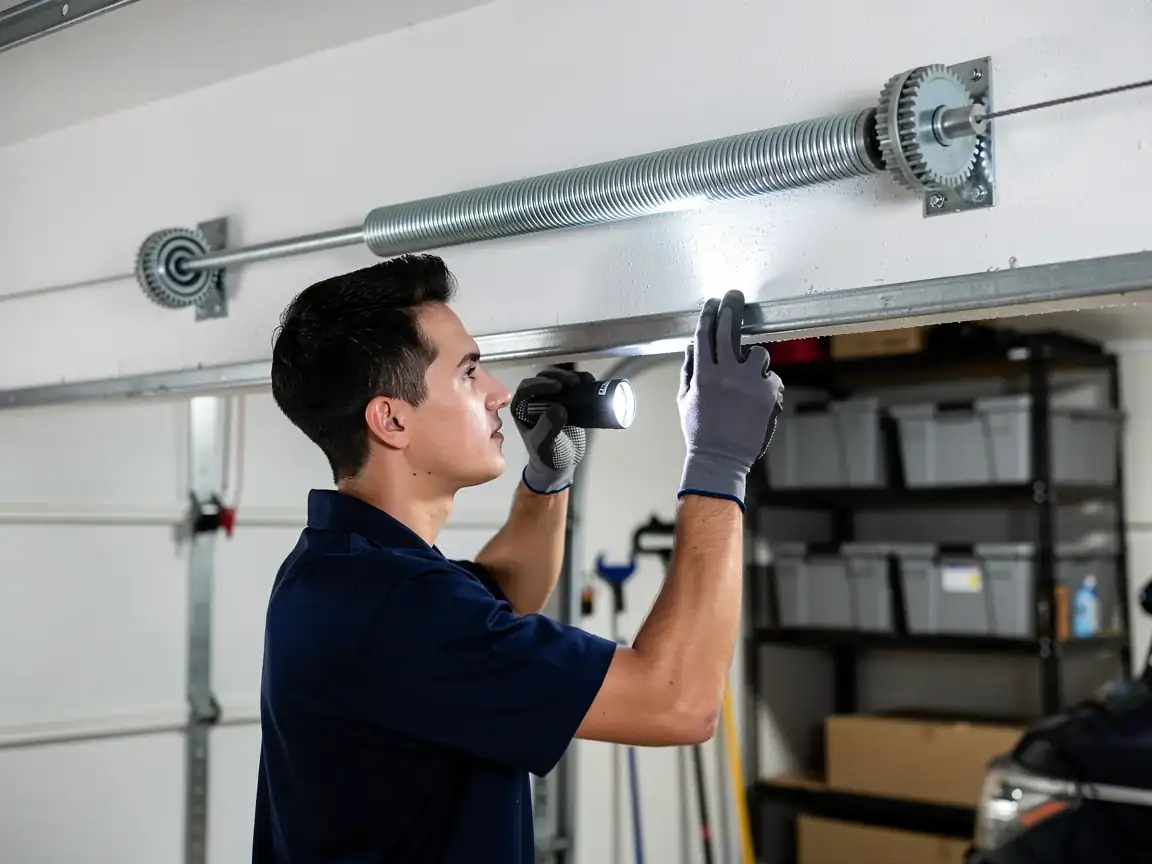
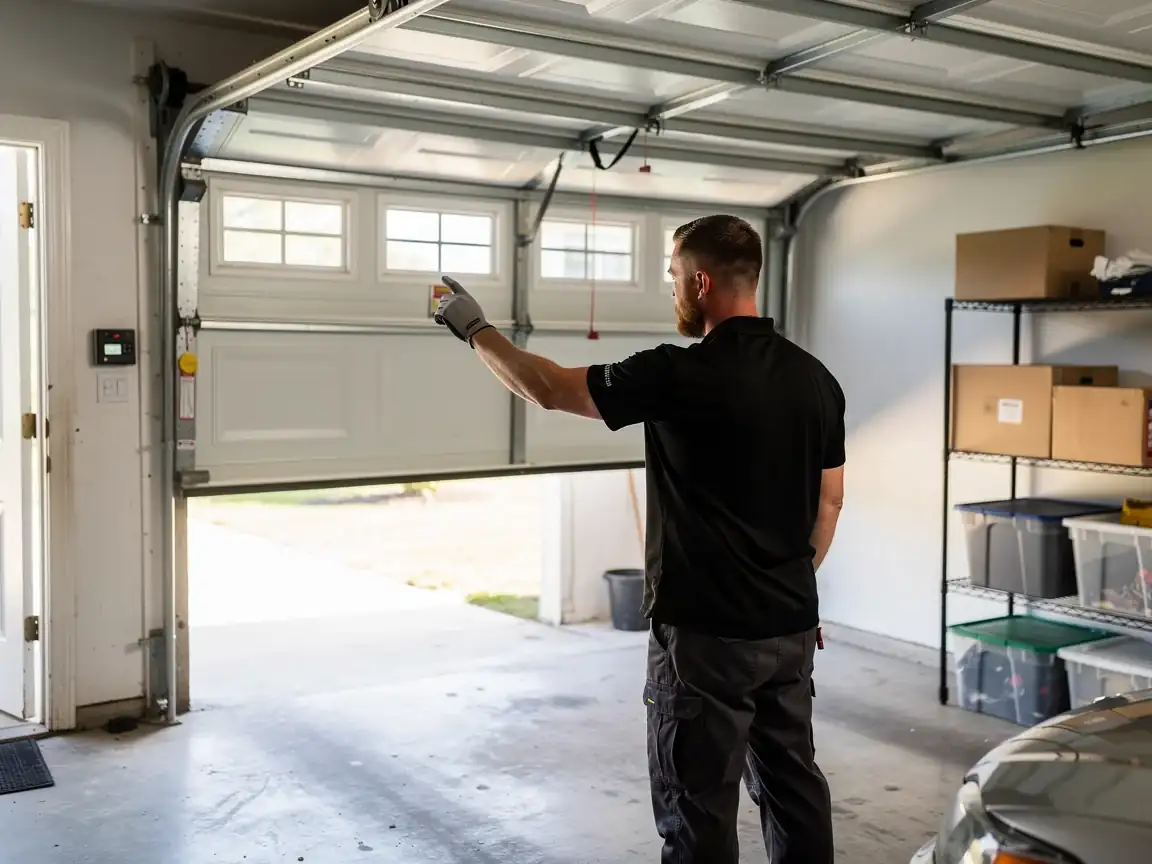
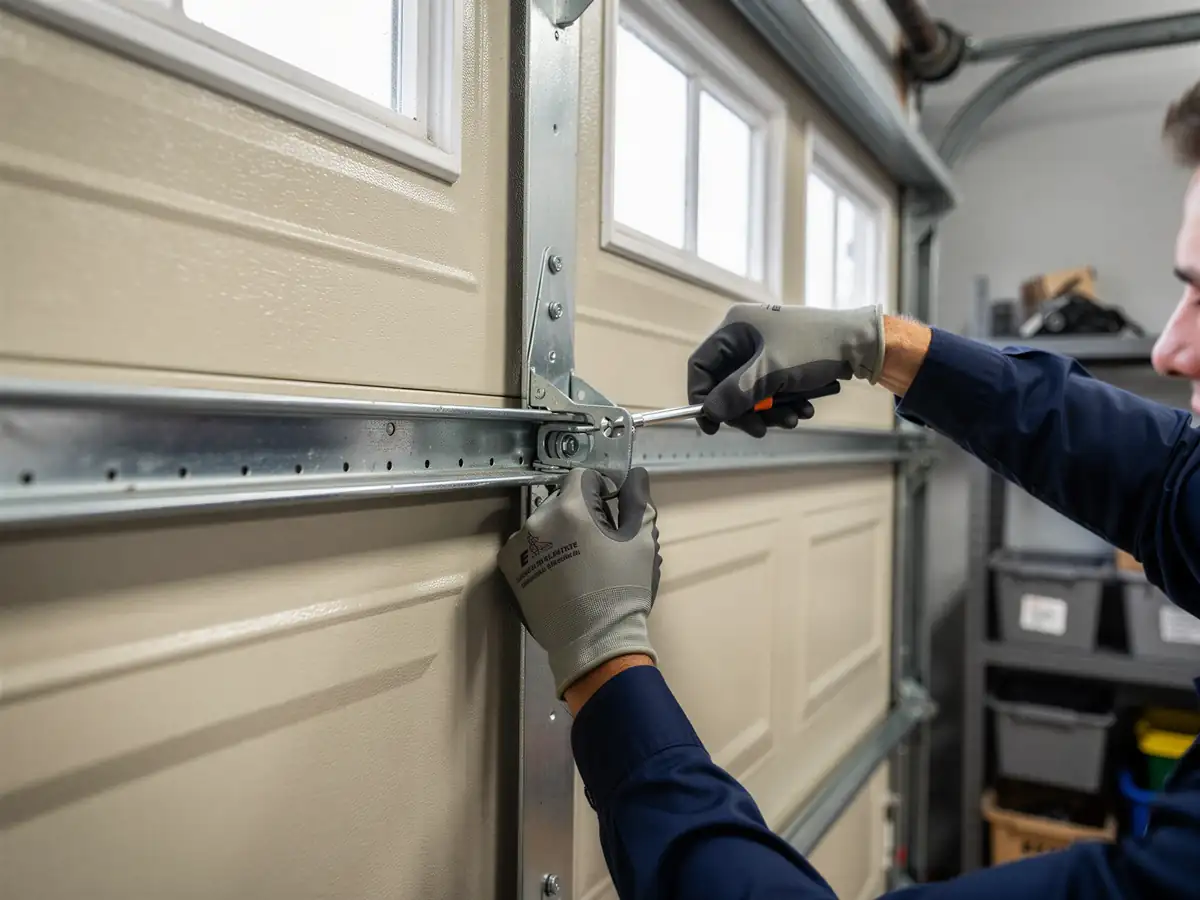
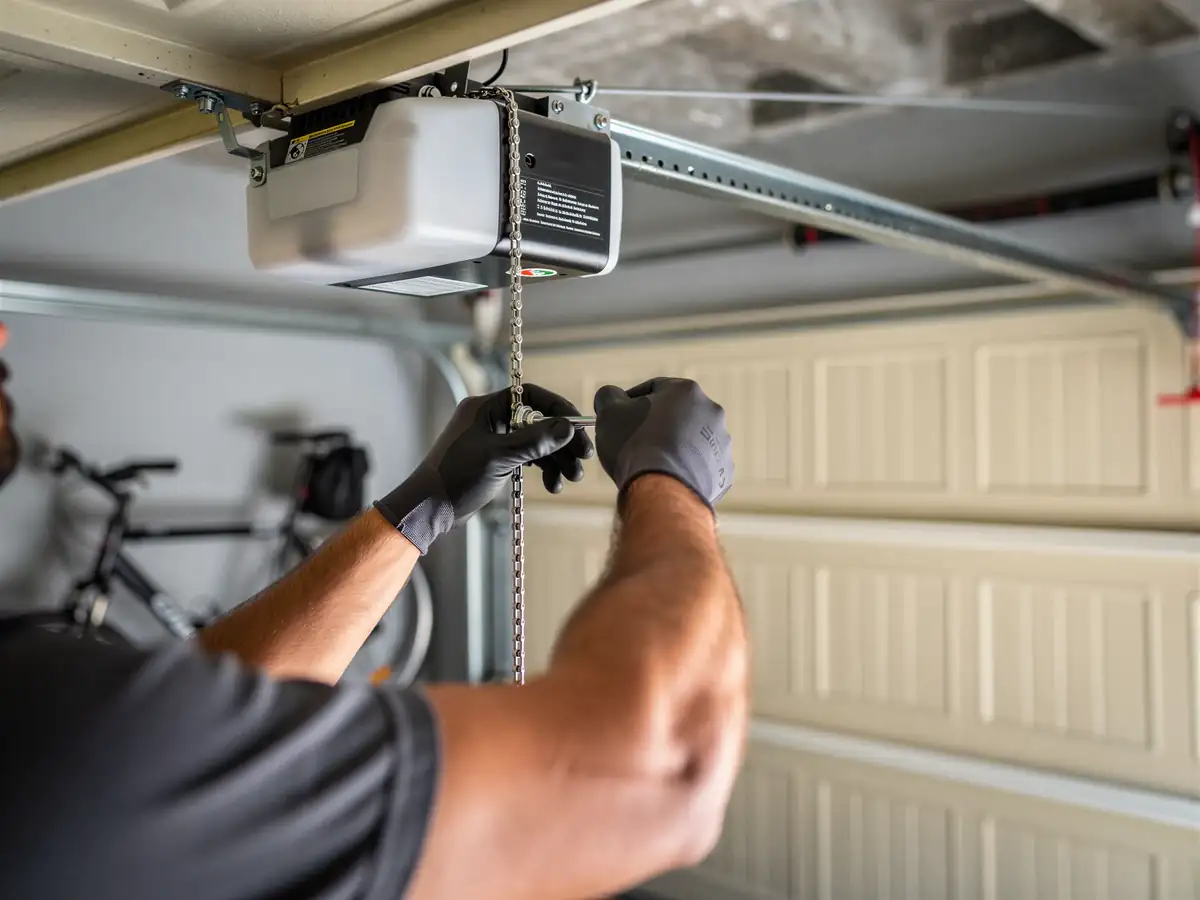
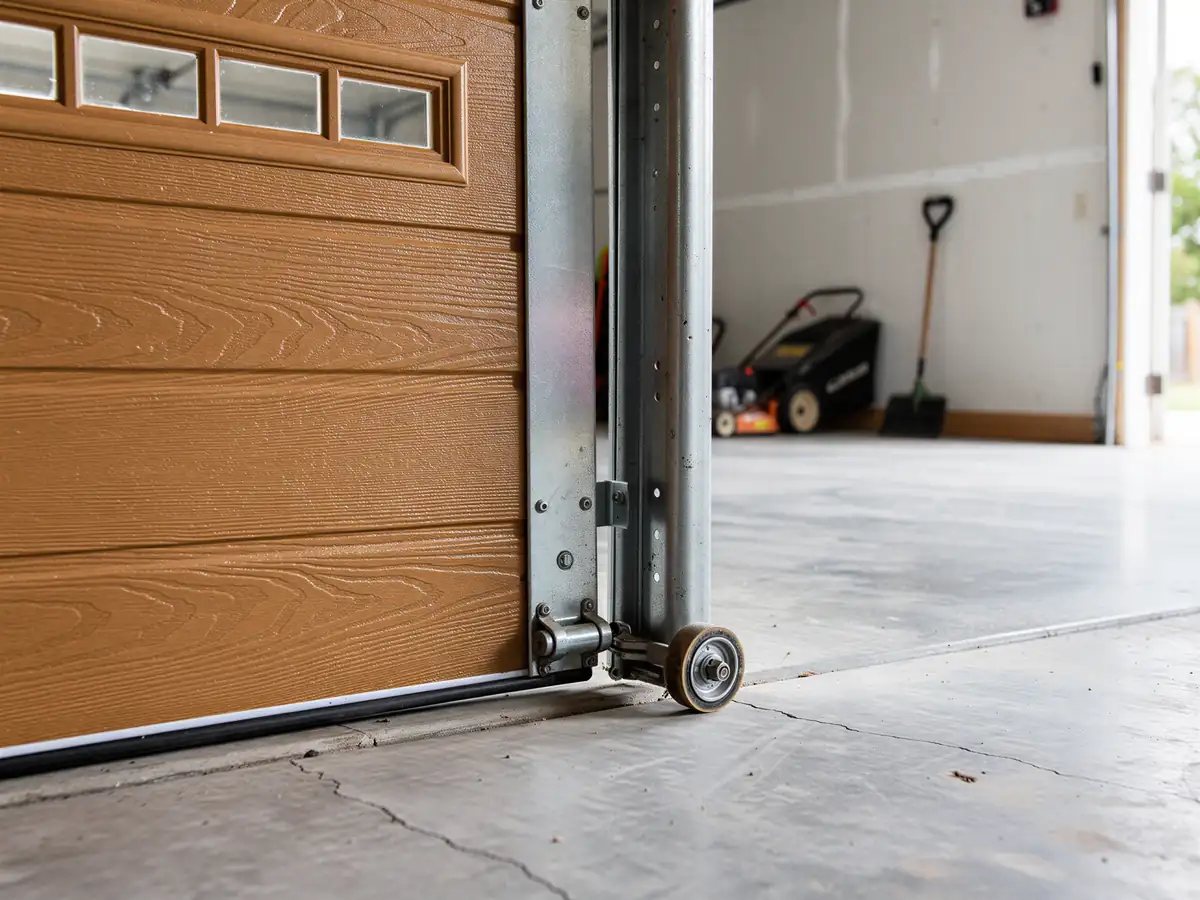
Walk a street in a neighborhood built in that 1960s-70s window and you'll find a lot of doors still on their original torsion hardware, or on a first-generation replacement from whenever the original finally gave out. With 69,298 owner-occupied houses out of 111,565 households across the area, that's a lot of garages that haven't been touched since the door went in. The common failure we see isn't exotic: a torsion spring that's cycled past its rated life, a cable that's frayed at the drum from years of cold-stiffened movement, or rollers that were fine in a mild fall and start binding once the cold sets in and the track contracts slightly. On older openers, the gear sets wear out around the same age the springs do, so both fail inside a year or two of each other. We don't see a lot of exotic failures here - we see ordinary parts that have simply done their job for longer than they were built to, in a climate that doesn't go easy on them. If your door is making noise it didn't make last winter, that's usually not new; it's the same part finally losing its margin.
What You Pay
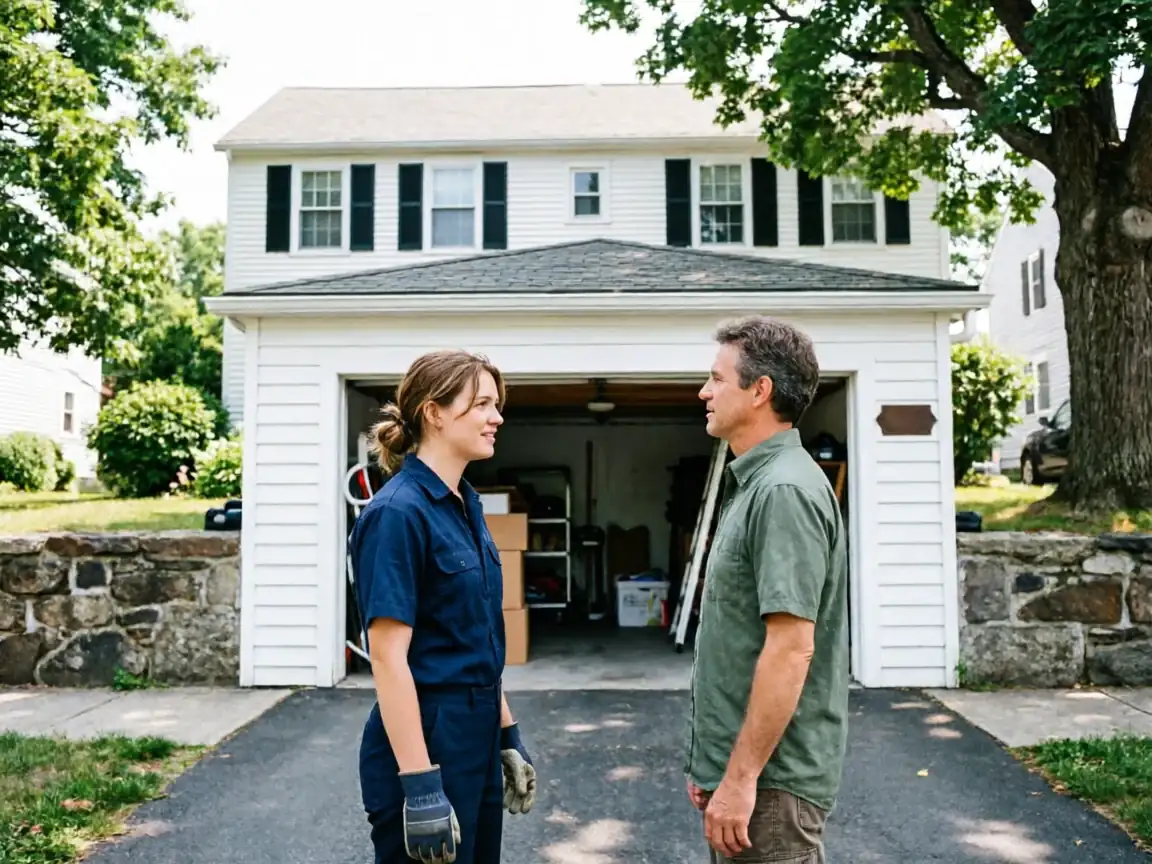
We don't have a flat number to put here, because what a job costs depends on what's actually on your house - the age of the hardware, whether the track or opener is original to a 1960s or 70s install, and whether parts for it are even still stocked. That's a real limitation: some older torsion assemblies and first-generation opener models take longer to source than a standard current part, and we'll tell you that up front rather than guess at a timeline. What we can say is that in a service area where median household income runs around $147,635, most homeowners are weighing a repair against a full replacement on a door that's already decades into its life, not making that call on a brand-new installation. If your hardware predates the current parts generation, replacement often ends up cheaper over time than chasing down discontinued springs and cables piece by piece. We'll always look at the actual door before quoting anything - not the decade it was built in.