What Local Conditions Do
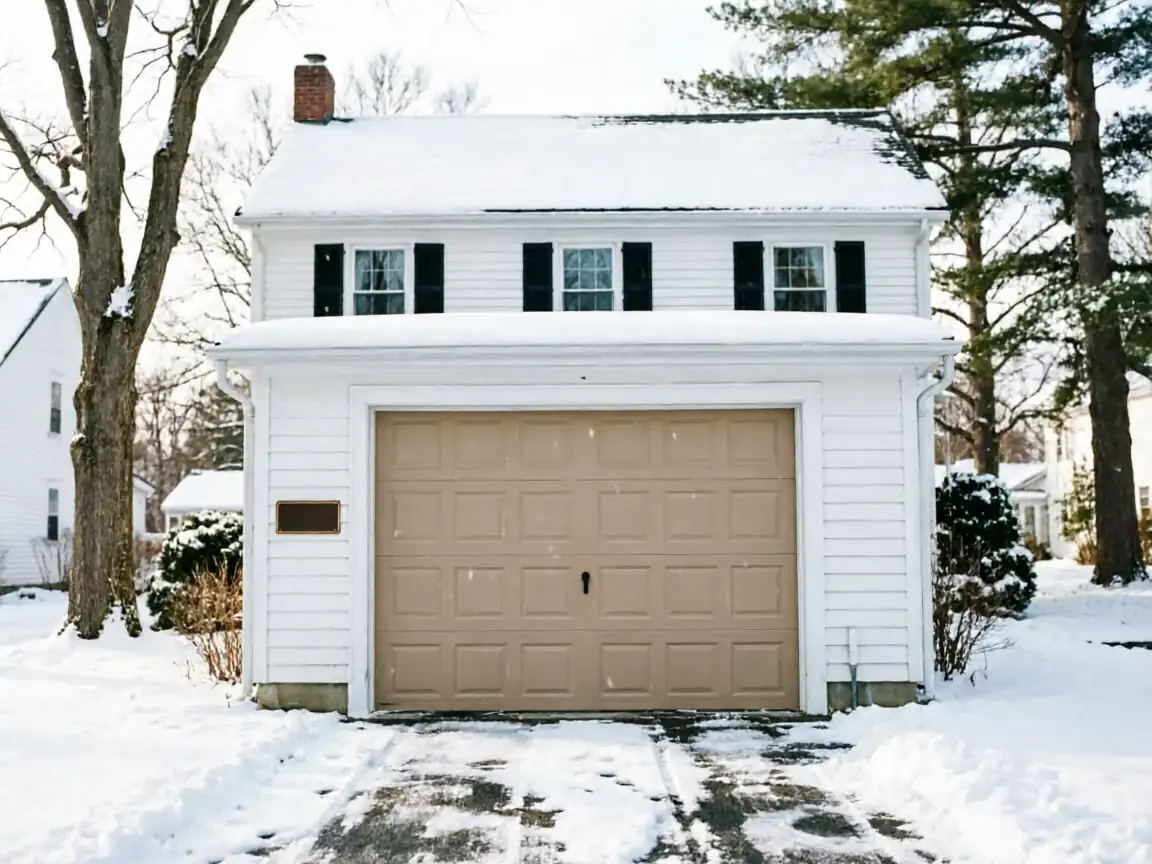
Hudson sits in a cold-severe climate band, and that matters more for a garage door than most people think. Steel contracts in deep cold, torsion springs lose a measurable amount of tension once temperatures drop and stay down, and the grease in an original cable drum or bearing plate thickens enough to make an opener strain on a cold start. None of that is dramatic on its own, but on a door that's already thirty, forty, fifty years old, it's the difference between a door that opens stiff and one that snaps a spring on a Tuesday morning.
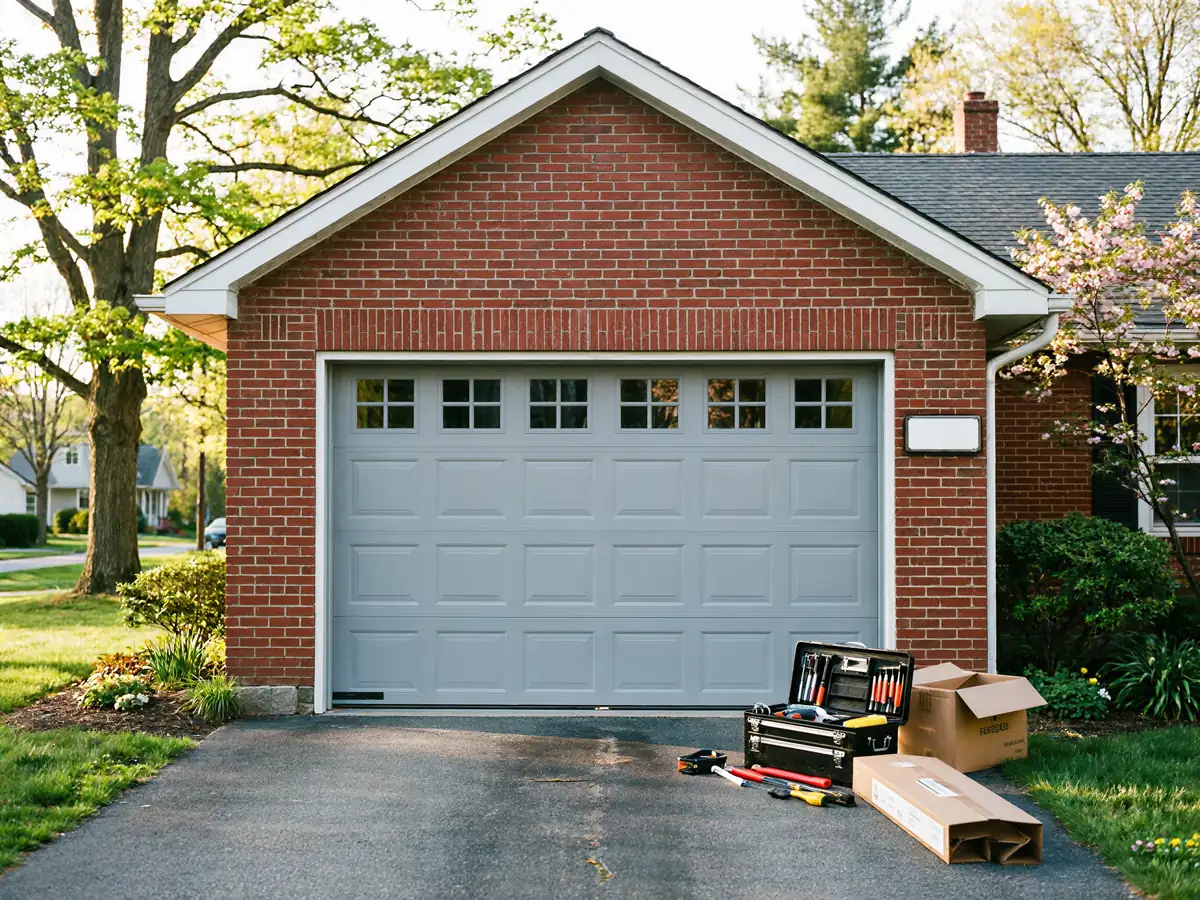
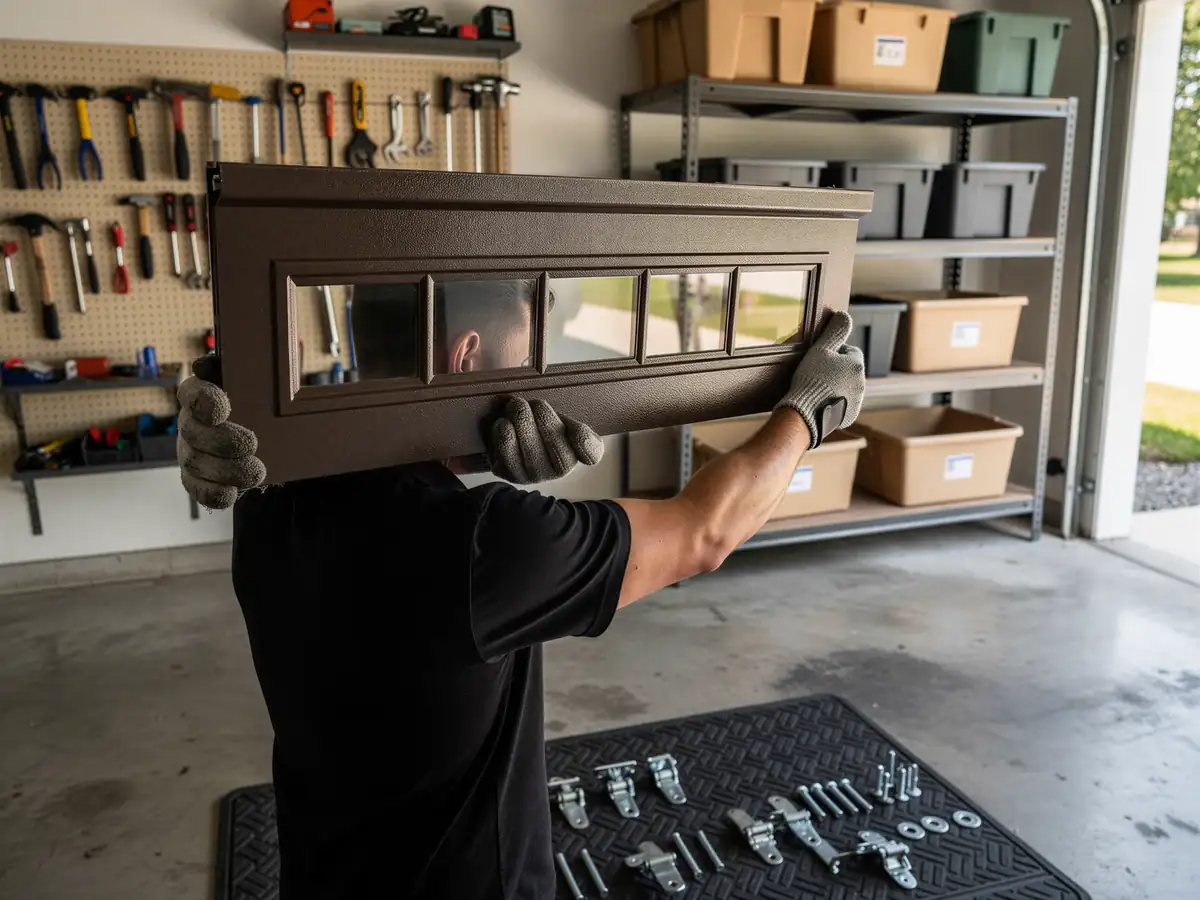
Most of the housing stock around here went up between 1938 and 1993, with the median landing right at 1969. That's a long run of houses built before double-wall insulated doors were standard, and a lot of them still carry the hardware that came with the house - sized for a lighter single-layer door, not the heavier replacement panel someone may have swapped in over the years without re-balancing the spring. Cold doesn't create that mismatch. Cold exposes it.
What Is Going On
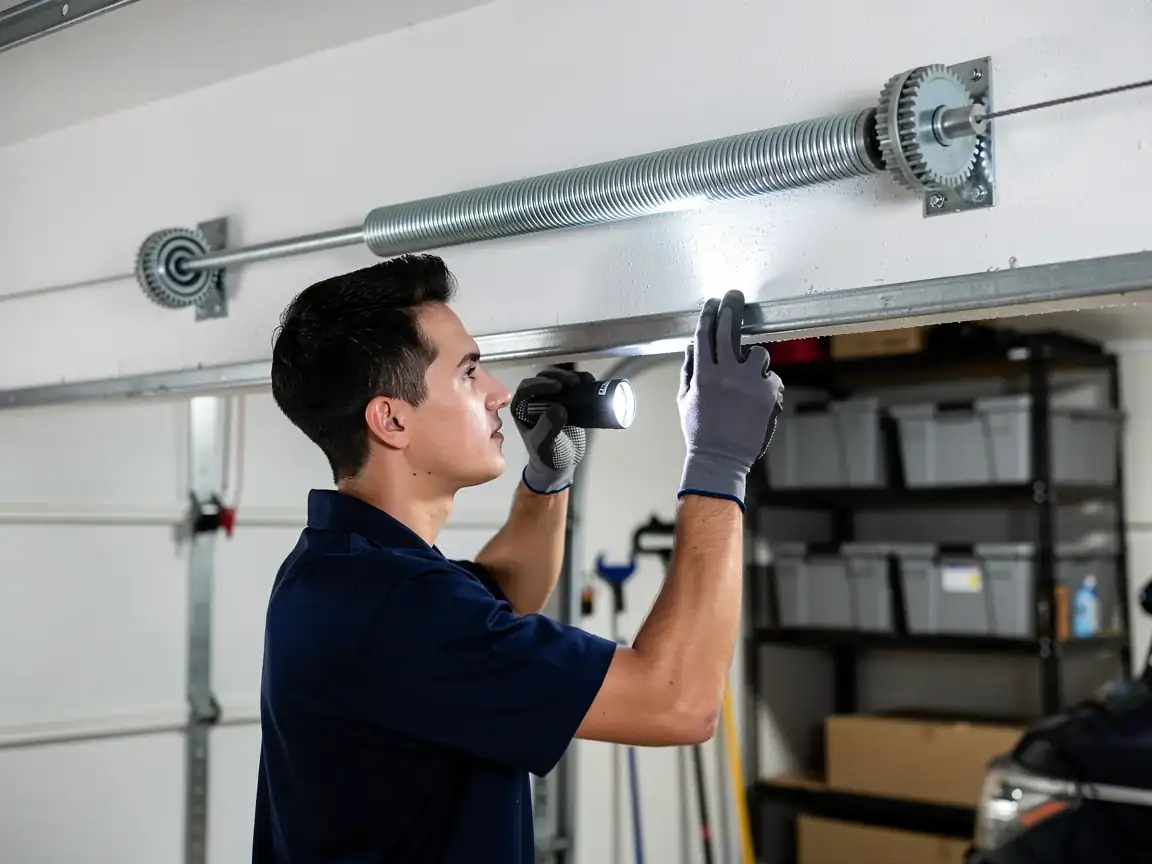
With most of the local stock dating to the 1960s and 70s, the common failure pattern isn't random - it's generational. A lot of these garages still have the original torsion spring from the house's construction, and torsion springs have a duty-cycle life measured in thousands of open-and-close cycles, not years. A door from 1969 has had a lot of those cycles by now, and cold makes a tired spring more likely to let go rather than just wear slowly.
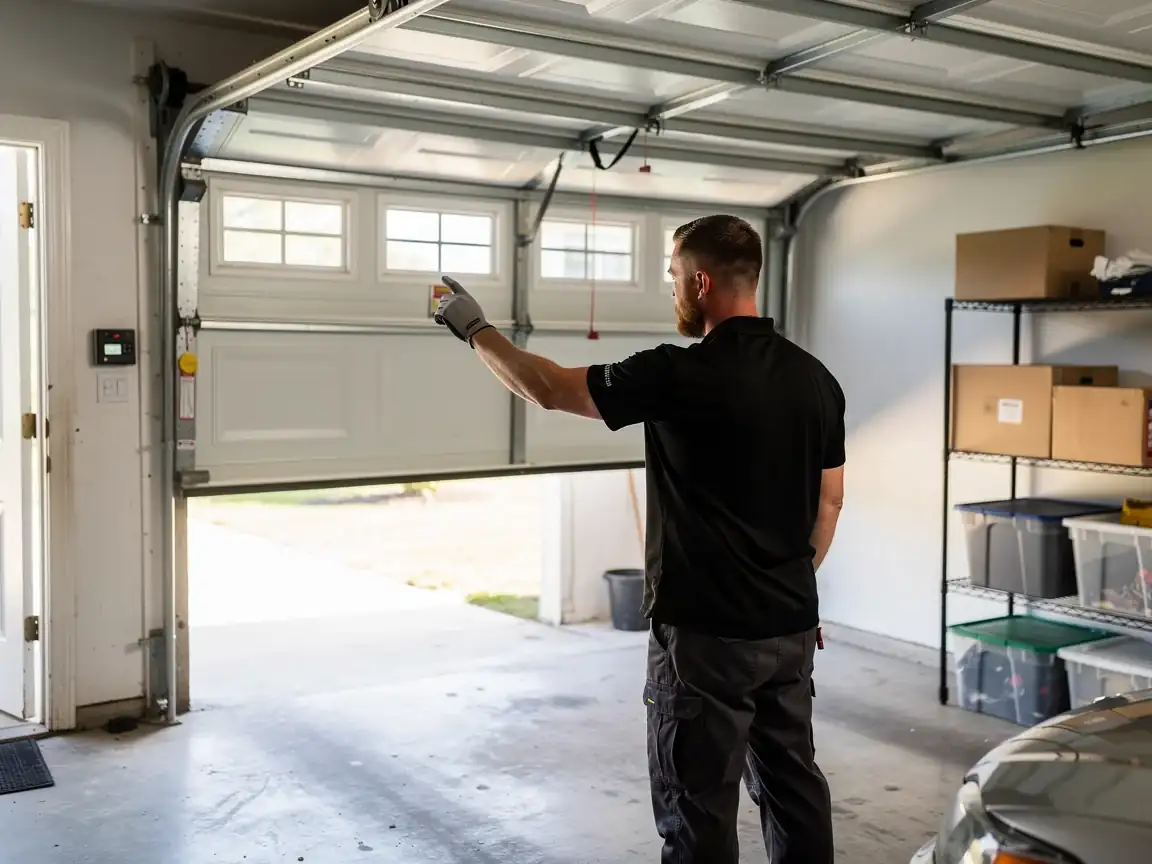
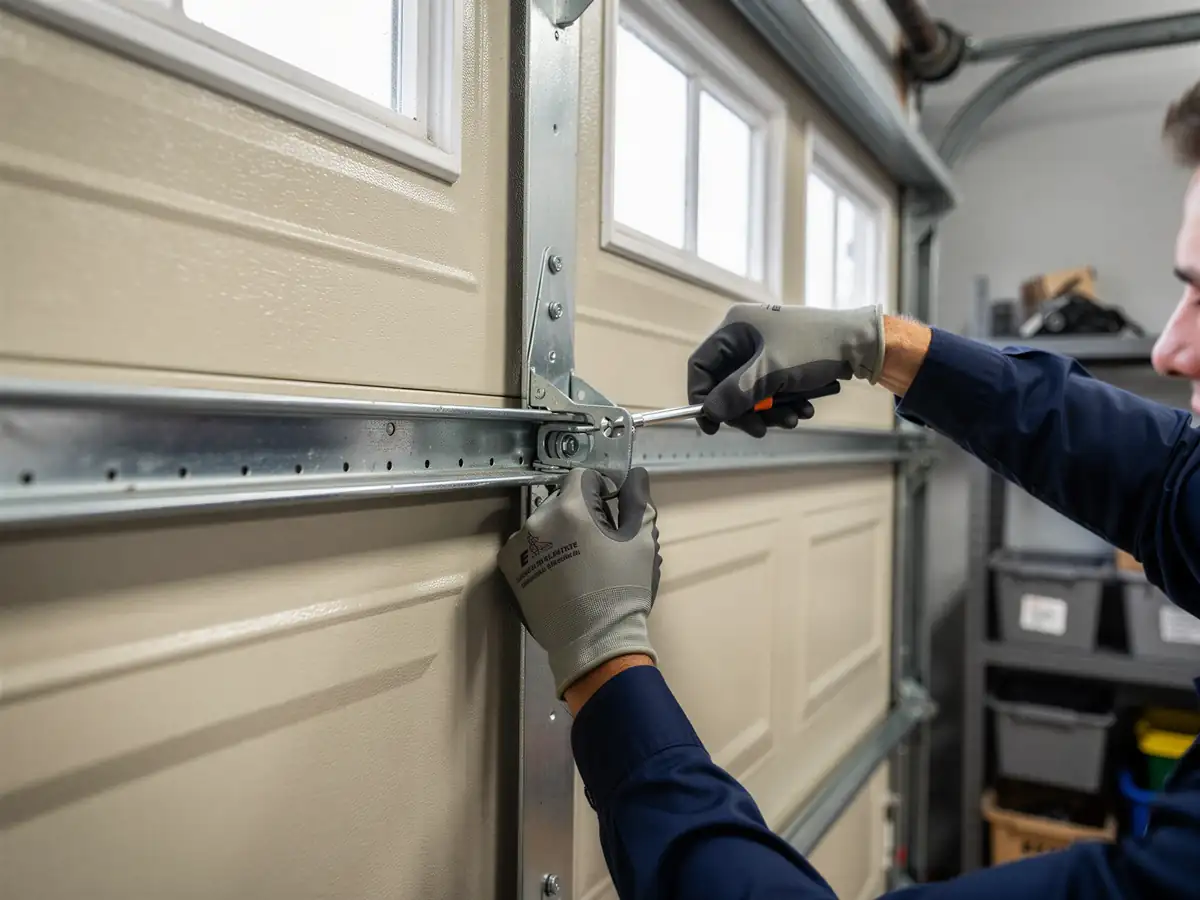
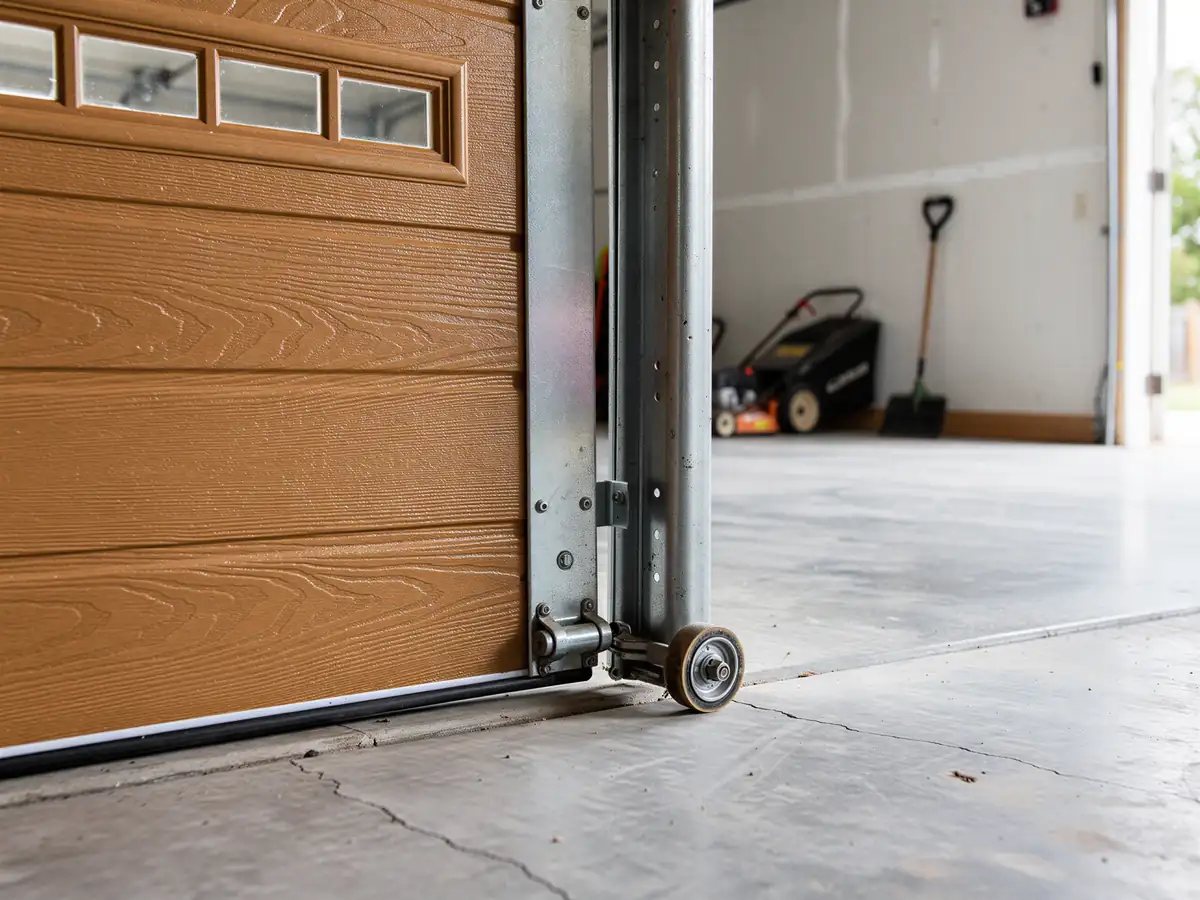
The other pattern we see tied to this era is the door itself. Many of these are single-layer steel, uninsulated, with no thermal break at the bottom seal - fine for decades, but in a cold-severe climate the panel skin contracts and expands enough each winter to loosen screws at the hinge and work rollers out of true in the track. That shows up as a door that rattles going up, or binds halfway, long before anything actually breaks. It's wear, not failure, and it's worth catching before it becomes the second kind.
Season by Season
Winter is when a spring goes in cold weather
That's the call we get most, usually first thing in the morning after a hard overnight drop, when a spring that's been losing tension all season finally lets go under a door that's heavier than it was ever rated to lift. It's rarely a surprise to anyone who's heard the door groan the week before.
Spring brings the freeze-thaw cycle
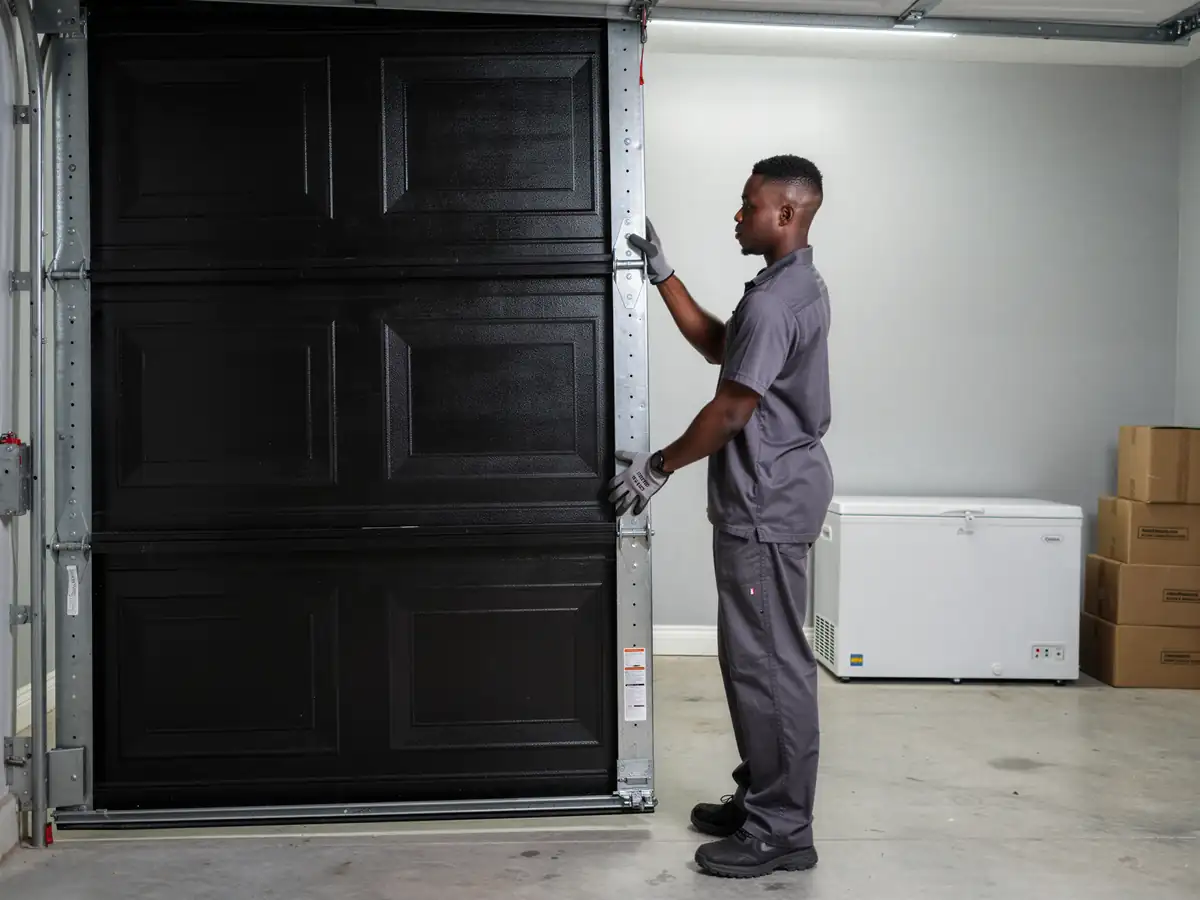
And on houses from this era that means jambs and header framing that shift slightly as ground moisture refreezes and releases. That throws the door's alignment in the track even when the hardware itself is fine - a door that closed square in January can bind in March.
Summer is the quiet season here, mechanically
Heat doesn't stress this hardware the way cold does.
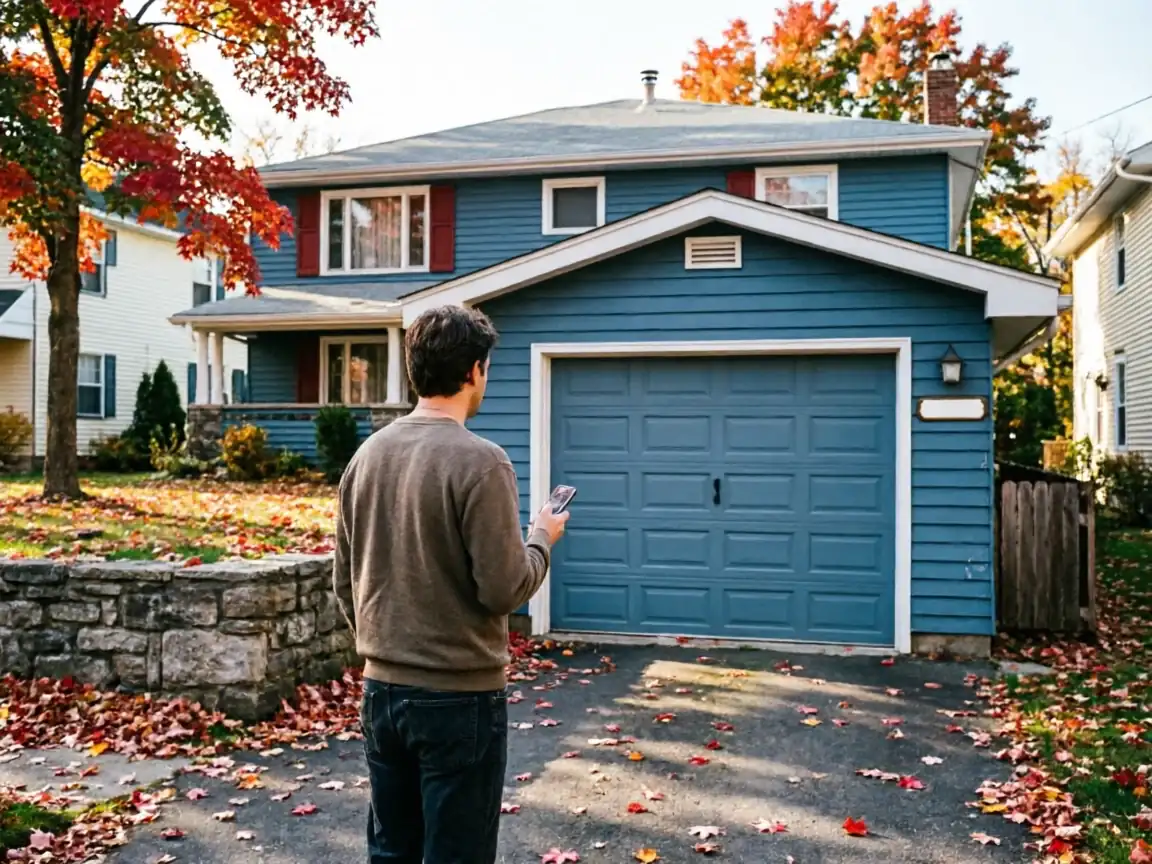
Fall is the one window to get ahead of it
Lubricate before the first hard freeze, and check spring tension while the steel is still at a temperature where it reads honestly, not already cold-stiffened.
What You Pay
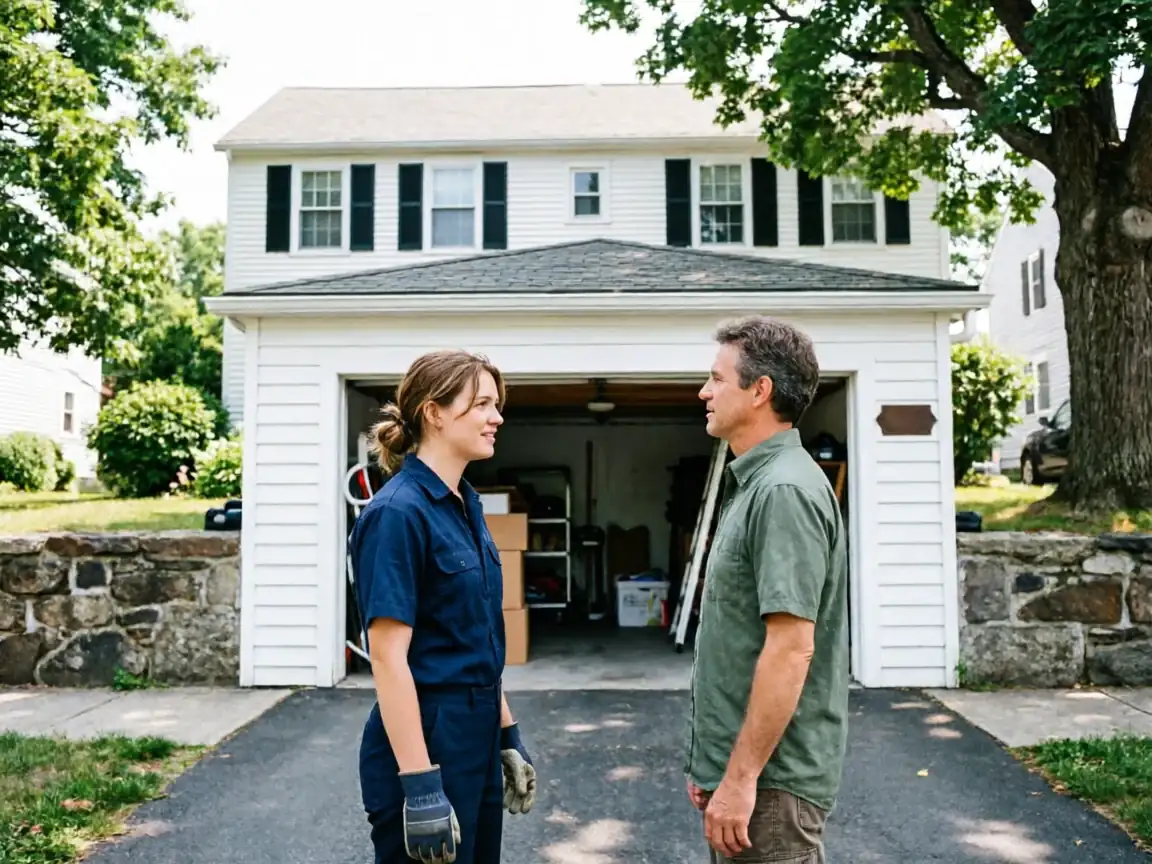
We don't have a flat number to quote here, and we're not going to make one up. What we can tell you is what drives the cost on a house like most of what's around Hudson: whether the original torsion spring is still in place (older gauge, often a straightforward swap) or whether someone's already upgraded the door without upgrading the spring to match the new weight, which is a bigger job.
The area's median household income sits at $147,635, and across the wider service area there are roughly 69,298 owner-occupied houses out of about 111,565 households - a lot of long-tenure homeowners who've had the same door and opener since they bought the place. That tends to mean deferred maintenance rather than neglect: a door that's been fine for years and then isn't, overnight.
One honest limit - if a door's frame or track has been bent from a car strike or the panel is badly rusted through, we'll tell you replacement is the better money, not a patch that fails again in a year.