How It Shows Up
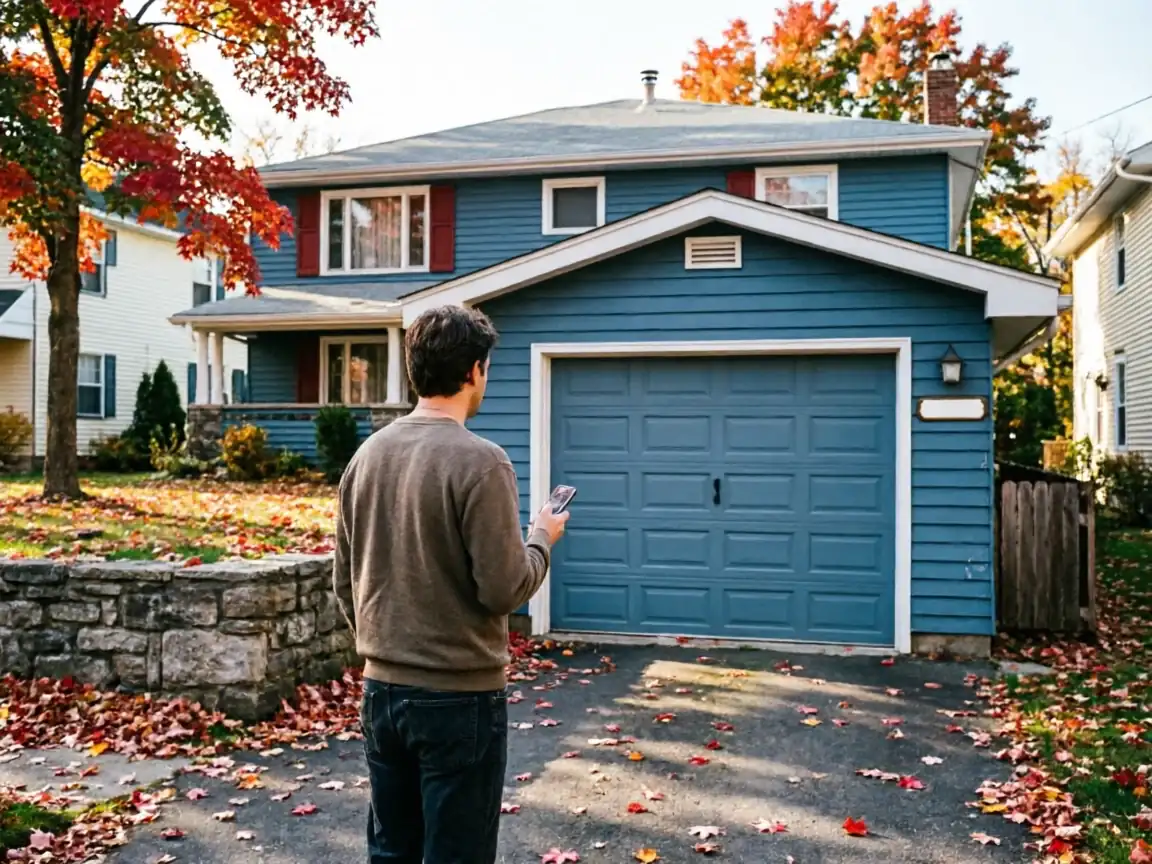
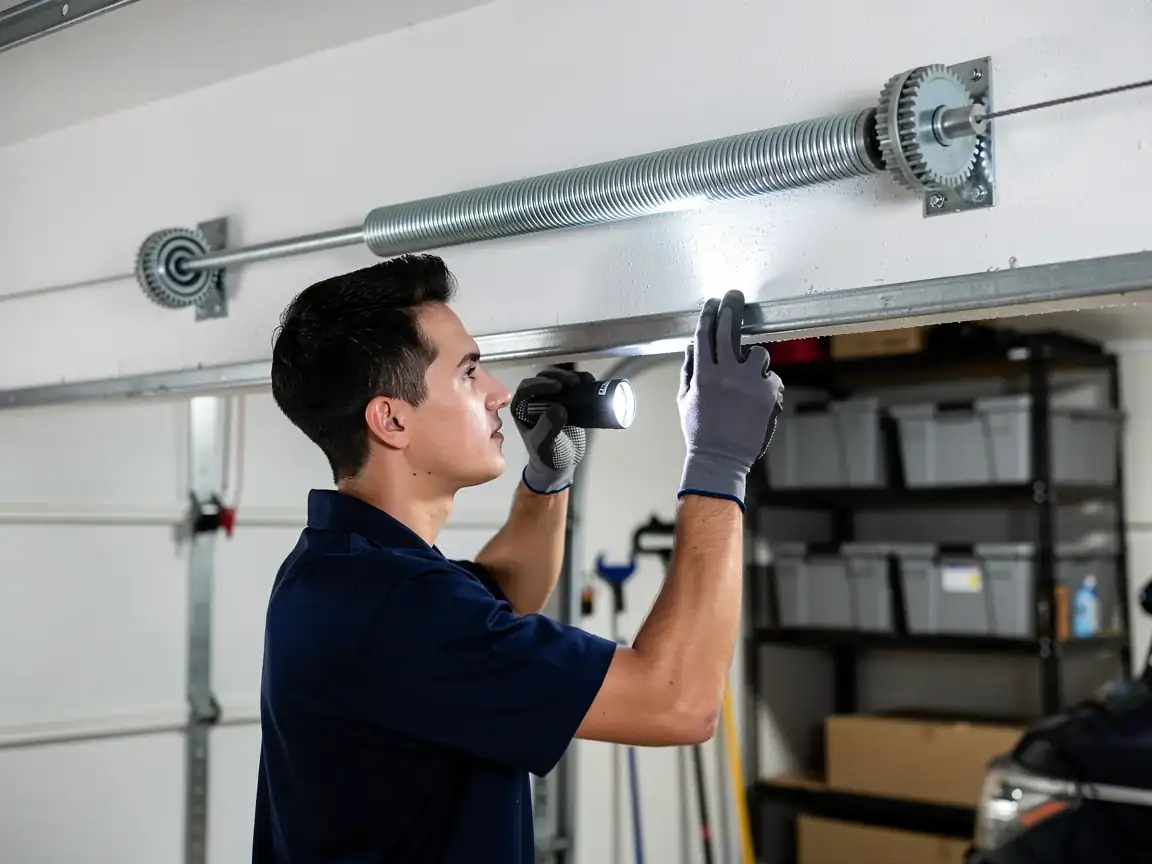
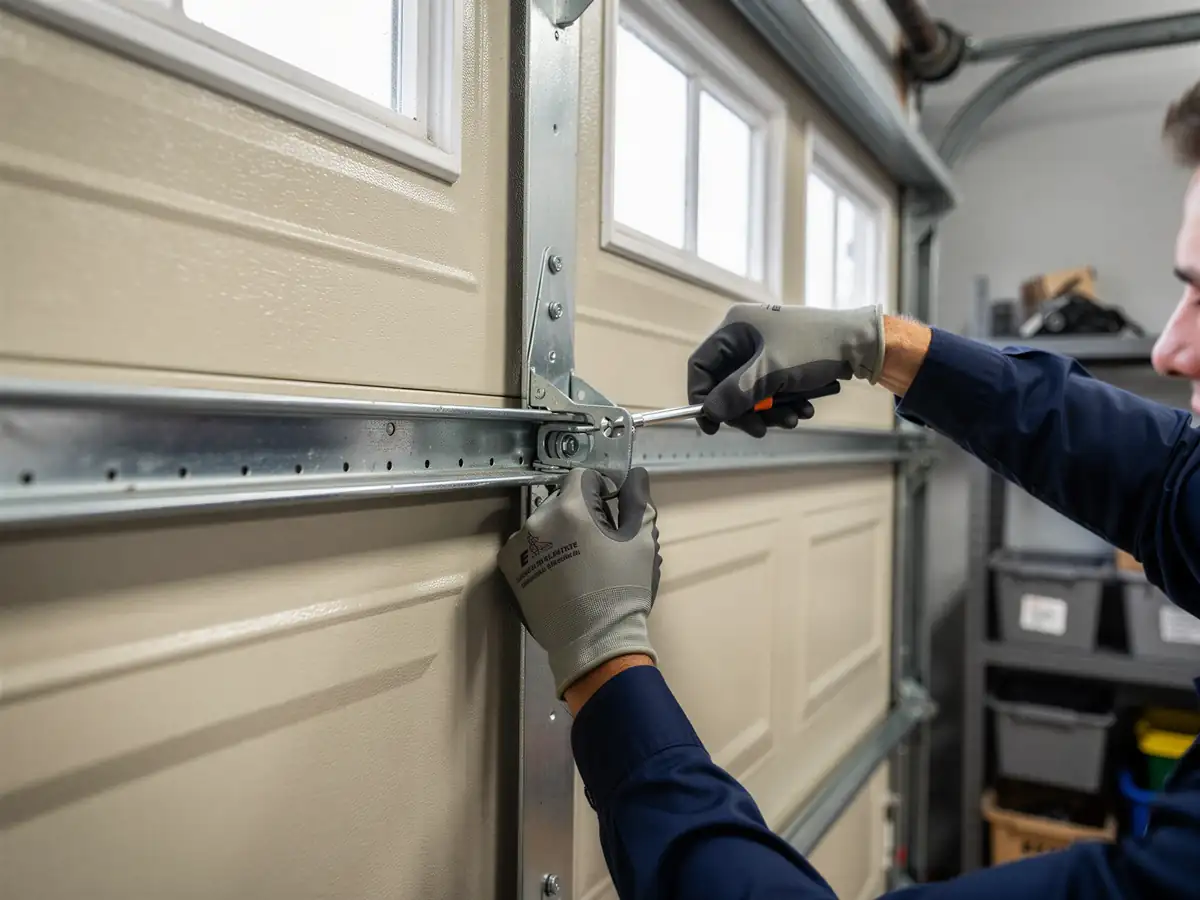
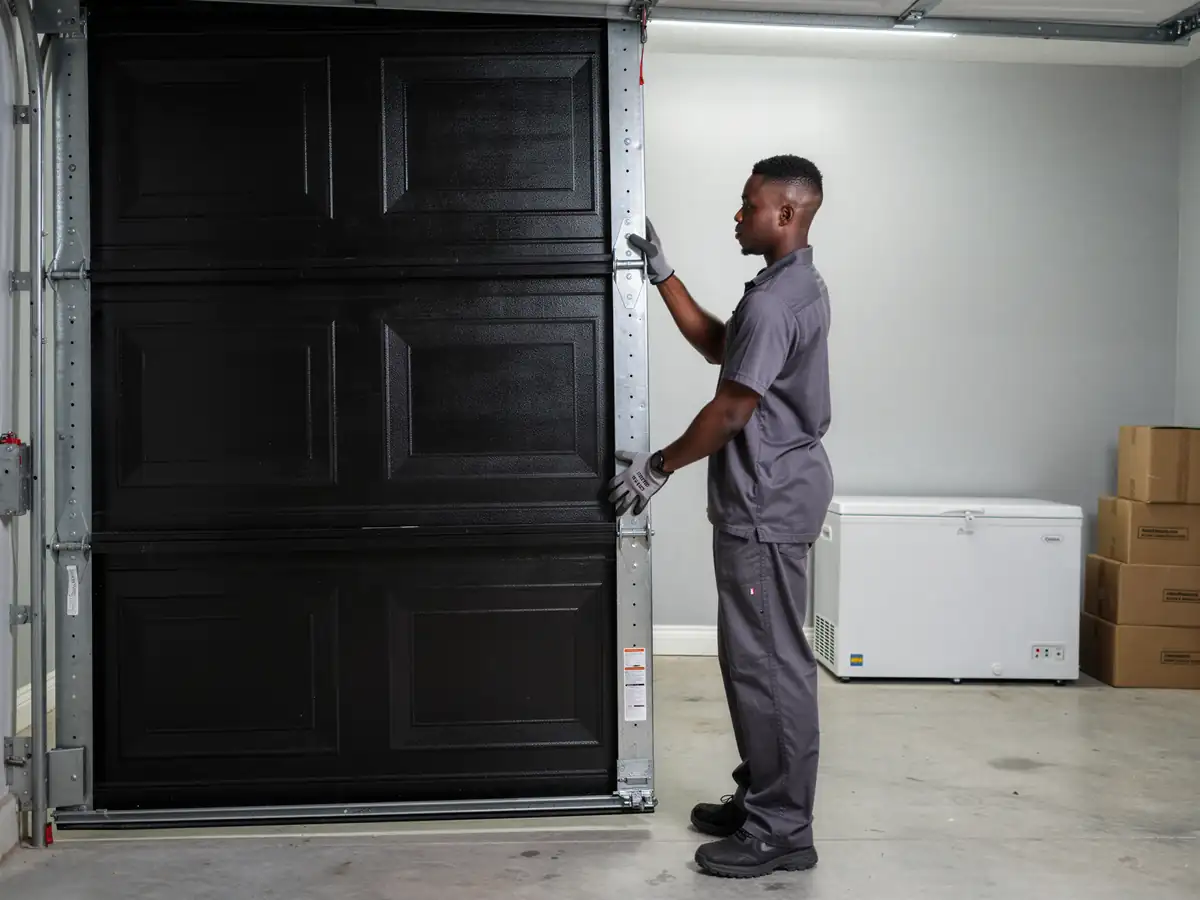
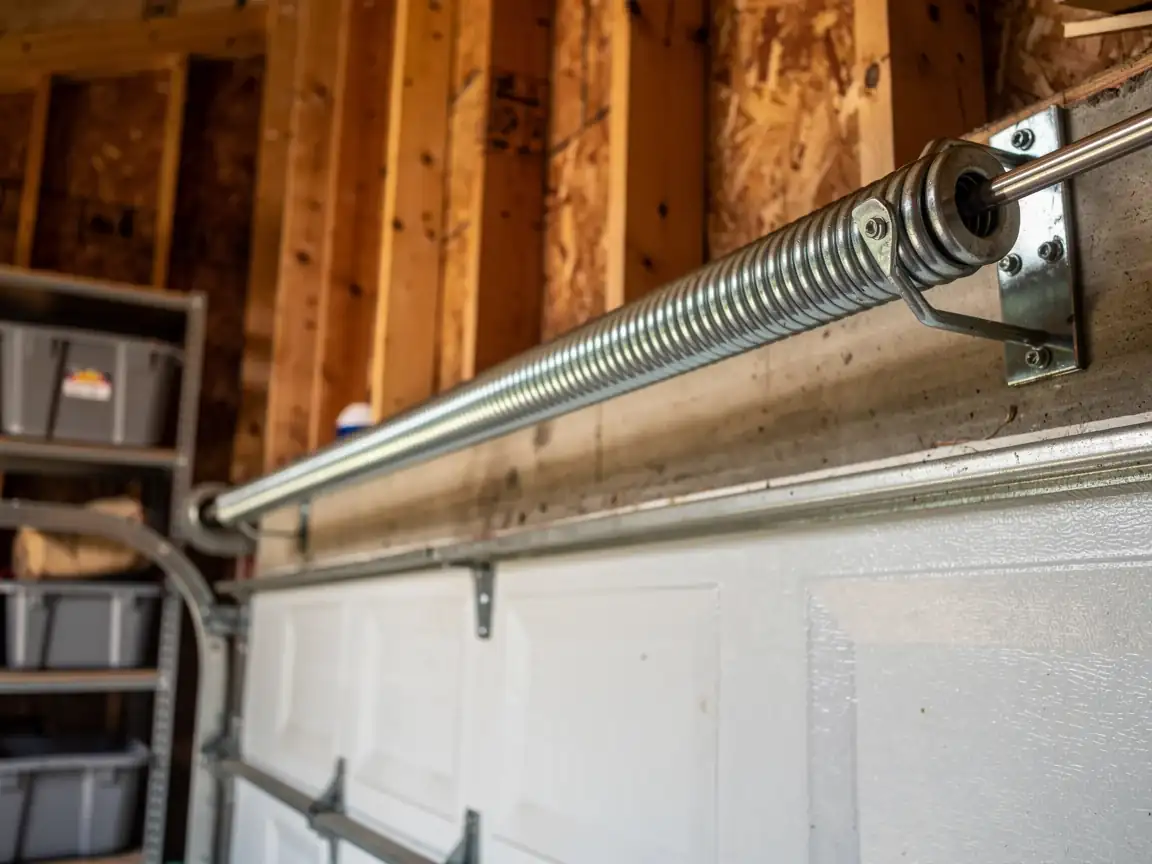
The call usually sounds the same: the door was fine last night, and this morning it won't move, or it's stuck halfway with a loud bang that happened on the way down. Most of the time that bang was a torsion spring letting go. Sometimes it's a cable that jumped the drum, or a track bent enough that the rollers won't ride it anymore.
In a service area where most houses went up between 1938 and 1993 with the median landing in 1969, a lot of garages still have the original spring and track setup, or a replacement spring installed decades ago that's simply at the end of its cycle count. That hardware doesn't send a warning. It holds, and then it doesn't.
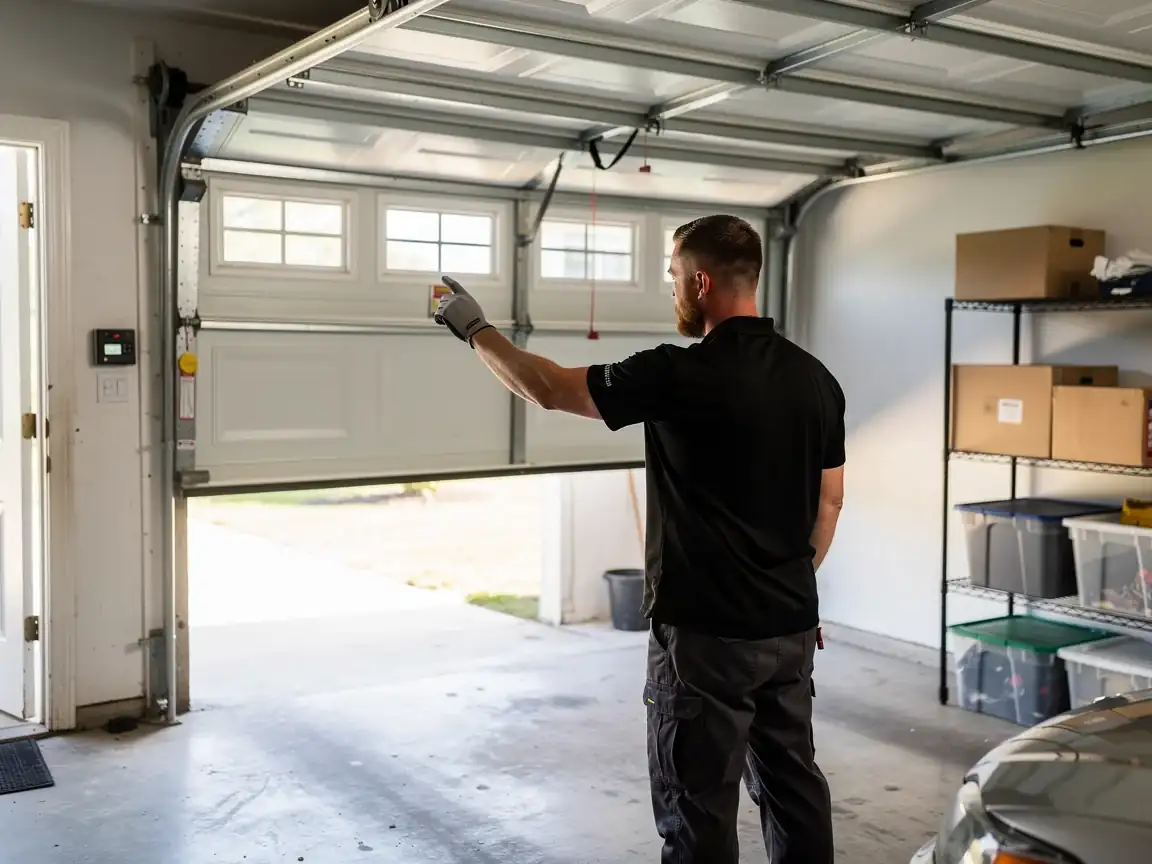
The other common version: the opener runs, the motor hums, but the door doesn't lift. That's almost always the spring too - the opener isn't built to lift a door's full weight on its own, and once the spring is gone, the opener just strains against it. Either way, the door is a few hundred pounds of garage door hanging on two cables, and that's not something to force open by hand while you wait.
How to Book
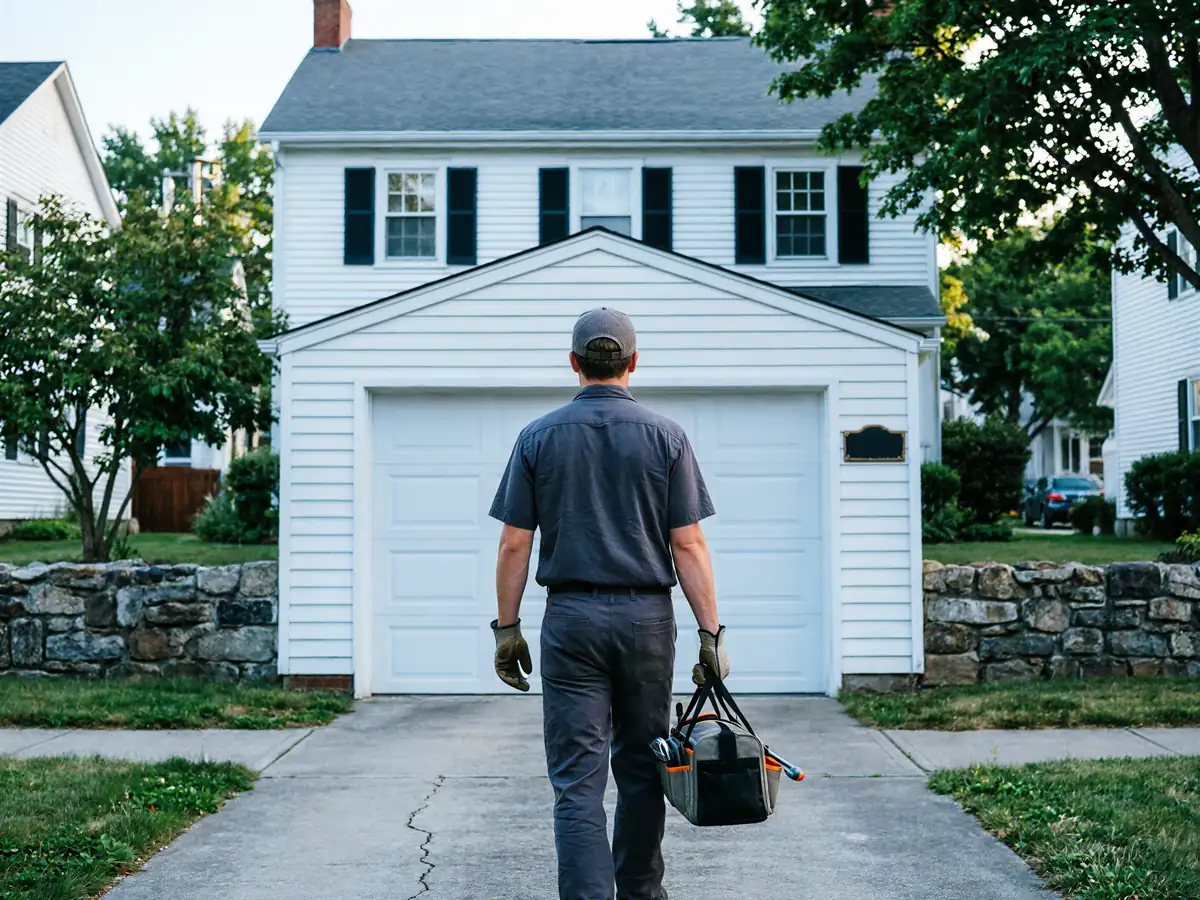
Call when it happens - a broken spring or a door stuck open isn't a leave-it-overnight problem, especially if the car you need is inside. Tell us what you're seeing: did you hear a bang, is the door stuck up or stuck down, does the opener run without lifting it. That tells us what's likely broken before the truck leaves, so we show up with the right spring size or cable instead of guessing twice.
We'll get a time window to you and confirm before we're on the way. If the door is stuck open on a house with anything inside the garage worth protecting, say so - that changes how we prioritize the call.
You can reach us through the site at / or by phone. Either way, the information we need is the same: what the door is doing right now, roughly how old the door or opener is if you know it, and whether anyone has already tried to force it.
What You Pay
We don't post a flat number for emergency repair because the fix isn't the same job twice
A single broken spring on a one-car door is a different job than a snapped cable plus a bent track on a double door, and parts pricing follows the door's size and spring type. What we can tell you is what drives the cost: which part failed, whether one spring broke or the matched pair needs replacing together, and whether anything else got damaged when it let go (a cable snapping under tension can take a bracket or a track section with it).
We'll give you the number before we start work, not after
If a repair doesn't make sense - say the door is old enough and the opener's failing too - we'll tell you that replacement is the better call rather than running up a repair bill on a door that's on its way out anyway. That's the one honest limit here: we fix what's worth fixing, and we'll say when it isn't.
What Causes It Around Here
Two things stack on each other in this part of the state. First, the housing stock: across the 48 named communities in this service area, most construction is 1960s and 70s, sitting inside an overall 1938-to-1993 range with a median year of 1969. That means a large share of garage doors are running on torsion springs installed when the house was built, or on a one-time replacement from years back - either way, well past the point where metal fatigue starts to matter.
Second, the climate: this area sits in a severe cold band, and cold is hard on spring steel. A spring that's already near the end of its rated cycles loses flex overnight in a hard freeze, and the next lift - sometimes the very next one - is the one that snaps it. That's why these calls cluster in cold stretches rather than spreading evenly through the year.
With 69,298 owner-occupied houses among 111,565 households across the area, a lot of garages fit this exact pattern: original or long-serving hardware, sitting through winters that make it worse. It isn't bad luck. It's the math of old springs and cold mornings.