How Long It Takes
The fault we see most in Stow isn't a dead opener, it's a door that's gotten heavy and loud over the last few winters - rollers grinding in the track, a panel that drops a little faster than it used to. That's not random. Stow's housing stock centers on 1973, which puts a lot of these garages right at the point where the original steel door and its extension springs are simply worn out, not broken in any one dramatic way.
Across the wider area we cover out of Hudson, houses run from 1938 to 1993, so a lot of towns we work in have a mix of eras under one roof style. Stow leans newer than that average, which matters for the fix: a 1970s door usually takes a modern torsion conversion cleanly, where an older one-piece door from the 1940s or 50s often needs a full frame rebuild first. We tell you which one you've got before we quote anything, because guessing wrong wastes a trip.
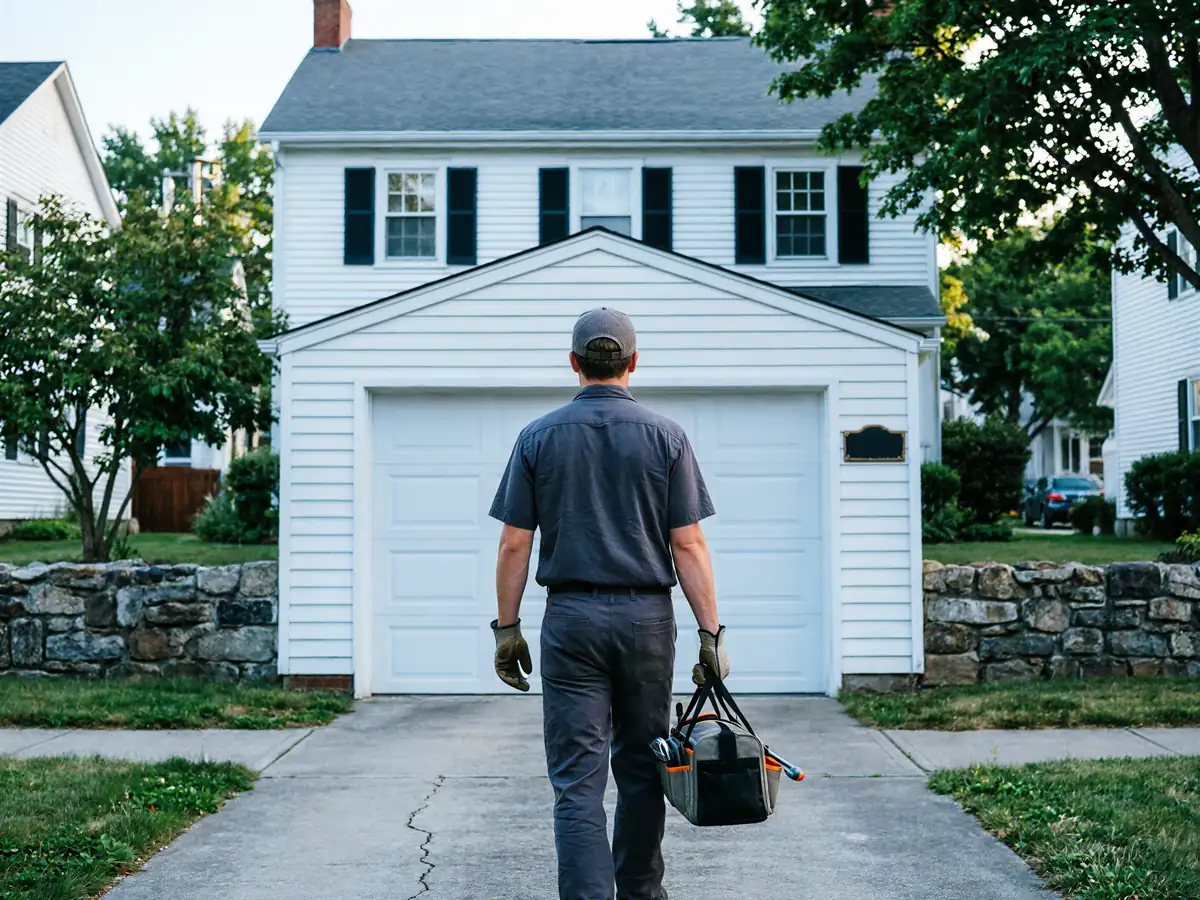
We come from Hudson, four miles over, so there's no local branch to call - just the truck and the schedule. We don't promise a response time here we haven't been given, but the drive itself isn't the bottleneck on most Stow jobs.
How It Shows Up
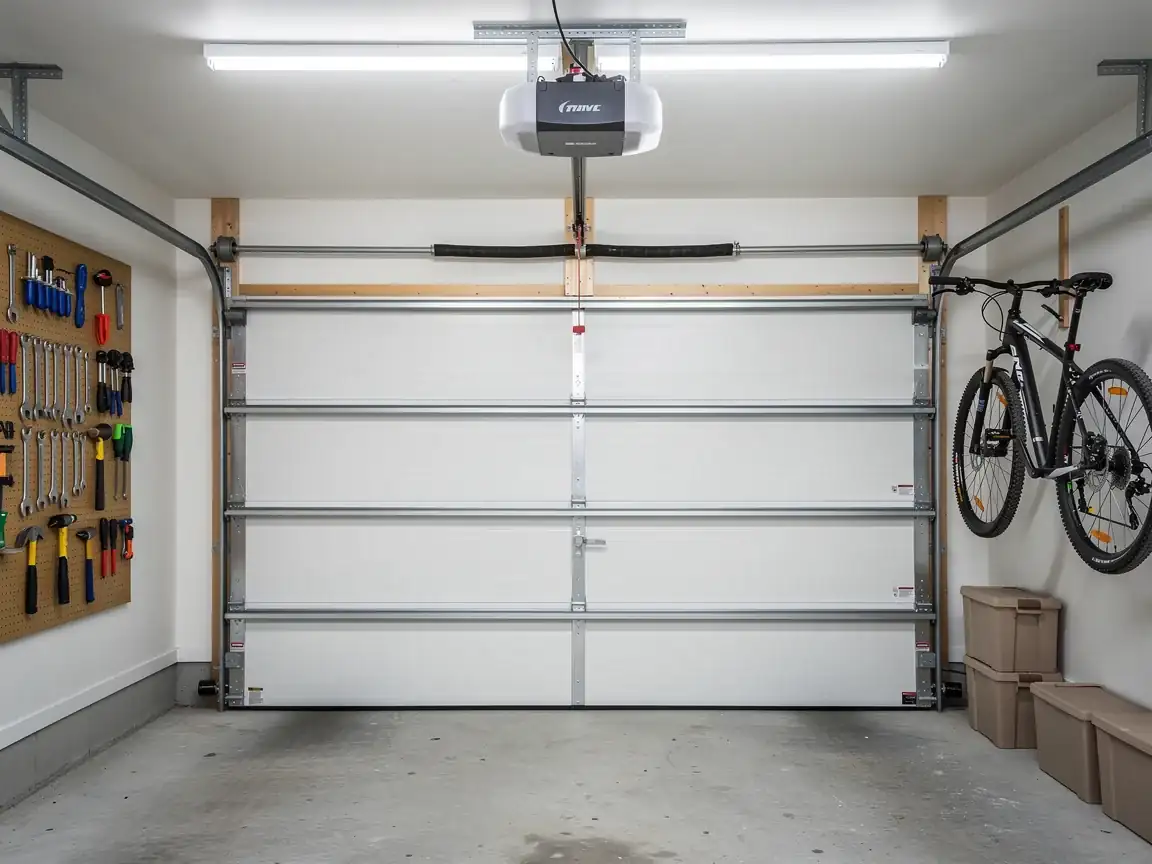
On a door this age, the symptom usually comes before the failure. You'll hear a scrape on the way up, or notice the door hangs a half-inch crooked at the bottom corner before it seats. Extension springs from the early 70s don't usually snap outright the way newer torsion springs do - they stretch, lose tension unevenly side to side, and the door starts fighting the opener instead of working with it.
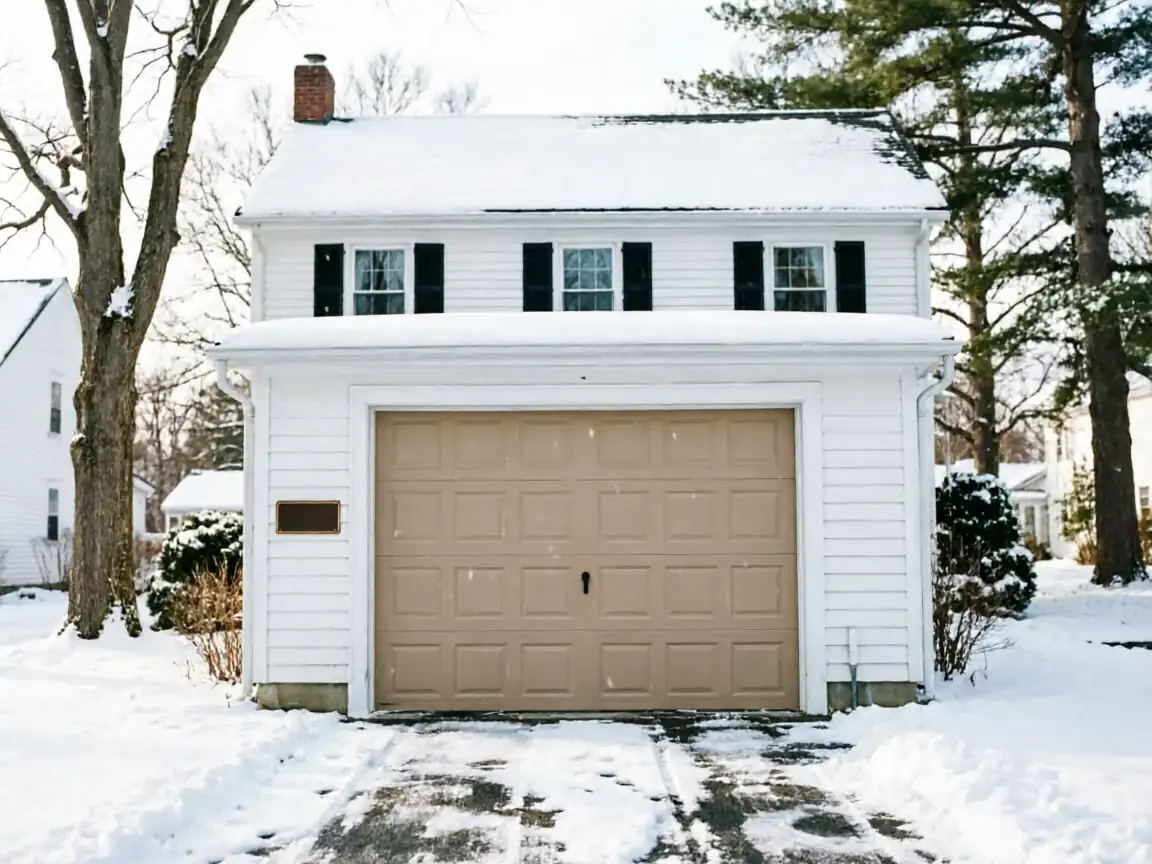
Stow's winters matter here too. The area sits in a cold-severe climate band, and steel contracts in the cold - rollers that were marginal in September start binding hard by January. If your door's gotten noticeably stiffer the last few cold mornings, that's the spring and track telling you the same thing, just at different speeds.
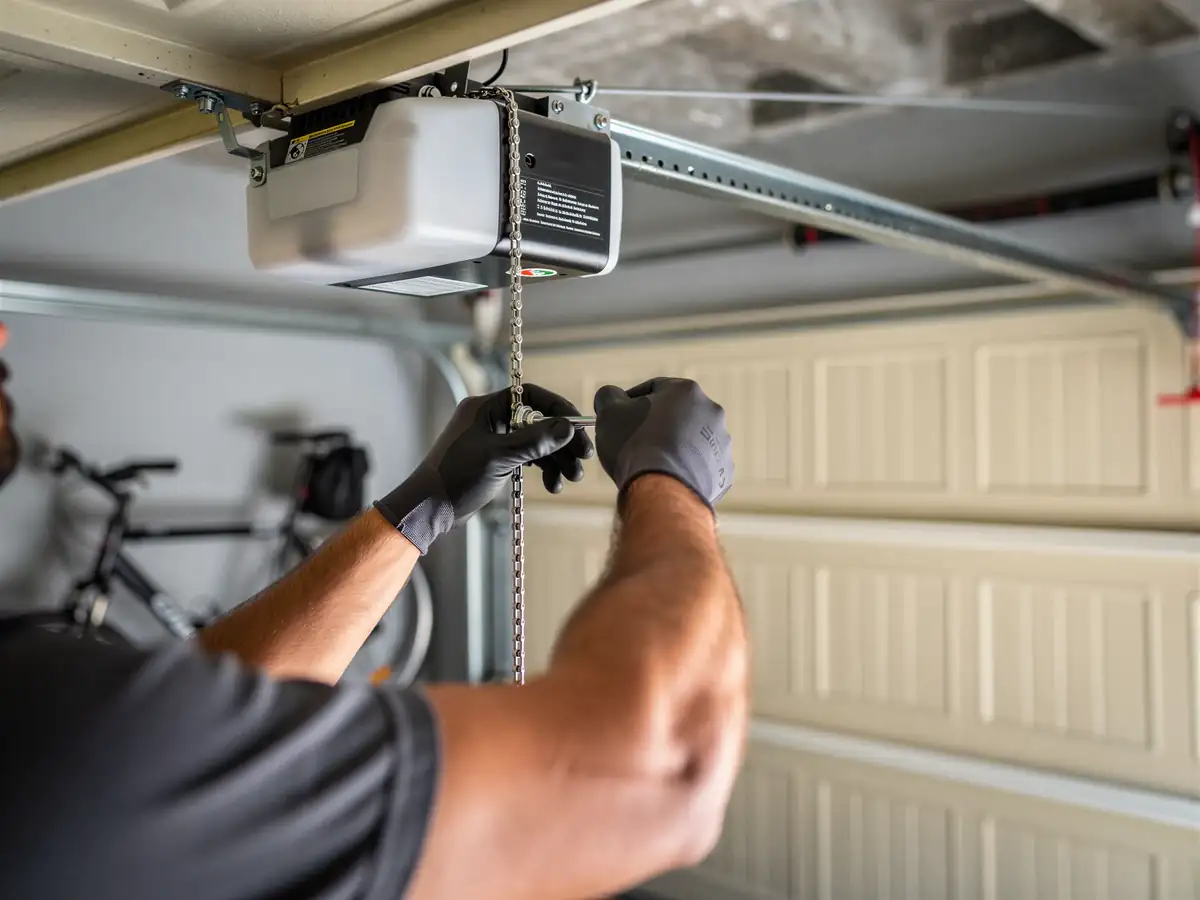
The other common sign is an opener that runs but the door barely moves, or reverses halfway up. That's almost always the spring doing less work than it used to, forcing the motor to cover the difference. An opener replacement won't fix that - the spring has to go first, or the new opener burns out the same way inside a year.
What Can Go Wrong
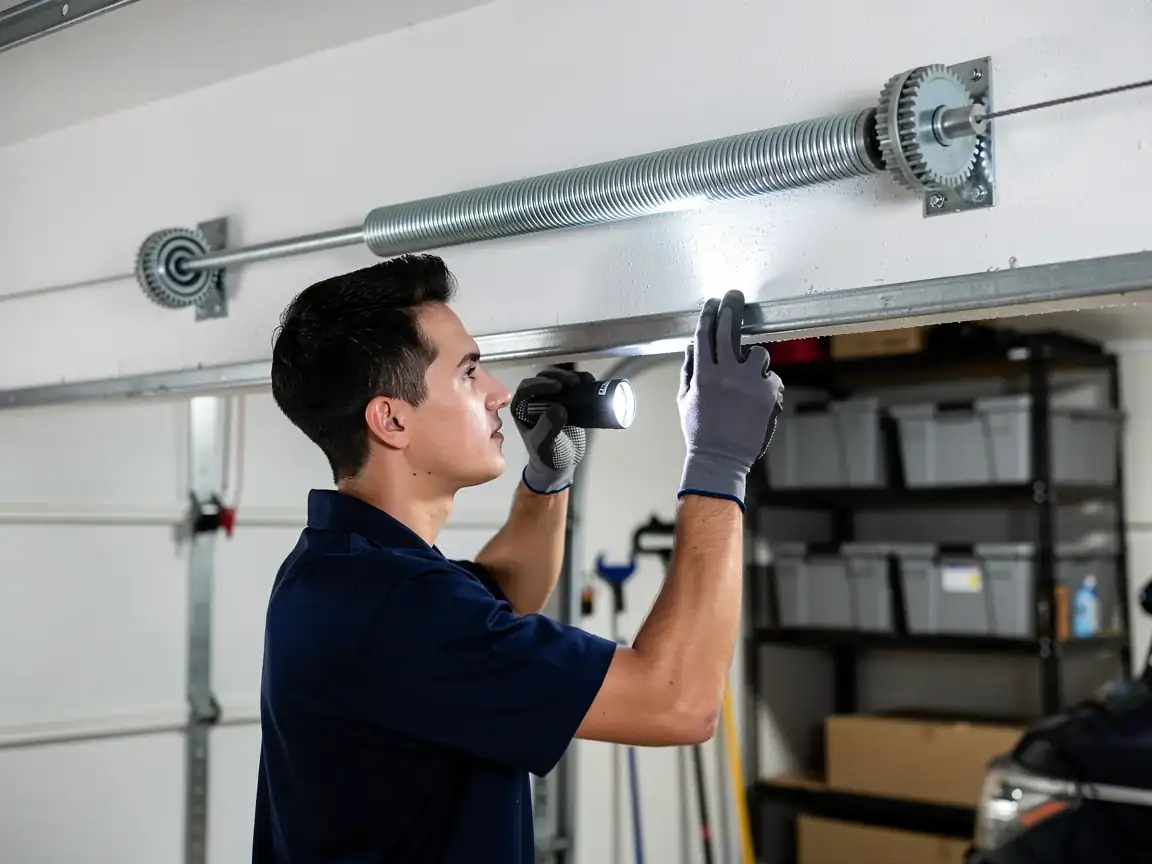
A rusted or unevenly worn extension spring is the main failure on Stow's 1970s-era doors
And it's not a small fix if it lets go while the door is up - the panel can drop fast with nothing holding it. That's a repair we won't let sit once it's spotted, even if the door still seems to be working.
Second most common: track misalignment from decades of settling
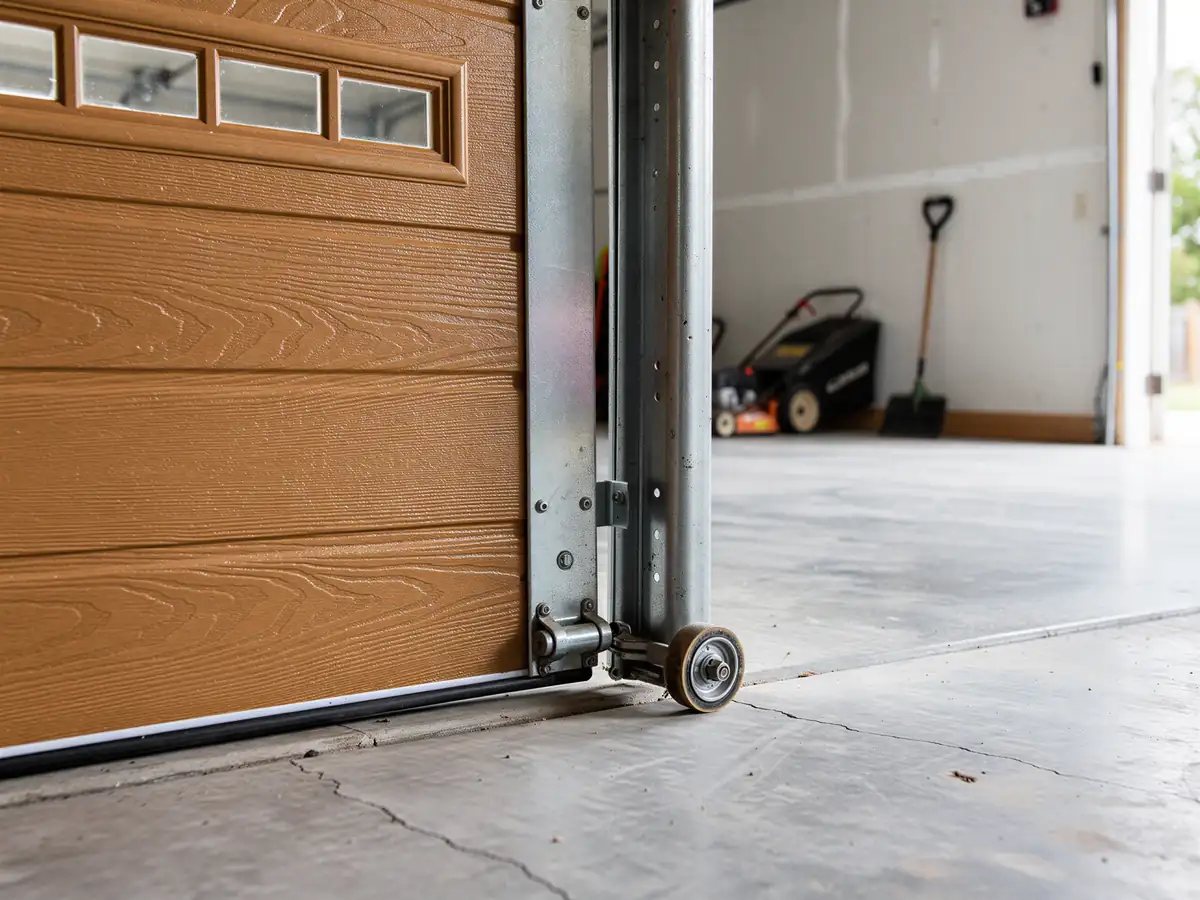
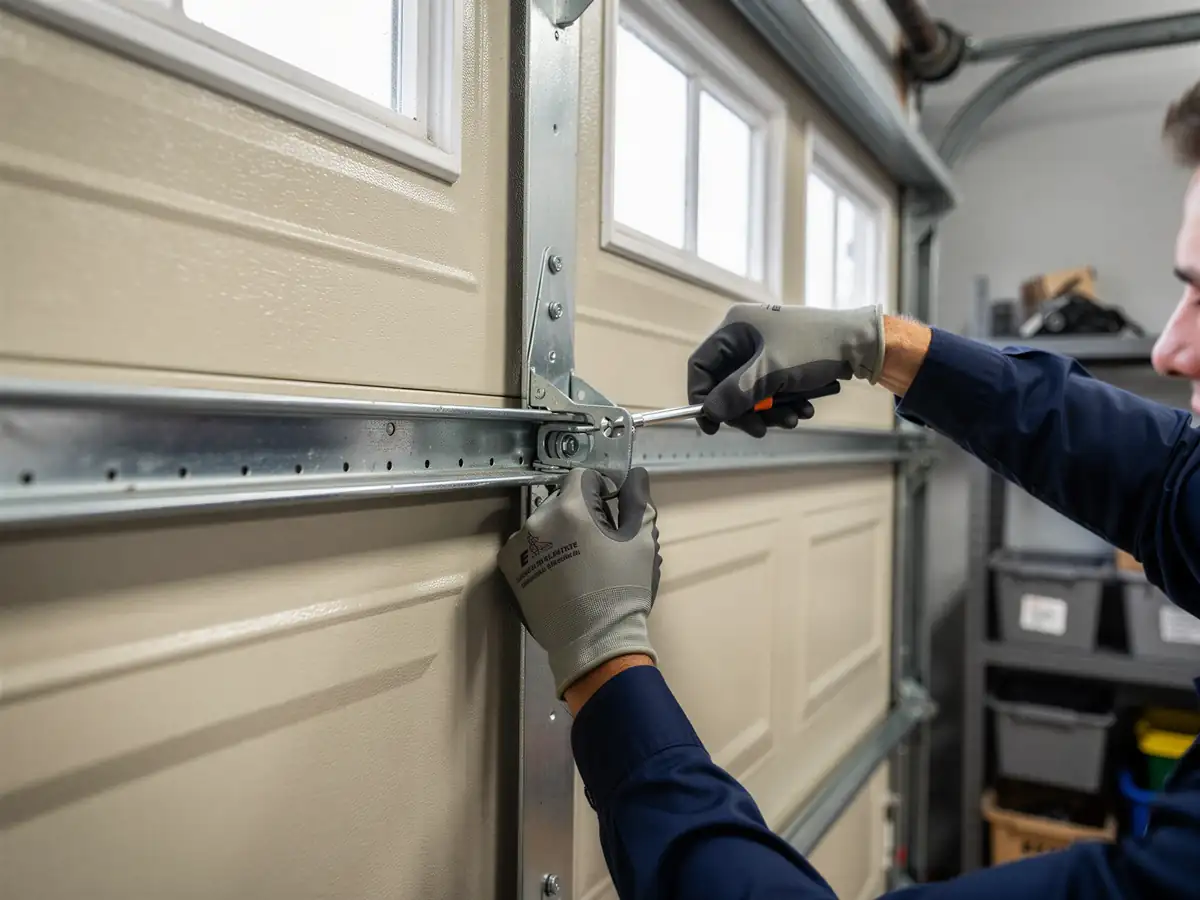
These houses are old enough that slabs have shifted a little, and a track bolted straight in 1973 is rarely still straight in 2024. We shim and realign rather than replace track outright when the rail itself is sound - replacing good track to fix a mounting problem is money spent on the wrong part.
Here's the honest limit
If the door itself is the original steel panel from that era and it's rusted through at the bottom corners, we won't spend your money reinforcing it. Past a certain point patching a fifty-year-old panel costs close to a new door anyway, and we'll tell you that straight instead of billing for a patch that won't hold through another cold-severe winter.
What You Pay
We don't have a posted price list for this page, so we won't put a number here that isn't backed by a quote for your actual door. What we can tell you is what drives the cost on a typical Stow job: spring type (extension springs from this era cost less to replace than a torsion upgrade, but the upgrade pays for itself if you're keeping the door long-term), whether the track needs realignment or replacement, and whether the opener is original or already swapped.
Stow's median household income runs well above the wider service area we cover from Hudson, where the figure sits at $147,635 - Stow itself runs higher than that. That's not us pricing by zip code; it's just context for why torsion upgrades and full opener swaps are common requests here rather than the cheapest patch available. With roughly 2,731 households in town, most on similar-aged lots, we see the same handful of failure patterns repeat, which is part of why we can diagnose fast over the phone before the truck even leaves Hudson.