The DIY Question
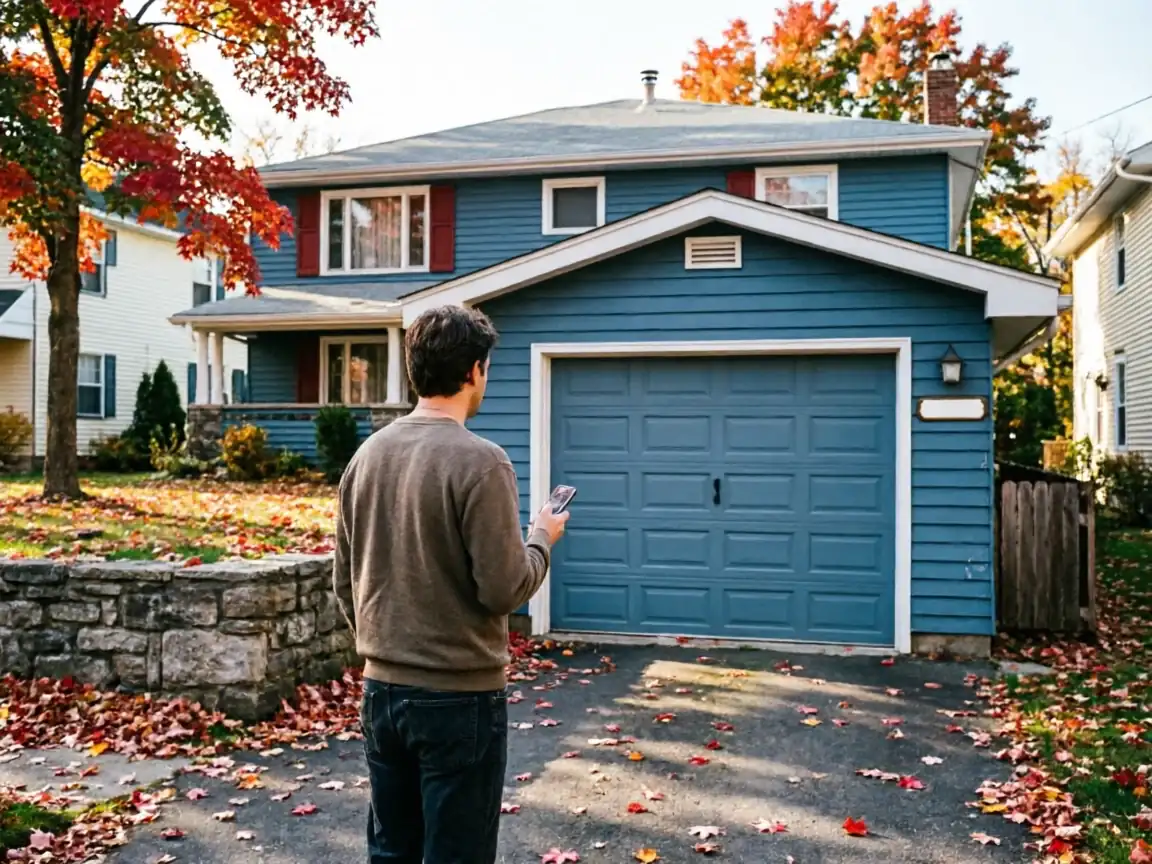
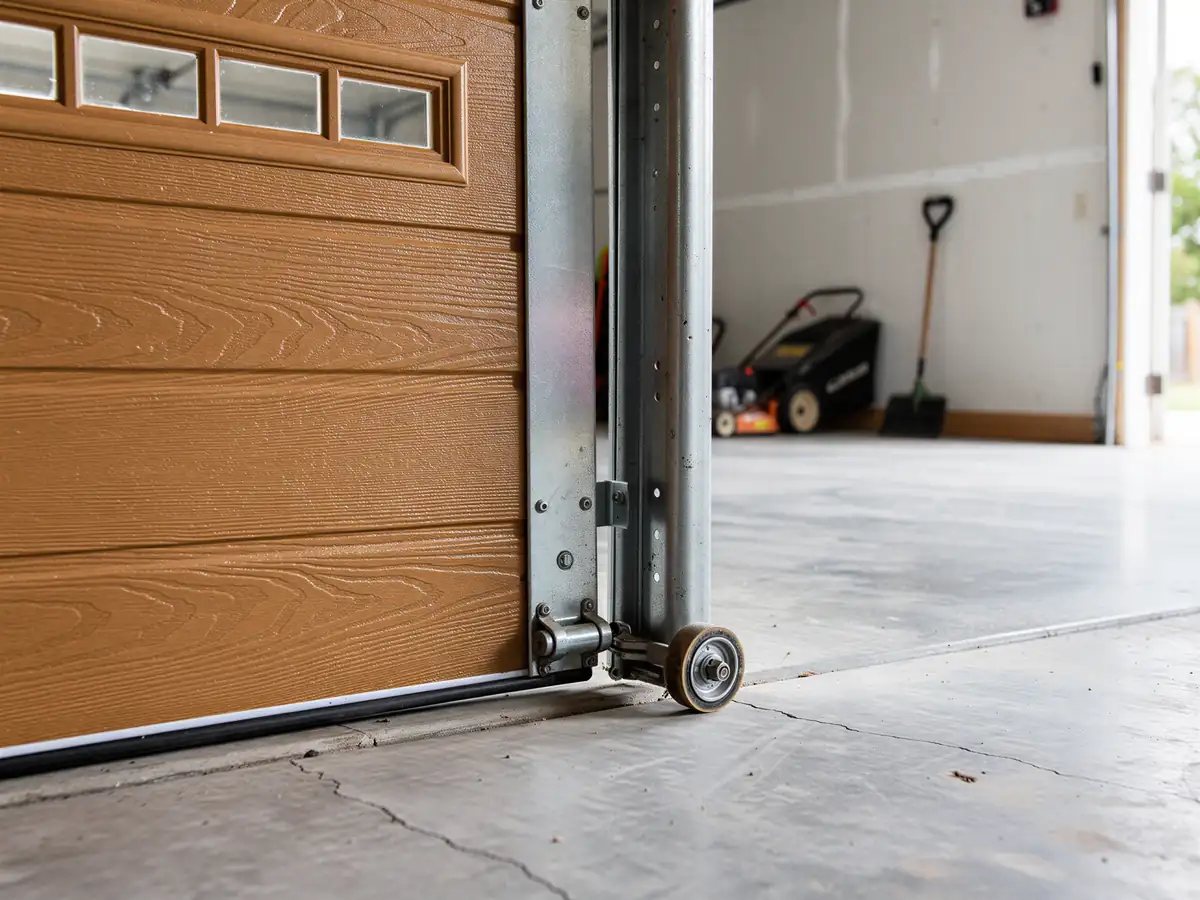
A door that's jumped the track usually did it for a reason, and most of those reasons aren't things you fix by shoving the door back into the channel. In Lancaster, where the median home was built around 1967, you're dealing with track brackets that have been through fifty-some winters of expansion and contraction. The bracket bolts loosen, the track itself bows a hair, and one cold morning the roller walks right out of the channel instead of riding in it.
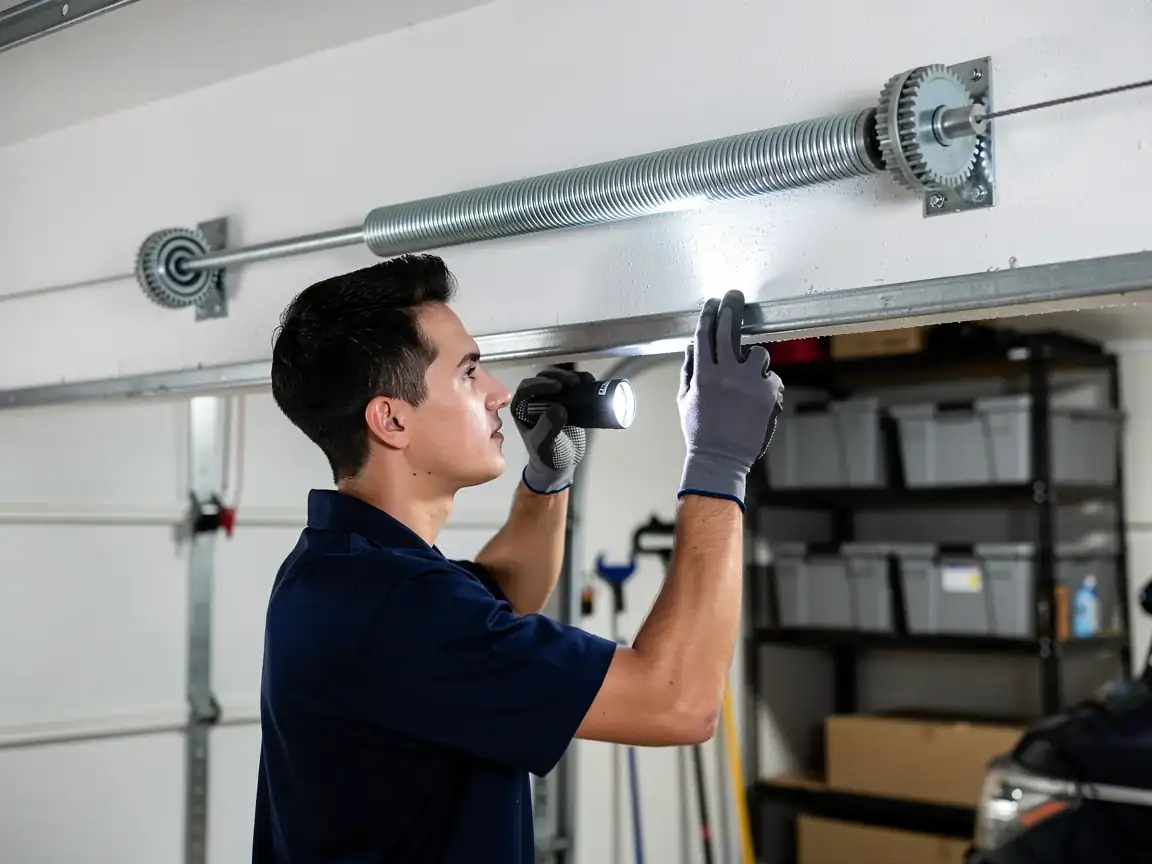
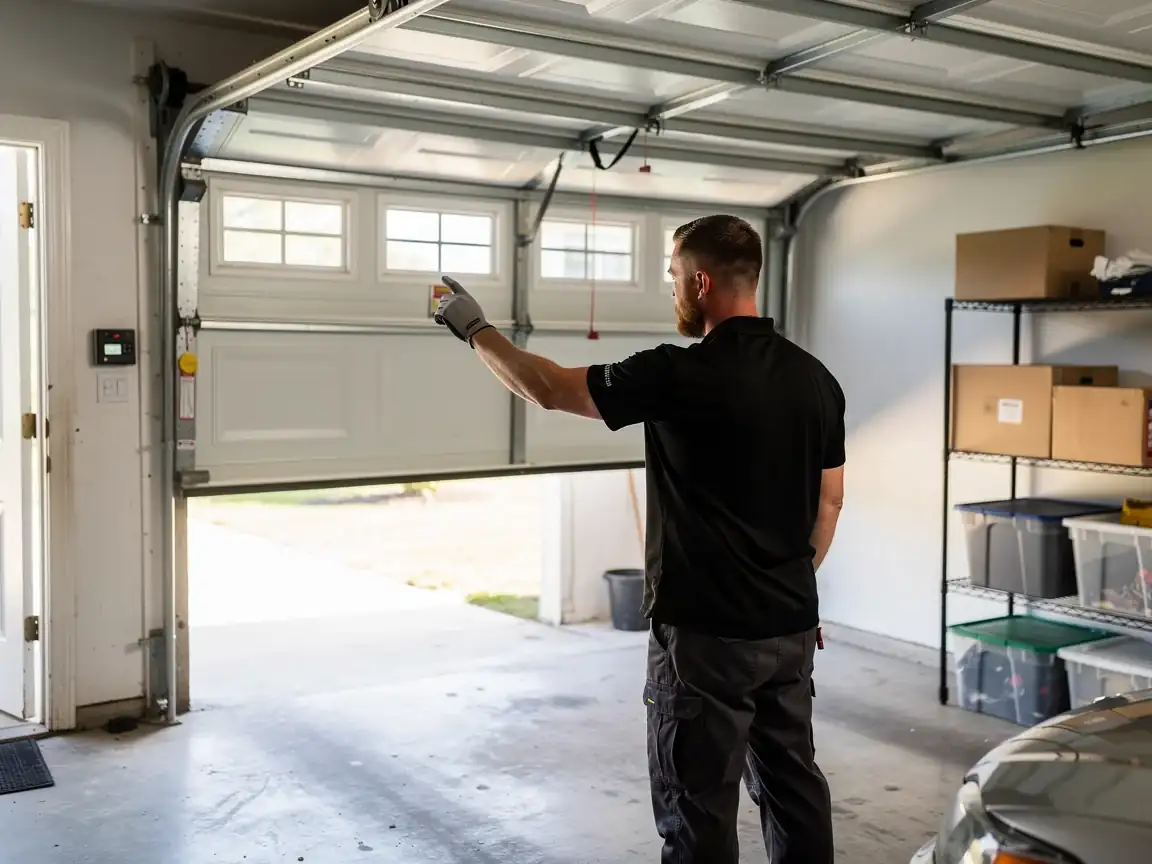
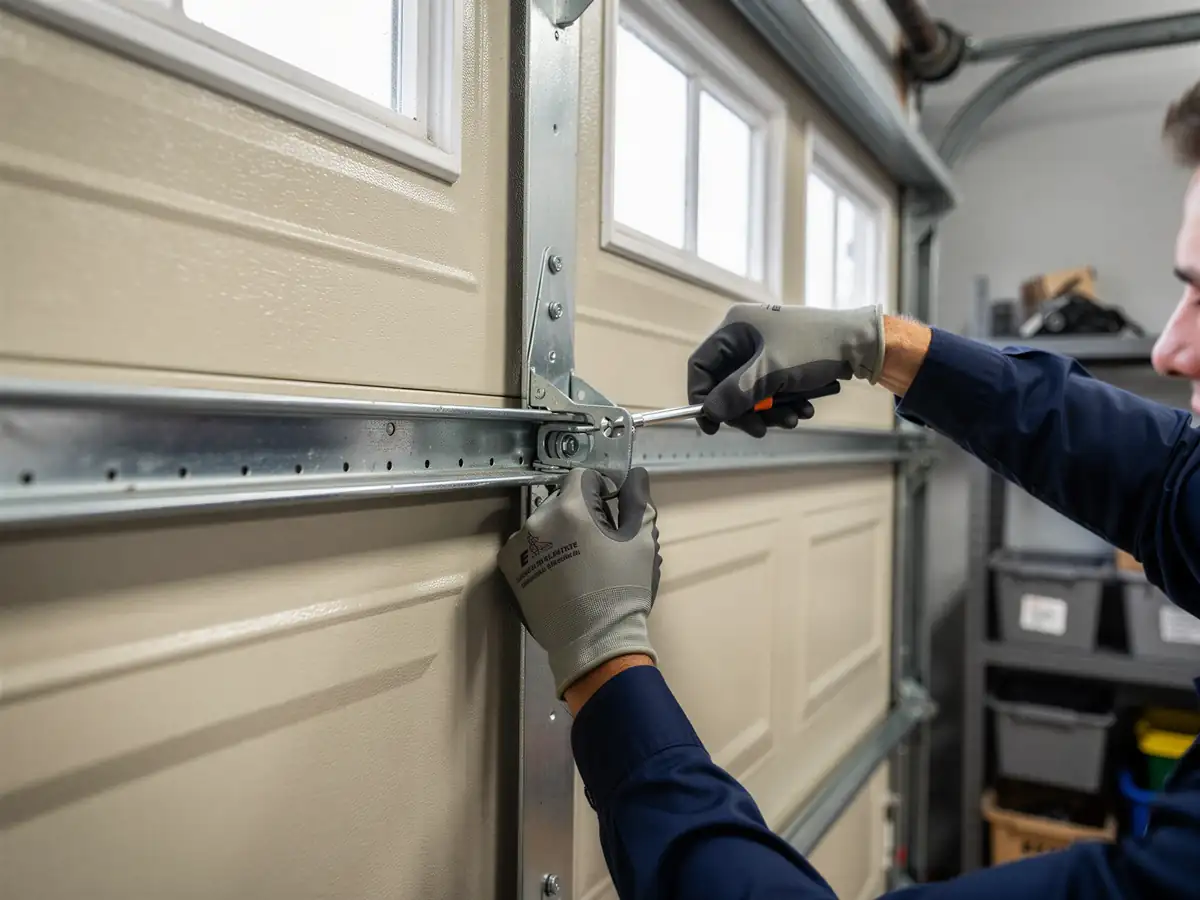
You can push a light door back onto the track yourself if the cable is still intact and the opener is unplugged - that part isn't dangerous. What's dangerous is doing that with a door still under spring tension, or assuming the track just needs a tap back into place when a bent track actually needs replacing. On a 1960s build, the track gauge sometimes doesn't match what's sold at a hardware store today, which is the kind of mismatch that turns a quick fix into a return trip. If the door won't move freely by hand with the opener disconnected, that's the line where we'd tell you to stop and call rather than keep working at it.
What Can Go Wrong
With roughly 2,944 households in Lancaster and a housing stock centered on 1967, we see a repeat pattern here: original steel track with the rollers it shipped with, never upgraded to nylon, now pitted from cold-season condensation inside the garage. New England's winters are hard on exposed steel hardware - F3's severe cold band means repeated freeze-thaw cycling on anything mounted outside a heated space, and a garage track qualifies.
The other common cause is a bent track from impact - a car bumper, a bike, a snowblower clipped against the bottom section. Once the track bends even slightly, the rollers bind going up and skip going down, and eventually one jumps clear. On double doors from this era, the center bracket between panels is also a frequent failure point; it's original hardware doing a job it was never resized for after decades of use.
We won't pretend every off-track call ends in a simple adjustment. If the track is bent in more than one place or the bracket has pulled out of the framing, replacing the section is the honest call over bending it straight and hoping.
How to Book
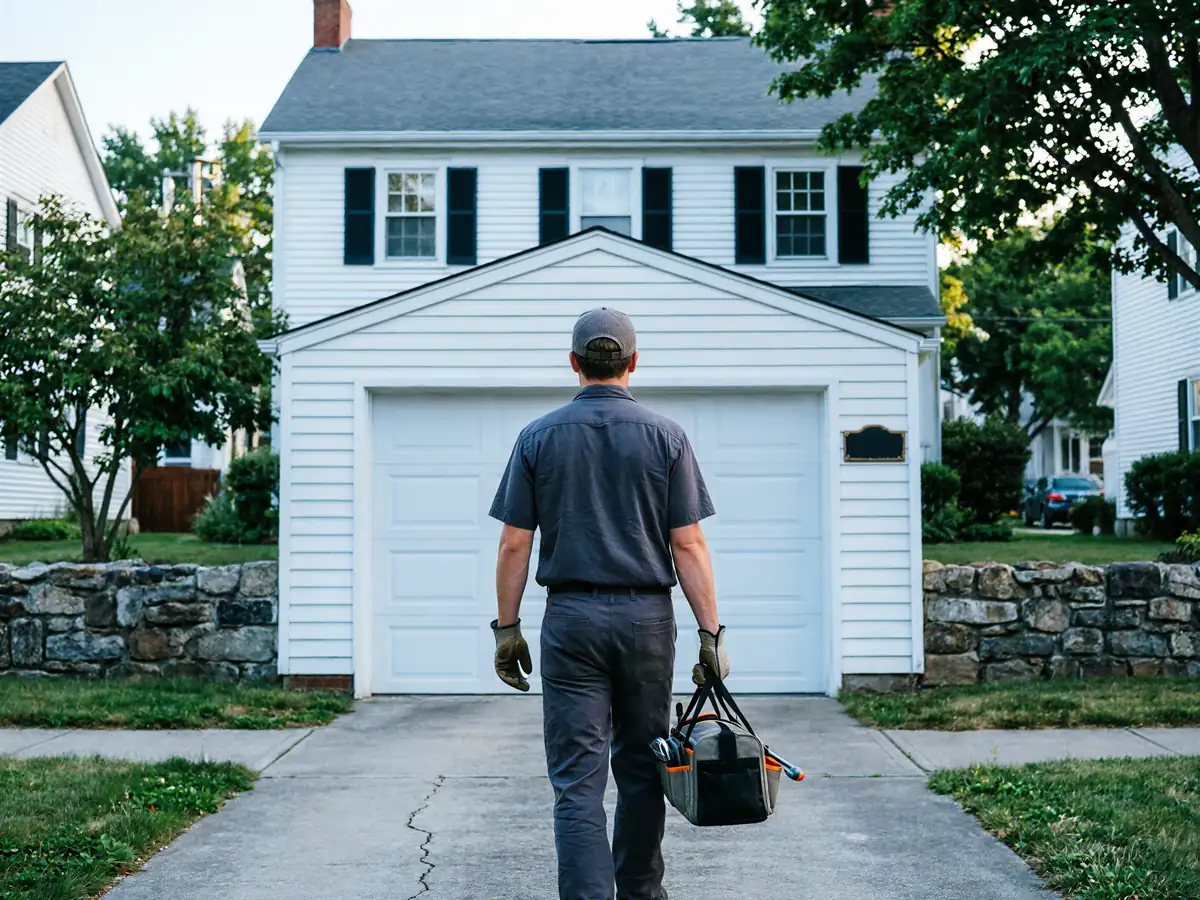
We cover Lancaster from our Hudson location, about 8 miles out
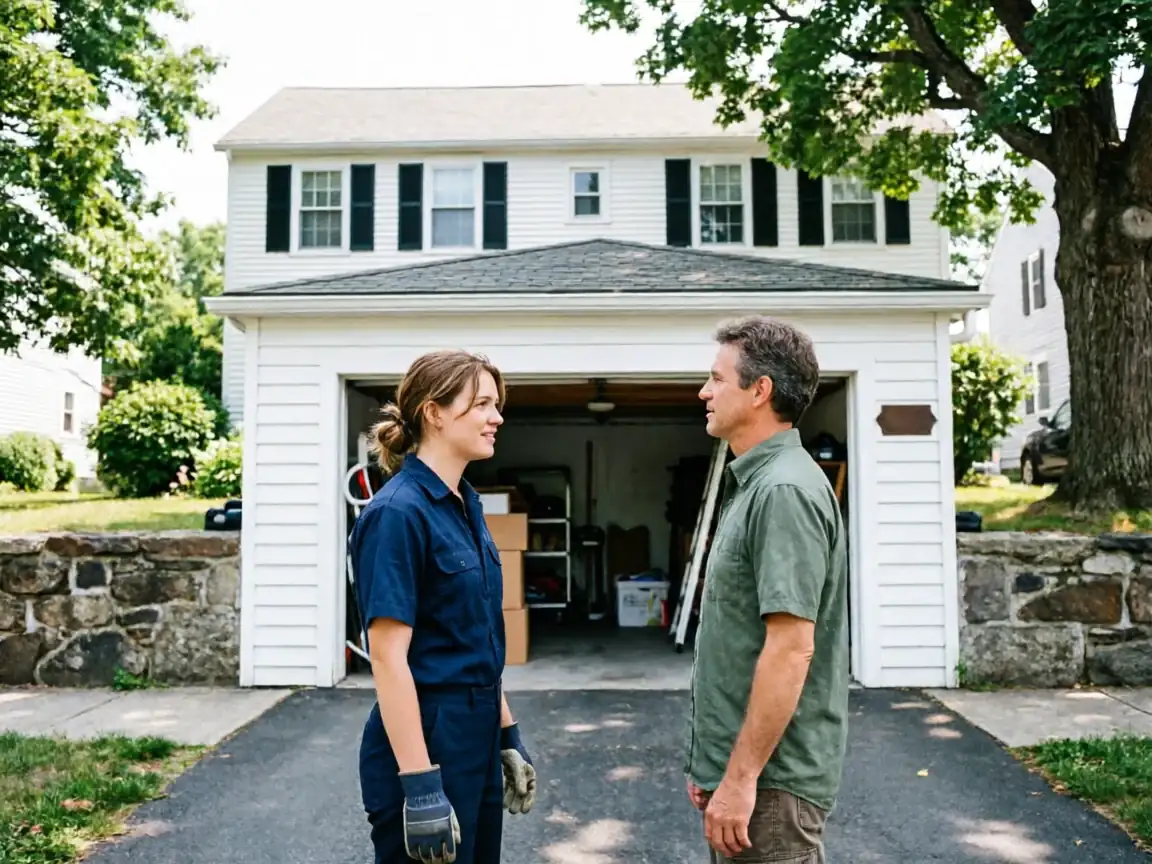
So we schedule the visit rather than dispatching from a local branch - there isn't one in town. Call and describe what you're seeing: whether the door is stuck open, stuck shut, or hanging crooked, and whether you've already tried to force it. That tells us whether to bring a replacement track section or just hardware for an adjustment.
- 8 miles
We ask for the rough age of the house if you know it
Since Lancaster's older stock (built mostly around the late 1960s) tends to need different bracket hardware than homes built in the 80s or later. Having that on hand before we arrive saves a second trip for the right part.
What You Pay
Pricing on an off-track repair depends on whether it's an adjustment - realigning a track that's shifted slightly - or a replacement section where the metal itself is bent or the bracket has torn loose. We don't carry a flat number to quote over the phone without seeing the door, because the two jobs aren't close in cost or time.
Lancaster's median household income runs around $130,444, somewhat below Hudson service-area's overall $147,635 median, and we price the same regardless of which town the call comes from - the job determines the cost, not the address. What does vary by house is the hardware: original 1960s track brackets sometimes require a part we need to source rather than carry on the truck, which can mean a short wait before the final fix even after the emergency piece is handled on the first visit.