What the Fix Involves
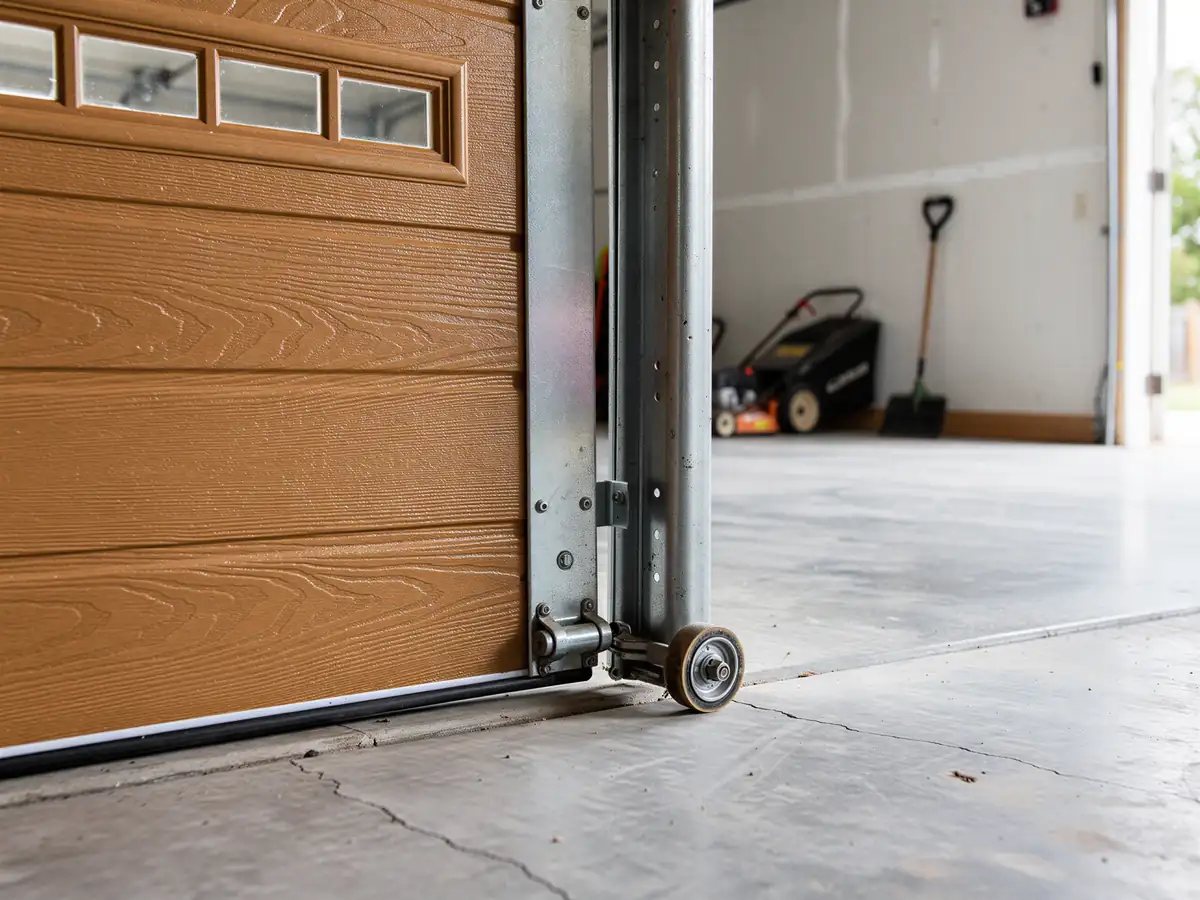
The call to Northborough is seven miles from our shop in Hudson, which matters more than it sounds like it should. An off-track door is rarely a simple nudge-it-back job. Once a panel has jumped the track, the rollers are usually bent or the track itself is pulled away from the jamb, and running the door again before that's fixed just tears the track loose further or cracks the bottom panel.
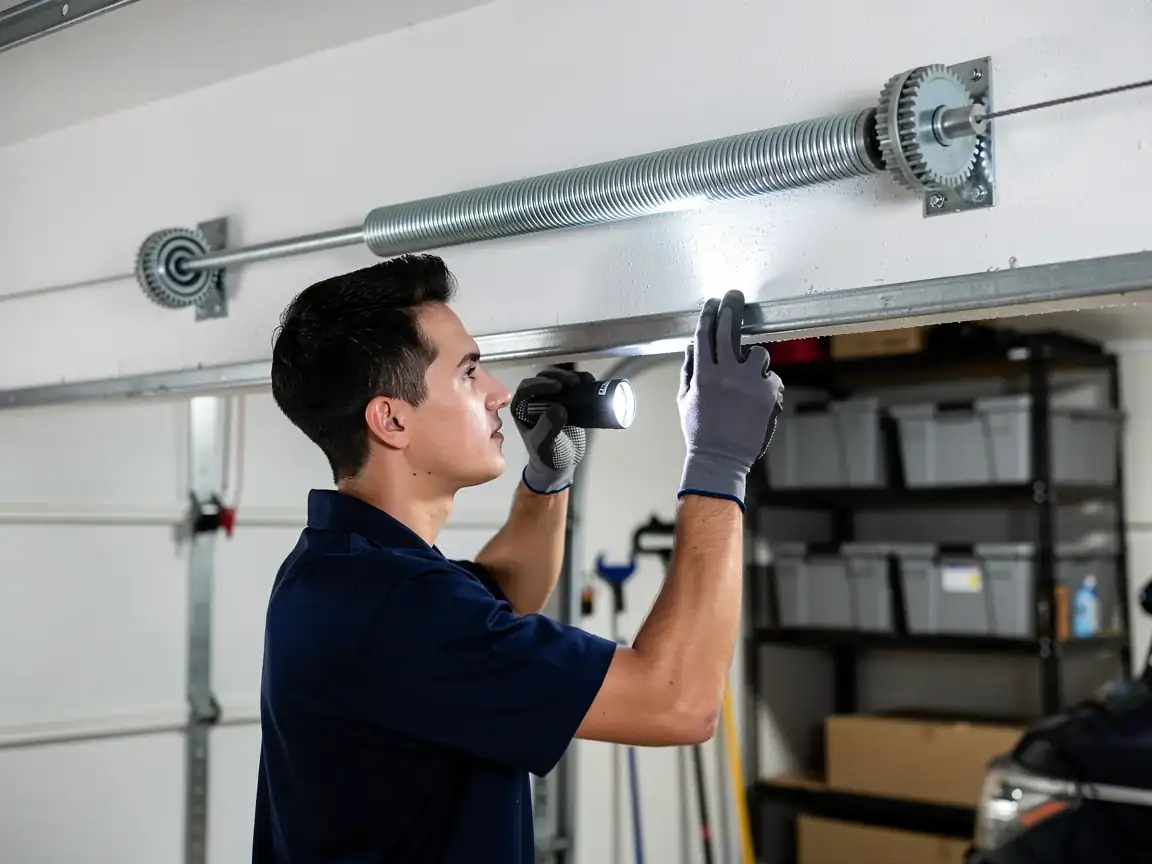
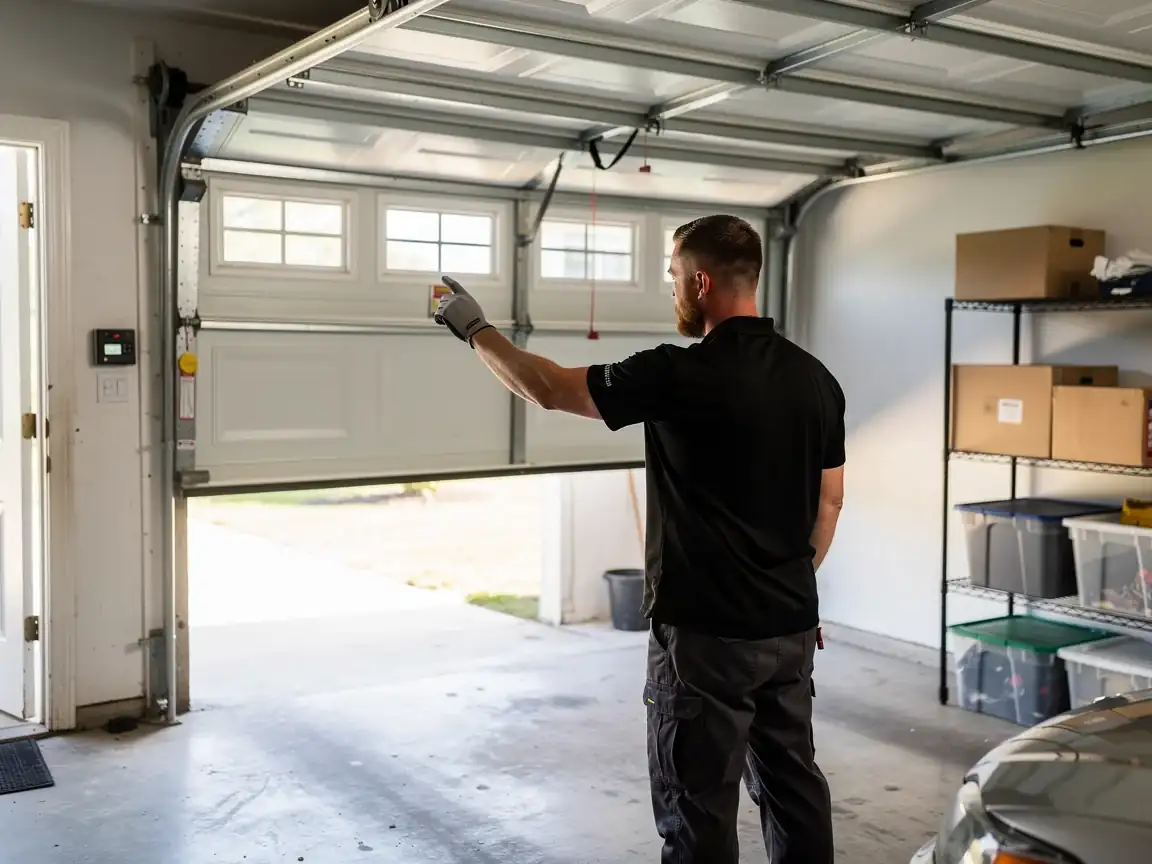
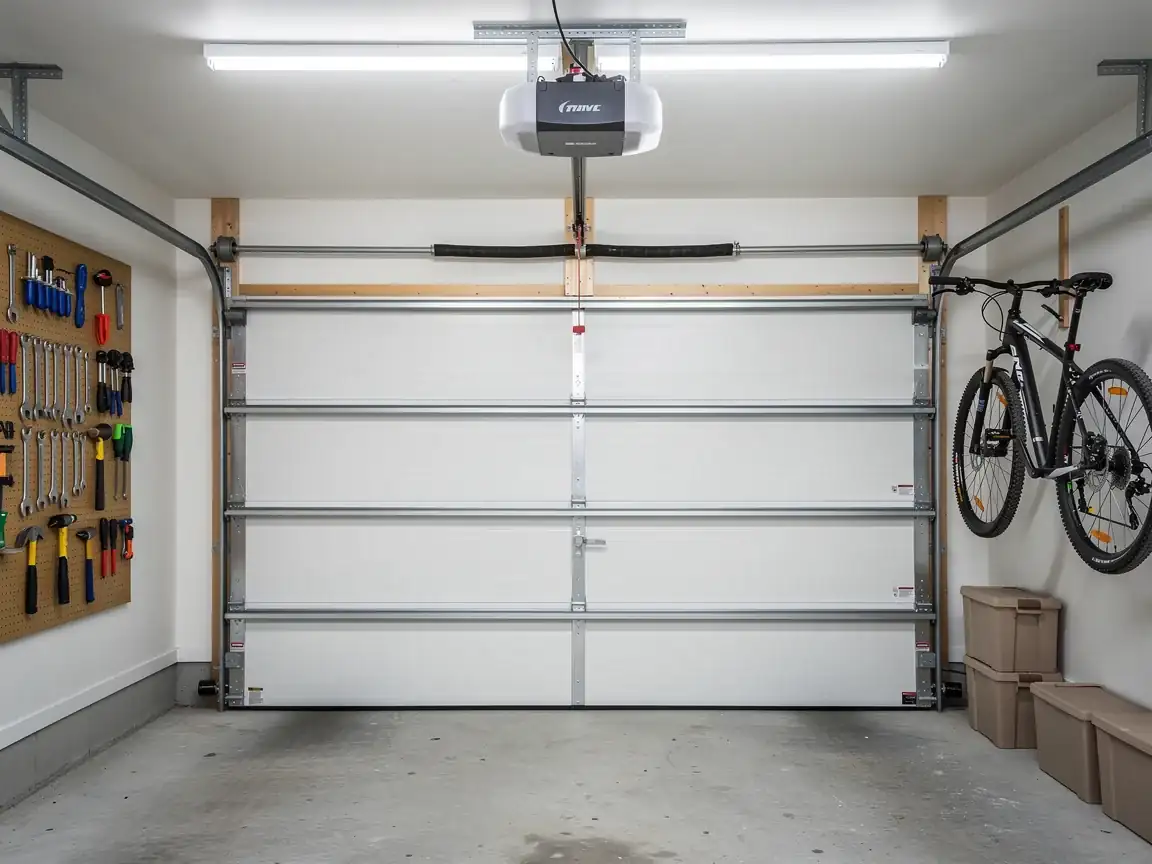
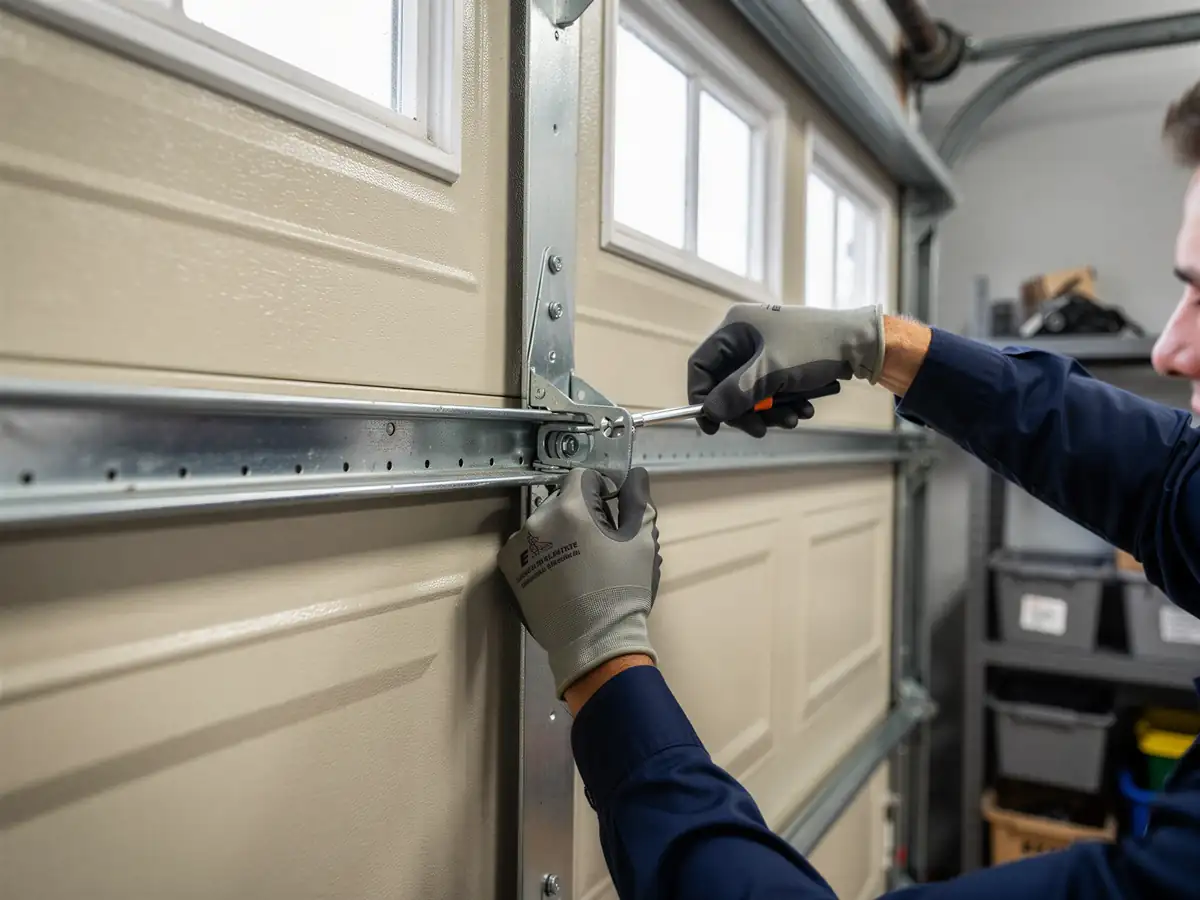
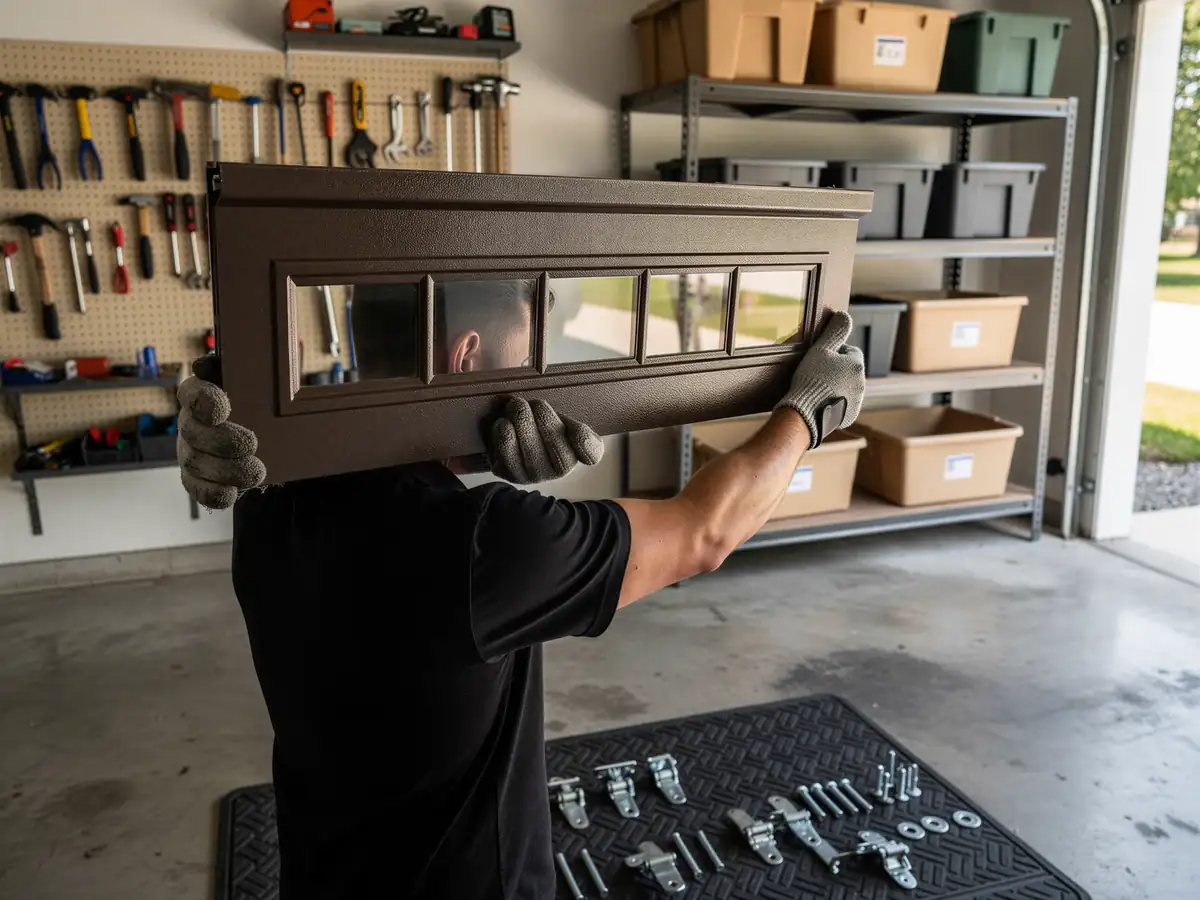
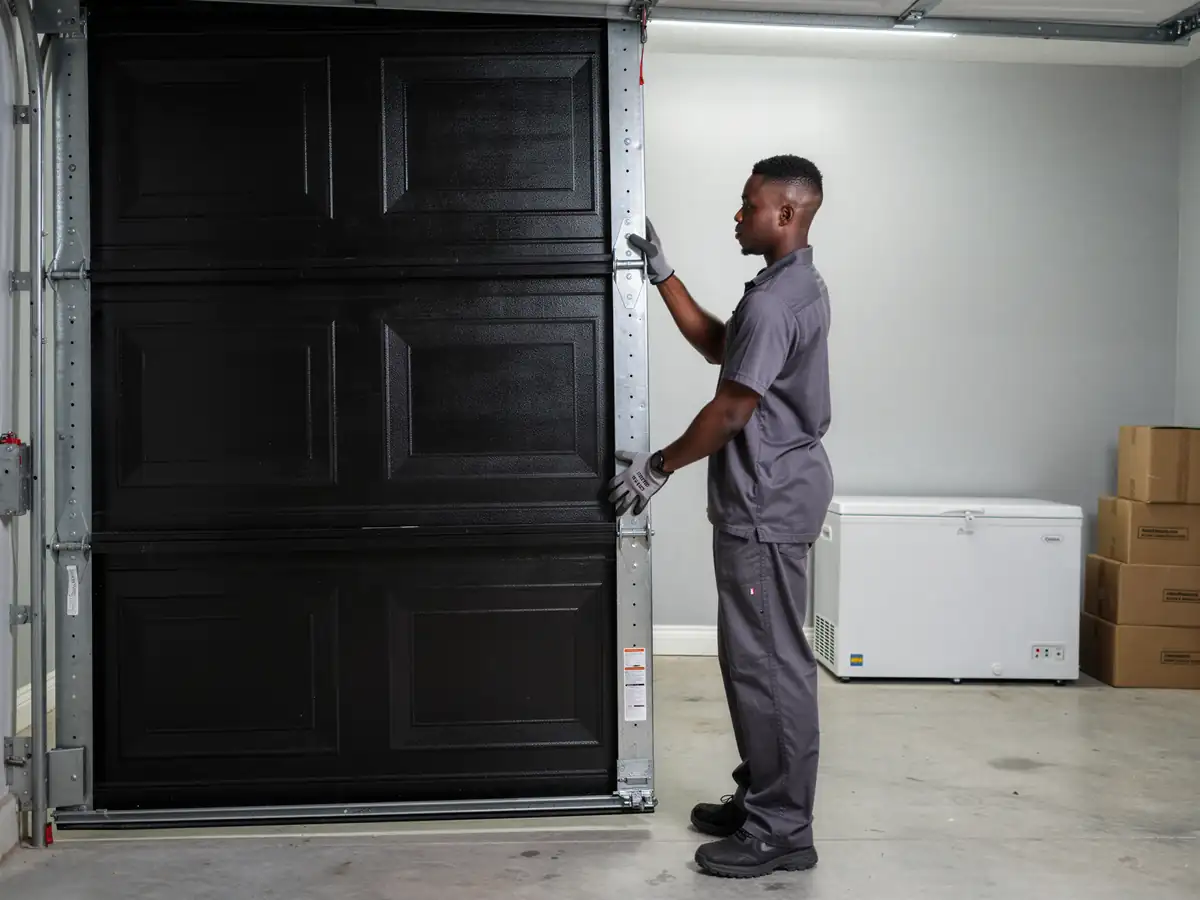
On site, the first job is getting the door safe to touch - if a cable has come off the drum or a spring is still under tension, that gets dealt with before anyone touches the track. Then it's a question of whether the existing track can be re-aligned and re-fastened to the frame, or whether a section has bent enough that it needs to come out and get replaced. We check the rollers at the same time, since the ones that caused the derailment are often the same ones that will cause the next one if they're left in.
We don't try to force a bent track back into shape and call it fixed. If the alignment is more than a small adjustment, we replace that section rather than leave a door that'll walk off the track again in a few months.
What Causes It Around Here
Northborough's housing stock centers on 1971, which puts a lot of these garages into the era of steel sectional doors on galvanized track hung with hardware that was never built to last fifty-plus years. By now the track brackets on a lot of these doors have loosened in the framing just from decades of the door running on them, and a loose bracket lets the track flex sideways under load - that's usually what lets a roller pop free.
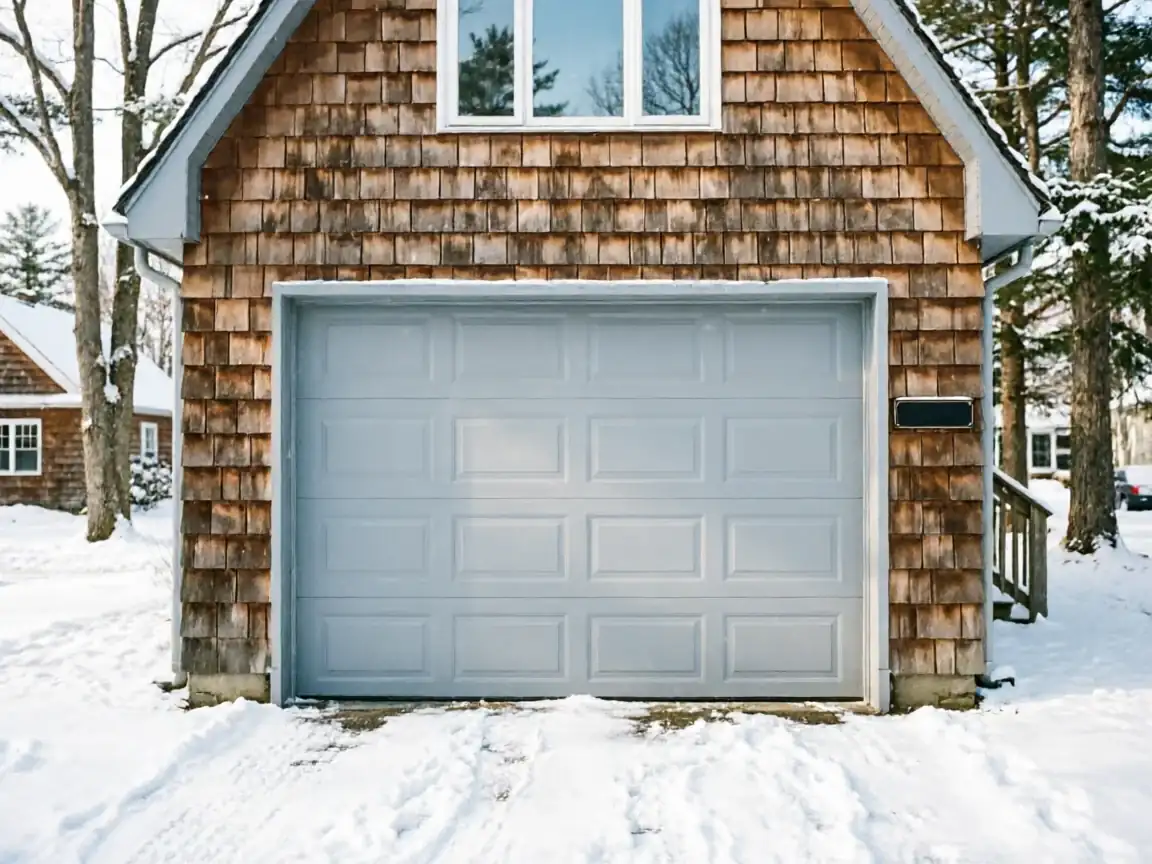
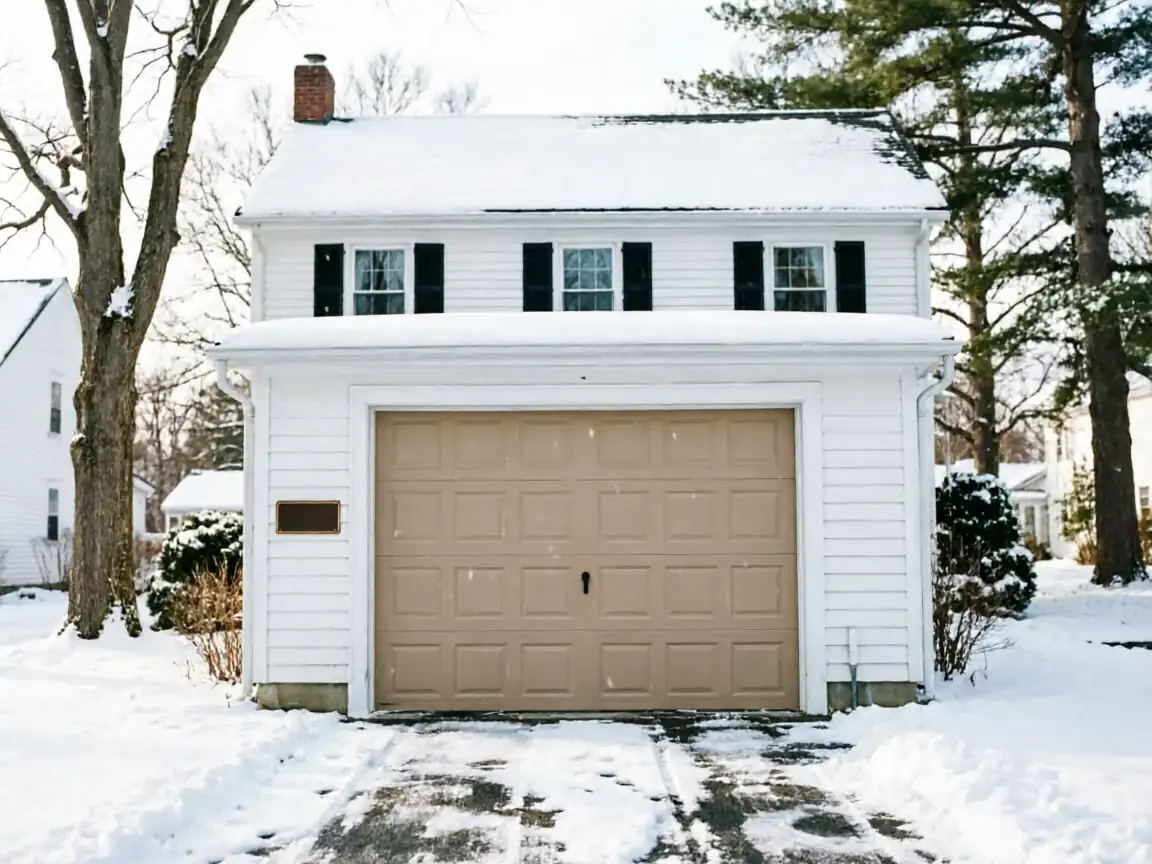
The cold is the other half of it. This part of Massachusetts sits in a cold, severe winter climate band, and track hardware from the 1960s and 70s wasn't built with today's cold-weather tolerances in mind. Steel contracts in deep cold, and a track that's already got a half-inch of play in the bracket gets worse play once temperatures drop. Add a little ice buildup at the bottom of the track, which is common on an unheated garage floor after a storm, and a door that's been limping along all fall will finally jump the track on a cold morning.
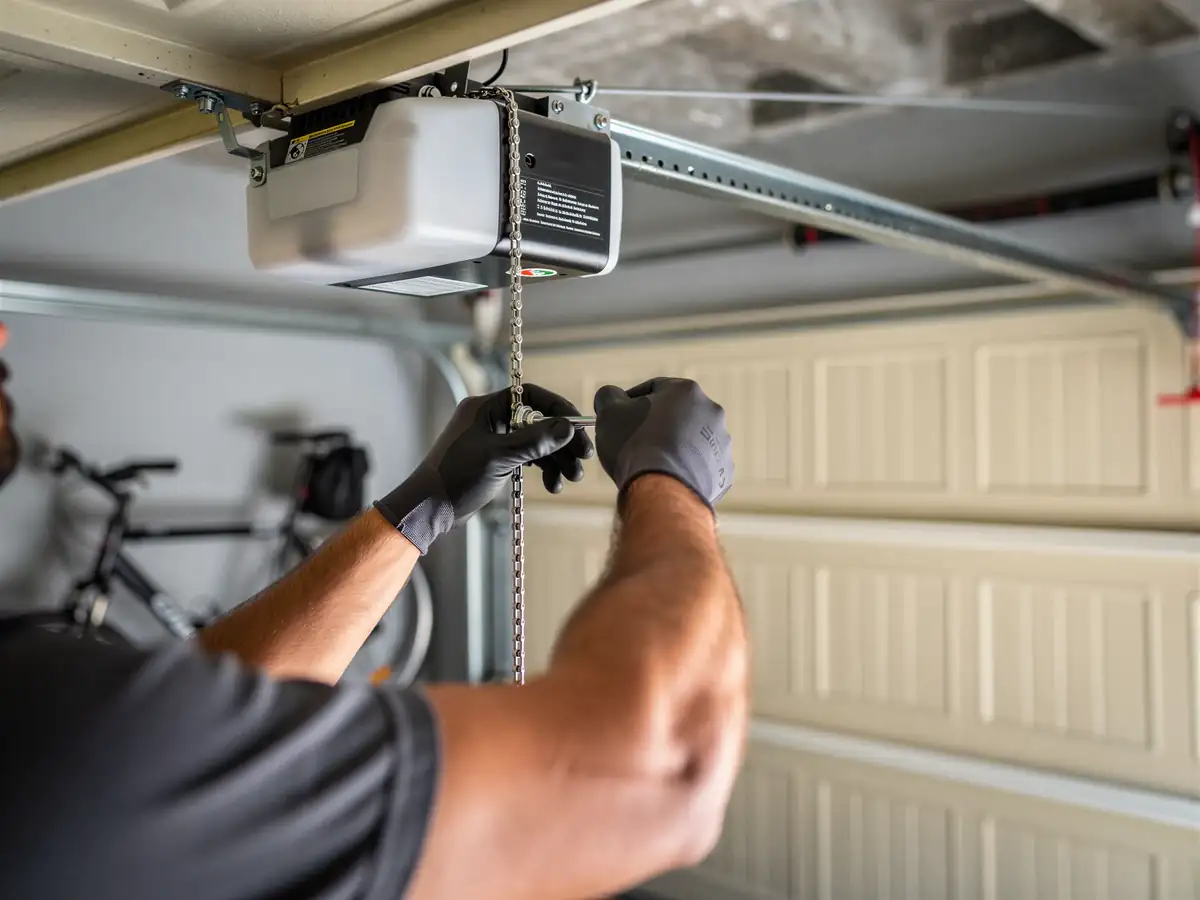
A garage door opener's force settings that are set too high make this worse, since the opener keeps driving the door even after it's caught on something it shouldn't be able to push through.
What You Pay
We don't have a flat number to quote here that holds for every job
Because what you pay depends on whether this is a re-alignment or a track replacement, and whether the rollers and hinges need to come out with it. A straightforward re-set of a track that's still straight costs less than replacing a bent section and the hardware riding on it. What we can tell you is that we price the job on site, after we've looked at the track and the rollers, not over the phone from a description.
Northborough's median household income runs well above the regional figure at roughly $154,926
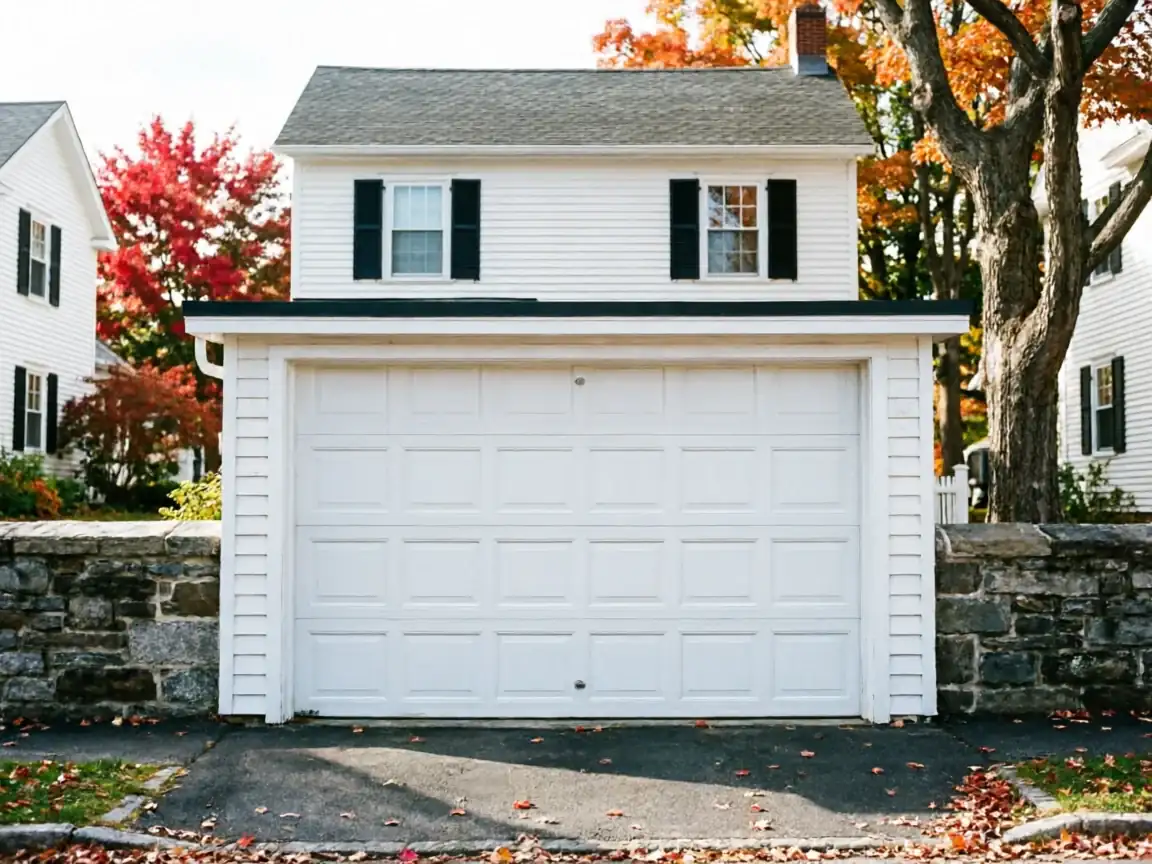
Which tells us something about the houses but not about what any particular door needs - a 1971 colonial and a 1971 ranch can have the exact same off-track problem and the same repair. We quote the repair in front of you before any work starts, and we'll tell you plainly if the better move is a new door section rather than patching an old one that's going to keep failing.
How Long It Takes
Most off-track repairs, once we're on site, run within a couple of hours - the bulk of the time is diagnosis and safely resetting tension, not the mechanical fix itself. The seven-mile drive from Hudson adds to the start of the day, not to the job itself, so it's worth telling us up front what you're seeing (a gap at the bottom, a door stuck halfway, a panel visibly out of the track) so we bring the right rollers and track stock instead of discovering a part is needed and having to come back.
The one thing we can't promise is a same-day fix if a section of track needs a size or finish that isn't something we carry on the truck - with roughly 2,560 households in Northborough built across a narrow stretch of years, the track widths and door weights cluster together, but they're not all identical, and an uncommon size means a return trip.